
Preparing meals from scratch doesn’t have to turn into a grueling marathon of chopping, dicing, and crying over onions. A quality food processor is the ultimate kitchen shortcut—capable of chopping vegetables, shredding cheese, kneading dense dough, pureeing soups, and whipping up emulsified sauces in a fraction of the time it takes by hand.
Whether you’re an absolute beginner trying to eat healthier, a busy parent prepping school lunches, or a passionate home chef tackling complex weekend recipes, investing in the right food processor can completely transform your workflow.
In this guide, we break down the best food processors for every kitchen in 2026. These recommendations are based on rigorous real-world testing, motor endurance checks, and trusted industry evaluations.
Why Buy a Food Processor?
A food processor isn’t just a luxury gadget; it’s one of the most versatile workhorses you can place on a kitchen counter. While a chef’s knife requires time, patience, and precise technique, a food processor delivers uniform cuts and perfectly blended textures in literally seconds.
Common Time-Saving Uses:
- Meal Prep Magic: Chop bags of onions, celery, and carrots for bases (mirepoix) without a single tear.
- Flawless Slicing: Uniformly slice potatoes for gratin or cucumbers for pickles.
- Dairy Management: Shred a block of cheddar cheese in under 10 seconds (way better than buying pre-shredded bags packed with anti-caking wood pulp cellulose).
- Baking Shortcuts: Quickly cut cold butter into flour for flaky pie crusts or mix thick pizza and bread dough.
- Gourmet Sauces: Emulsify homemade mayonnaise, blend rustic pesto, or blitz smooth, creamy hummus.
If you cook home meals at least 3 to 4 times a week, a food processor can easily save you up to 2 hours of manual preparation time every single week.
Comparison Table
| Model | Capacity | Best For | Power Rating | Standout Feature |
| Cuisinart Custom 14-Cup | 14 Cups | Best Overall | 720W | Heavy induction motor, classic design |
| Breville Sous Chef 16 | 16 Cups | Premium Choice | 1200W | 24 adjustable slicing thicknesses |
| KitchenAid 13-Cup | 13 Cups | Versatility | 500W+ | All-in-one storage caddy & dicing kit |
| Ninja Professional Plus | 9 Cups | Value Choice | 1000W (Peak) | Auto-iQ intelligent presets |
| Hamilton Beach Stack & Snap | 12 Cups | Budget Buyers | 450W | No-twist, easy guide assembly |
The Top Food Processors for 2026:
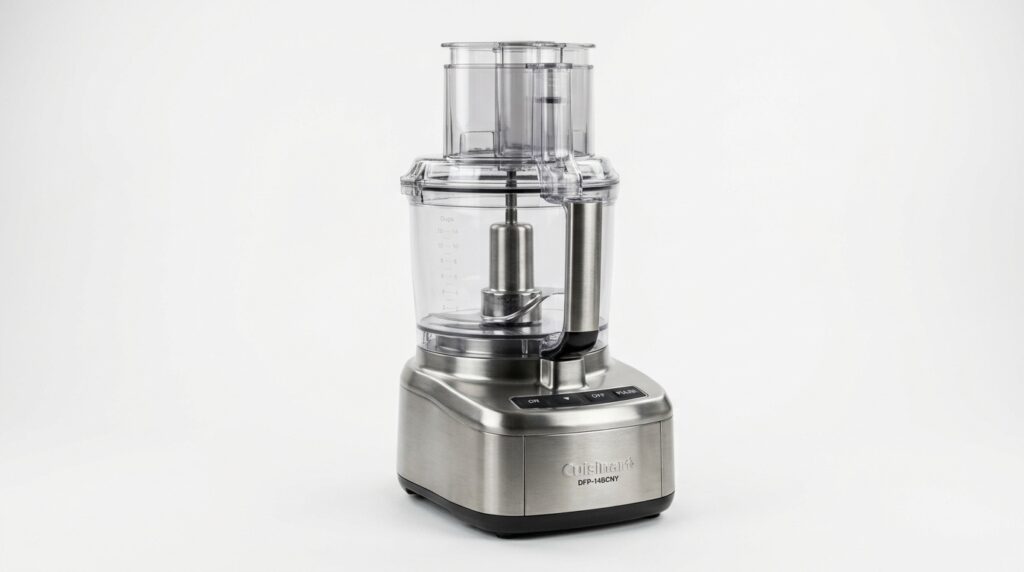
1. Cuisinart Custom 14-Cup Food Processor – Best Overall
The Cuisinart Custom 14-Cup remains the gold standard of the industry. It doesn’t rely on flashy digital screens or complex speed dials. Instead, it features a heavy-duty, commercial-grade induction motor and two simple, tactile levers: Paddle (On) and Pulse.
Why We Love It
Because it uses a direct-drive induction motor rather than a noisy belt-driven gear system, it delivers immense torque at a consistent speed. It effortlessly powers through cold pie crust butter and dense bread doughs without bogging down or walking across your countertop. The extra-large feed tube allows you to drop whole potatoes and tomatoes inside without pre-slicing them.
- Capacity: 14-cup work bowl
- Motor Power: 720-Watt Induction Motor
- Included Accessories: Stainless steel chopping/mixing blade, medium slicing disc (4mm), shredding disc, and detachable stem.
Pros & Cons
- Pros: Practically indestructible motor; whisper-quiet operation compared to competitors; excellent slicing consistency; highly durable BPA-free bowl.
- Cons: The heavy base is cumbersome to lift in and out of cabinets; lacks modern variable speed controls.
Best For: Families, serious meal preppers, and anyone looking for a lifetime appliance
2. Breville Sous Chef 16 – Best Premium Food Processor
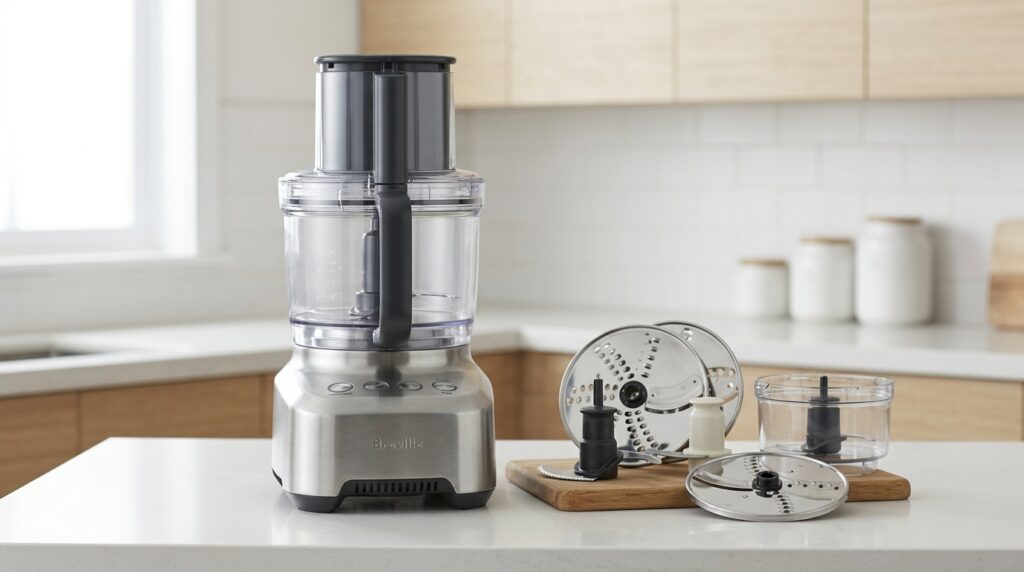
If budget isn’t a constraint and you want professional, commercial kitchen capabilities at home, the Breville Sous Chef 16 is an absolute masterpiece.
Why We Love It
The standout feature is the micro-adjustable slicing disc, which offers 24 distinct thickness settings ranging from paper-thin (0.3mm) for potato chips to thick-cut (8.0mm) for stews. Driven by a massive 1200-watt motor, it handles multi-batch doughs effortlessly. It also includes an industry-leading 5.5-inch extra-wide feed chute, cutting down on ingredient prep completely.
- Capacity: 16-cup primary bowl + 2.5-cup mini processing bowl
- Motor Power: 1200-Watt Peak Power
- Included Accessories: Adjustable slicing disc, reversible shredding disc, julienne disc, French fry cutting disc, whisking disc, micro-serrated S-blade, dough blade, mini blade, and a dedicated accessory storage case.
Pros & Cons
- Pros: Unrivaled power and build quality; micro-precision slicing control; multiple bowls for small or large tasks; includes a secure, organized storage case for safety.
- Cons: Very expensive; takes up substantial counter and cabinet space.
- Best For: Advanced home chefs, culinary enthusiasts, and frequent entertainers who cook massive batches.
3. KitchenAid 13-Cup Food Processor – Best Versatile Option
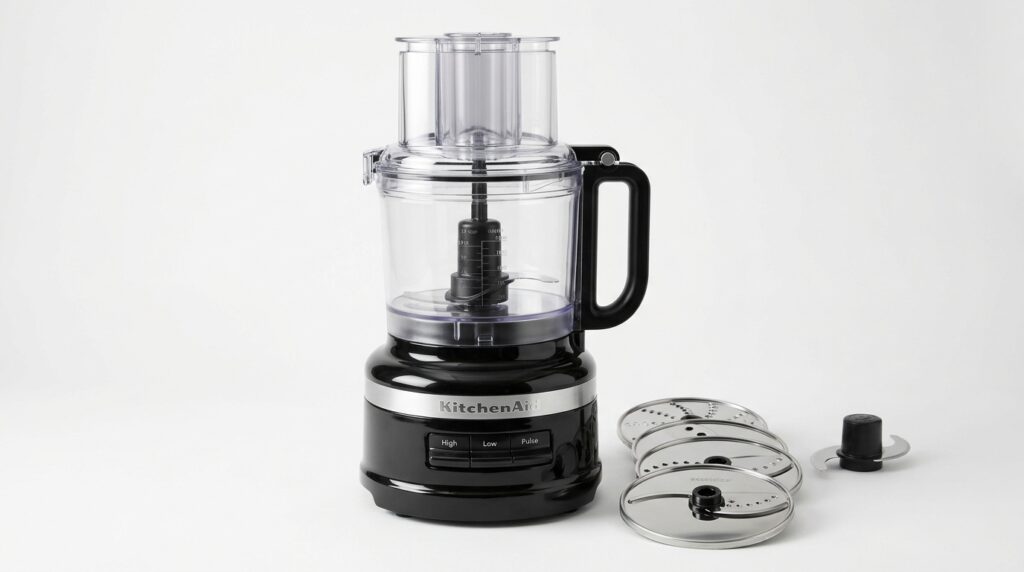
KitchenAid excels at bringing high-end functional design and user-friendly ergonomics into the home kitchen. This 13-cup model is remarkably easy to assemble compared to older, tricky twist-and-lock variants.
Why We Love It
It features a unique, leak-resistant work bowl with a click-and-latch system that eliminates difficult twisting. The multi-purpose blade and discs fit neatly inside an in-bowl storage caddy, saving you massive drawer space. The externally adjustable Exact Slice lever lets you shift from thick to thin slicing without removing the lid or changing blades mid-recipe.
- Capacity: 13-cup capacity
- Motor Power: 500+ Watts optimized for high-torque tasks
- Included Accessories: Multi-purpose blade, dough blade, externally adjustable slicing disc, reversible shredding disc, and in-bowl storage caddy.
Pros & Cons
- Pros: Beautiful, streamlined aesthetic; incredibly quiet motor operation; completely leak-resistant design for liquid purees; space-saving internal accessory storage.
- Cons: Plastic housing feels less heavy-duty than Cuisinart’s steel build.
- Best For: Everyday home cooks who value smooth organization and aesthetic style alongside powerful performance.
4. Ninja Professional Plus Food Processor – Best Value
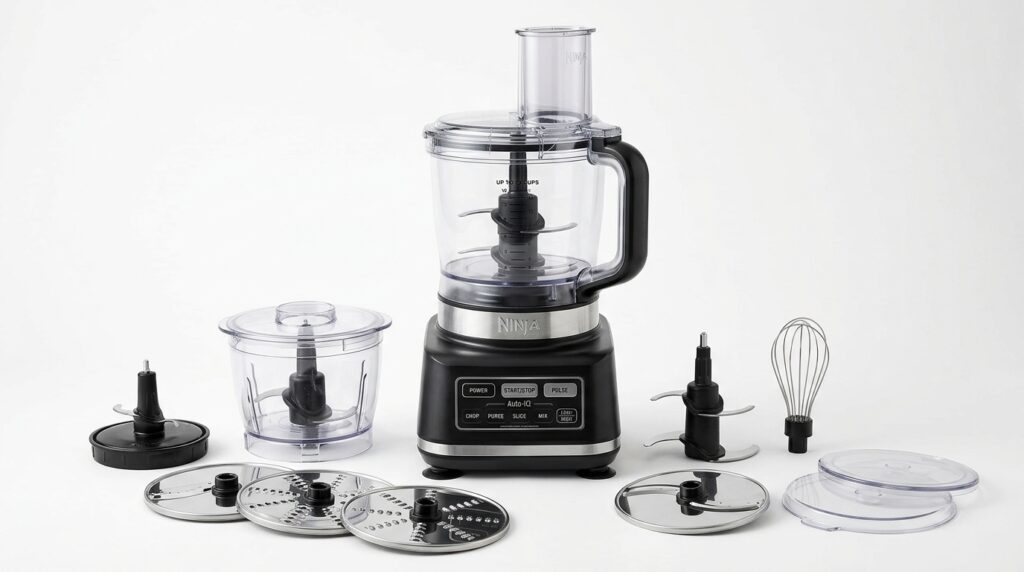
Ninja has disrupted the appliance market by delivering high-wattage, high-performance machines at a fraction of premium pricing. The Ninja Professional Plus is a modern, button-operated powerhouse.
Why We Love It
This machine features Auto-iQ Intelligent Presets, offering dedicated buttons for Chop, Puree, and Dough. You press the button, and the machine runs a tailored sequence of pulses and continuous runs, stopping automatically when the texturing is perfectly done. Its 1000-peak-watt motor punches far above its price tag, making it incredibly effective at kneading bread dough without overheating.
- Capacity: 9-cup work bowl
- Motor Power: 1000 Peak Watts
- Included Accessories: Quad chopping blade assembly, dough blade, and a reversible slicing/shredding disc.
Pros & Cons
- Pros: High-speed motor easily crushes tough roots and hard cheeses; automated pulse programs prevent accidental over-processing; excellent value for the price.
- Cons: The high-speed motor is noticeably loud; the 9-cup capacity can feel limiting for larger families.
- Best For: Modern, tech-loving cooks looking for powerful performance on a smart budget.
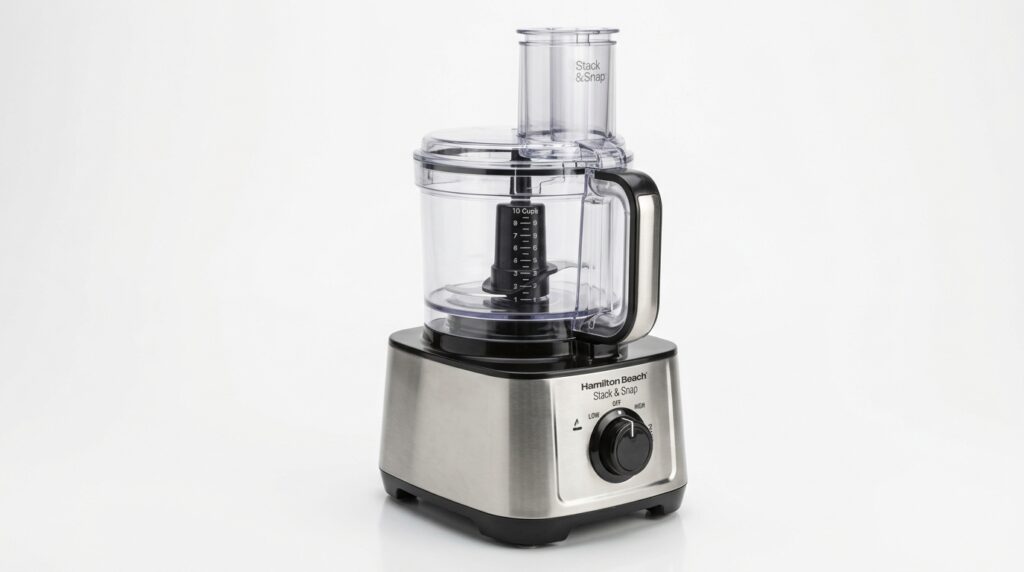
5. Hamilton Beach Stack & Snap – Best Budget Food Processor
For those who only plan to pull out a food processor occasionally for seasonal baking or quick holiday dinners, spending hundreds doesn’t make sense. The Hamilton Beach Stack & Snap offers reliable utility for under $60.
Why We Love It
Traditional food processors can puzzle users with exact locking tabs. This model completely eliminates that frustration. The bowl drops directly onto the base, and the lid snaps down securely with a simple front clip. A clear, printed function guide right on the front buttons tells you exactly which blade to use for which setting.
- Capacity: 12-cup bowl
- Motor Power: 450-Watt Motor
- Included Accessories: Stainless steel S-blade, reversible slicing/shredding disc
Pros & Cons
- Pros: Exceptionally affordable; highly intuitive no-twist assembly; large capacity for the price point; lightweight and easy to pull out of deep cabinets.
- Cons: The motor can struggle or heat up under heavy, dense bread doughs; plastic components feel thin.
- Best For: Beginners, college students, or occasional cooks who want large capacity without breaking the bank.
How do you Choose the Right Food Processor?
1. Capacity Rules
- 3 to 4 Cups (Mini): Best for small tasks like mincing garlic, chopping a single onion, or making small batches of baby food.
- 7 to 10 Cups (Mid-Size): Perfect for couples, individuals, or small households making quick evening dinners.
- 12 to 14 Cups (Large): The ultimate sweet spot. Ideal for typical families, batch cooking, and processing full blocks of cheese or pie dough.
- 16 Cups (Extra-Large): Reserved for batch baking, heavy meal prep, or commercial entertaining.
2. Motor Power & Torque
Look for a minimum of 400 watts for basic chopping and pureeing. However, if you plan to shred hard cheeses like Parmesan, grind homemade nut butter, or knead thick pizza crusts, prioritize models with 700 to 1200 watts of high-torque power. A weak motor will overheat, smoke, or burn out when handling dense mixtures.
3. Attachment Flexibility
While every model comes standard with a universal chopping S-blade, premium options offer incredible versatility with extra tools:
- Dough Blade: A plastic blade engineered to pull and turn dough rather than cutting it.
- Adjustable Slicing Disc: Lets you tune the thickness of your cuts without swapping hardware.
- Dicing Kits: Grid blades that cleanly square your vegetables into perfect uniform cubes—ideal for commercial-looking salads and salsas
Food Processor vs. Blender: What’s the Real Difference?
Many home cooks mistakenly assume these appliances are interchangeable. They are actually fundamentally different tools built for entirely separate textures.
The Golden Rule: Blenders are designed for liquids and high-speed pulverization. Food processors are designed for dry or solid ingredients that need structural shaping, chopping, or kneading.
| Task | Food Processor | Blender |
| Chopping onions & carrots | Yes (Crisp, even pieces) | No (Turns them into mush/liquid) |
| Kneading bread/pizza dough | Yes (Using low-speed torque) | No (Will jam the blade housing) |
| Shredding cheese or potatoes | Yes (Using specialized discs) | No (Impossible) |
| Making green smoothies & milkshakes | No (Will leak out of the lid) | Yes (Creates smooth vortex emulsions) |
| Crushing ice for frozen margaritas | No (Dulls the blades) | Yes (High RPM pulverization) |
Maintenance Tips to Extend the Appliance Life
To protect your kitchen investment and keep your stainless steel blades razor-sharp, practice these basic maintenance rules:
- Wash Blades Promptly: Acidic ingredients like tomatoes, onions, and citrus juices can micro-corrode stainless steel over time if left sitting. Rinse blades immediately after use.
- Hand-Wash the Plastic Bowls: Even if a manufacturer labels components as “dishwasher safe,” the high heat of modern dishwasher drying cycles can warp plastic rims and make locking mechanisms brittle over time. Hand-washing extends their lifespans significantly.
- Pulse Dense Ingredients: Instead of holding the “On” button down and forcing the motor to strain against massive blocks of hard food, use short, sharp pulses. This allows the food to drop back down into the blades evenly.
- Wipe the Base: Never submerge the motor base in water. Simply wipe down the exterior housing with a damp microfiber cloth after every use.
Frequently Asked Questions (FAQs)
Can a food processor be used as a juicer?
Not directly. A food processor grinds whole fruits and vegetables into a thick puree, retaining all the solid fiber and pulp. To extract clear juice, you would have to manually pour the resulting puree through a fine nut milk bag or cheesecloth.
Why is my food processor vibrating or moving on the counter?
This usually happens when processing dense, sticky mixtures like bread dough or grinding nuts. Ensure the rubber suction feet on the base are clean, dry, and set on a completely level countertop. If it continues, pause processing and break the ingredients into smaller batches
Can I pour hot liquids into a food processor?
Be extremely cautious. Most standard food processor bowls are not completely airtight or pressurized at the top lid. Pouring boiling soup inside can cause steam to rapidly expand, spraying hot liquid out of the feed chute. Always allow soups to cool down slightly before pureeing, or use a hand immersion blender instead.
The Final Verdict: Which One Should You Buy?
For the vast majority of households, the Cuisinart Custom 14-Cup Food Processor remains our undisputed top pick. It is simple, beautifully streamlined, ultra-reliable, and features a near-indestructible commercial motor that has stood the test of time.
If you are a culinary enthusiast who demands professional-level precision and wants endless cutting options, save up for the powerhouse Breville Sous Chef 16. On the other hand, if you want unmatched power on a smart budget, the automated Ninja Professional Plus delivers top-tier value, while the Hamilton Beach Stack & Snap remains the clear choice for simple, low-cost convenience.