
Your coffee tastes off and you can’t figure out why. You bought the good beans, you measured the water perfectly, and yet that first sip still tastes like something died in your machine.
I’ve been there, and I’m going to guess your coffee maker is the actual problem, not your technique.
I learned this the hard way after ignoring my machine for almost a year.
My coffee turned bitter, my machine started gurgling like it had a cold, and I finally cracked it open to find a science experiment brewing inside. Let’s fix that for you before it gets that bad.
Why Cleaning and Descaling Actually Matters
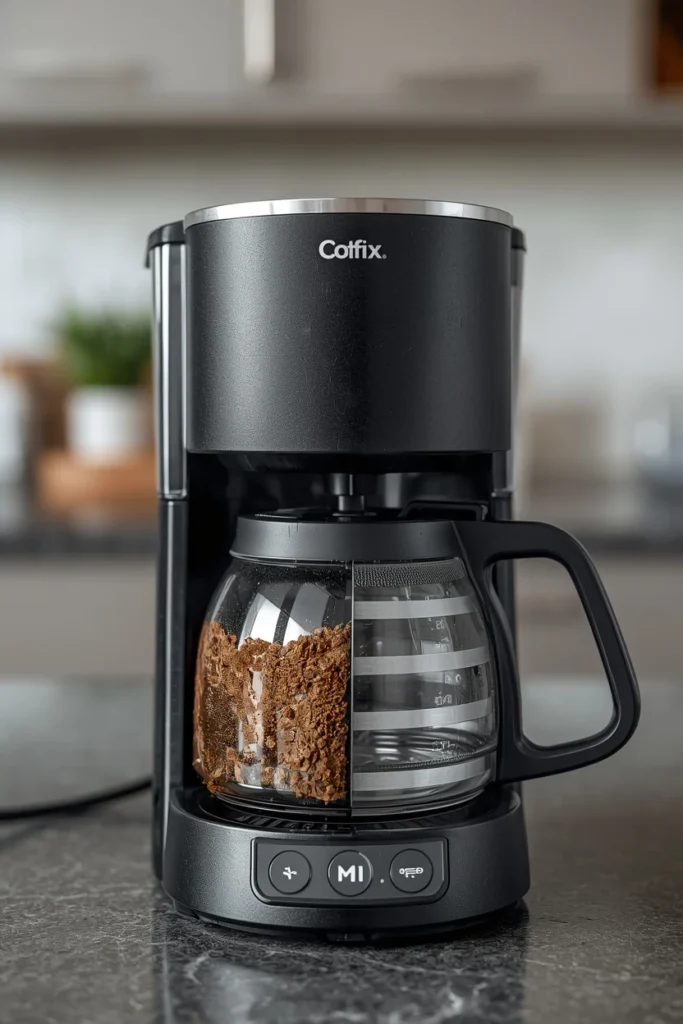
Coffee makers deal with water, heat, and organic oils every single day. That combination creates the perfect environment for mineral buildup and bacterial growth, whether you want to think about that or not.
Ever wonder why your coffee tastes weirdly sour some mornings? That’s often old coffee oils clinging to parts you never clean.
Hard water is the real villain here. It leaves behind calcium and limescale deposits inside your machine’s internal tubing, and that buildup restricts water flow over time.
Your machine has to work harder, your brew temperature drops, and your coffee ends up weak and flat.
Here’s what neglecting maintenance actually costs you:
- Slower brew cycles because scale blocks the water lines
- Weaker, sourer coffee from trapped oils and residue
- Shorter machine lifespan since parts corrode or clog permanently
- Musty smells that no amount of ground coffee can mask
None of that sounds appealing, right? Good, because it isn’t. Let’s talk about how often you actually need to deal with this.
How Often Should You Clean vs Descale
People mix these two tasks up constantly, and honestly, I get why. They sound similar but they solve completely different problems.
Cleaning removes coffee oils, grounds, and everyday grime from removable parts. Descaling dissolves mineral deposits that build up inside the machine’s internal components.
You need both, and you need them on different schedules.
Daily and Weekly Cleaning
Rinse the carafe, basket, and any removable parts after every brew. It takes thirty seconds and saves you from that stale, oily smell later. Once a week, wash these same parts with warm soapy water instead of a quick rinse.
Monthly Descaling
Descale your machine once a month if you have hard water, or every two to three months if your water is naturally soft. I know that sounds like a lot, but trust me, your taste buds will thank you.
If you’re not sure how hard your water is, a cheap test strip from the hardware store settles the debate fast.
What You’ll Need Before You Start
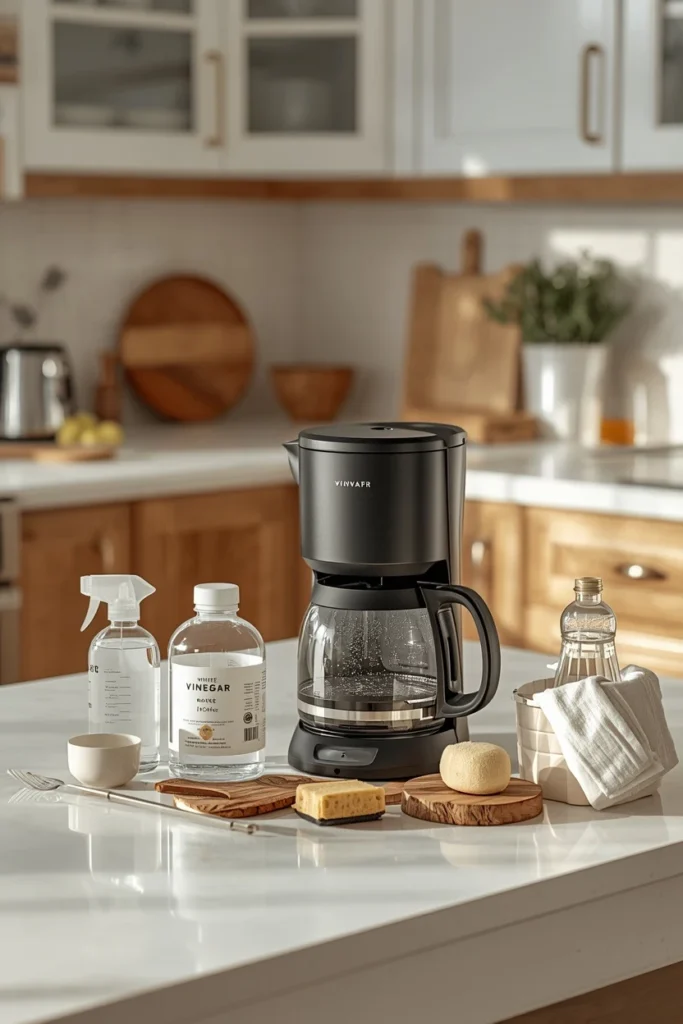
You don’t need fancy equipment for this, and I’d argue the simplicity is part of the appeal. Grab these basics before you get started:
- White vinegar or a descaling solution (vinegar works great and costs almost nothing)
- Fresh water for rinsing cycles
- A soft sponge or brush for scrubbing removable parts
- Dish soap for the weekly clean
- A microfiber cloth for wiping down the exterior
Some people swear by commercial descaling powders instead of vinegar. I’ve used both, and honestly, vinegar does the job just as well for most home machines.
Save the fancy stuff for machines with sensitive internal seals, like some espresso makers, where manufacturers specifically warn against acidic solutions.
Step-by-Step Guide to Cleaning Your Coffee Maker
Cleaning the Removable Parts
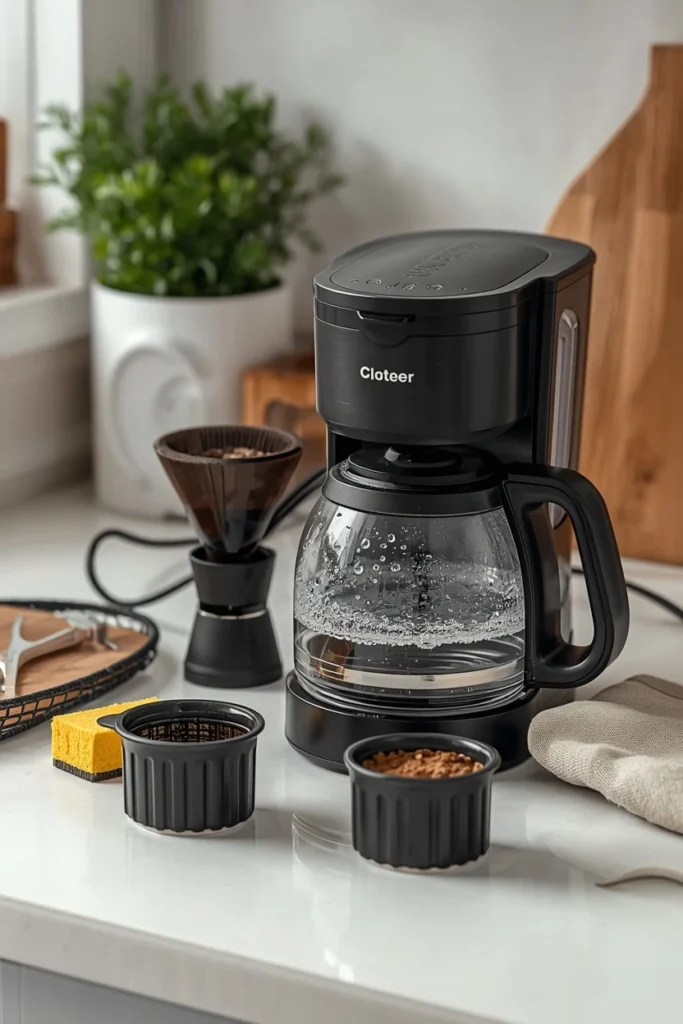
Pull out the carafe, filter basket, and any detachable pieces first. Wash them with warm water and dish soap, paying extra attention to any spots where coffee oils tend to collect.
Rinse everything thoroughly since soap residue in your coffee is nobody’s idea of a good morning.
Let every piece air dry completely before putting the machine back together. Trapped moisture invites mold, and nobody signed up for that surprise.
This step alone fixes a surprising amount of “why does my coffee taste bad” complaints.
Wiping Down the Exterior and Hot Plate
Unplug your machine before cleaning the exterior, because safety first, obviously.
Wipe down the outer casing with a damp microfiber cloth to catch dust, splashes, and whatever mystery substance always seems to end up on kitchen appliances.
Clean the hot plate separately since burnt-on coffee residue there can actually affect brewing temperature.
Don’t forget the area around the drip tray either. Coffee grounds and spilled liquid love to hide there, and that buildup attracts more grime than you’d expect.
Step-by-Step Guide to Descaling Your Coffee Maker
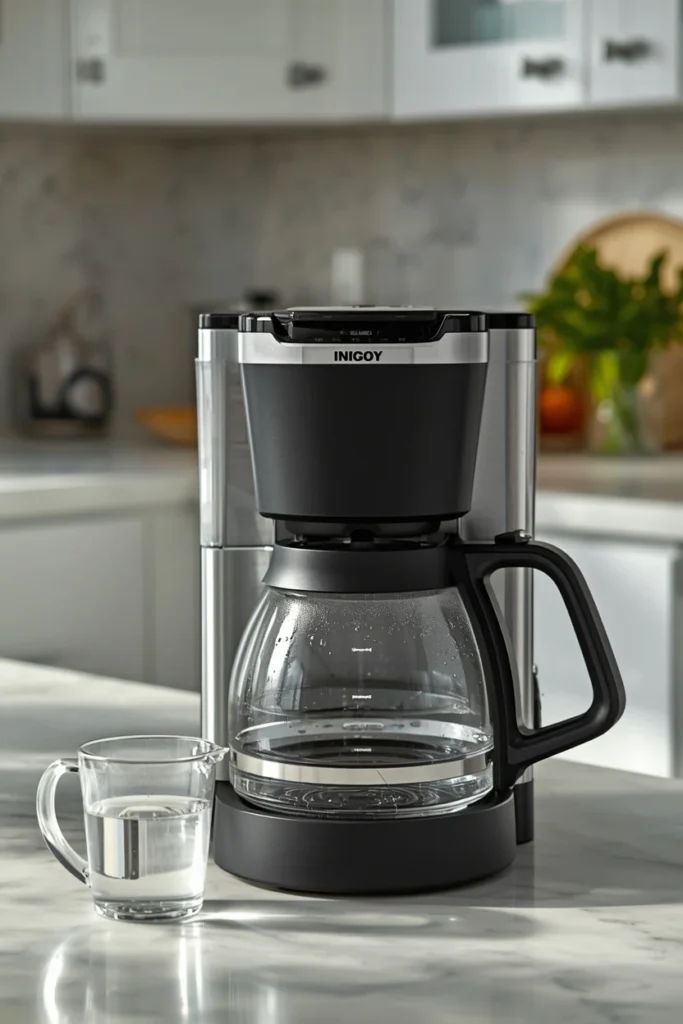
This is the part people skip, and it’s exactly the part that matters most. Descaling clears out the mineral deposits hiding where you can’t see them, deep in the water lines and heating element.
- Mix your solution. Combine equal parts white vinegar and water, filling the reservoir as if you were brewing a full pot.
- Run a brew cycle halfway. Start the brew, then stop the machine partway through and let the solution sit in the lines for about thirty minutes. This gives the vinegar time to actually break down the scale instead of rushing through.
- Finish the brew cycle. Let the rest of the vinegar solution run through completely into the carafe.
- Run two to three cycles of plain water. This step matters more than people realize, because nobody wants vinegar-flavored coffee tomorrow morning. Keep rinsing until you can’t smell vinegar anymore.
- Clean the removable parts again. Wash the carafe and filter basket one more time to catch any loosened scale.
Simple, right? It takes maybe an hour total, most of which is just waiting around while your machine does the actual work.
Comparing Vinegar vs Commercial Descalers
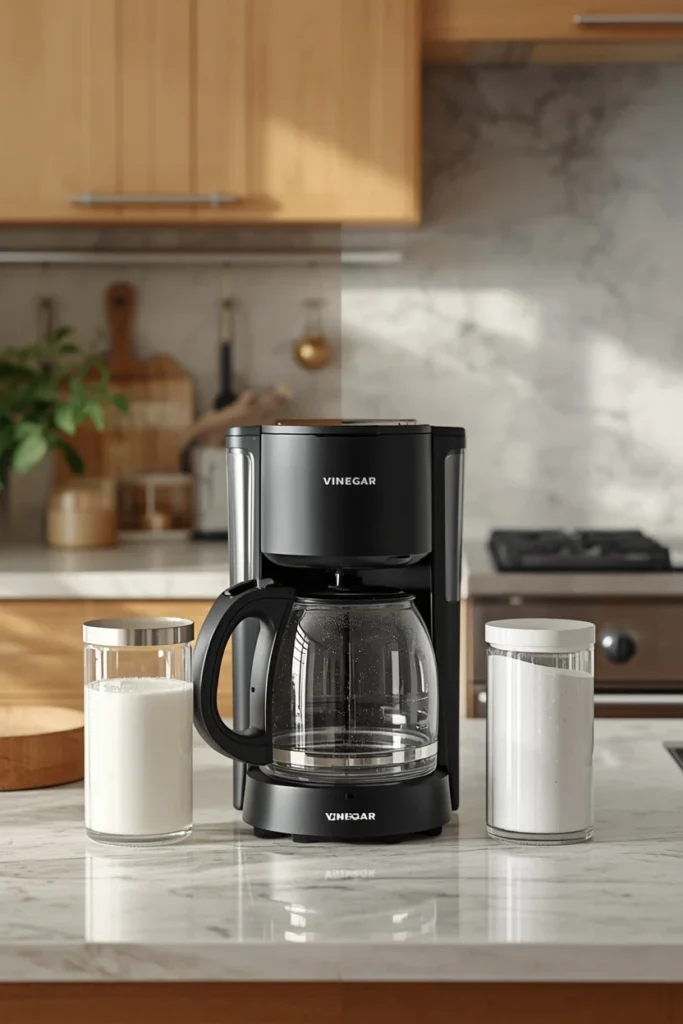
I get asked this constantly, so let’s settle it here. Both options work, but they suit different situations.
Vinegar:
- Costs next to nothing and sits in most kitchens already
- Works well for standard drip coffee makers
- Requires extra rinsing cycles to remove the smell completely
- Can be too acidic for some espresso machines with delicate seals
Commercial Descalers:
- Formulated specifically for coffee machine components
- Often rinse away faster and leave less odor behind
- Cost more than vinegar, though not dramatically so
- Tend to be the manufacturer-recommended choice for premium machines
I personally use vinegar for my basic drip machine and switch to a commercial descaler for my espresso machine, since the manual specifically asked me to avoid vinegar.
Check your owner’s manual before choosing, because some manufacturers get genuinely upset about acidic cleaners in specific machine types.
Signs Your Coffee Maker Needs Attention Right Now
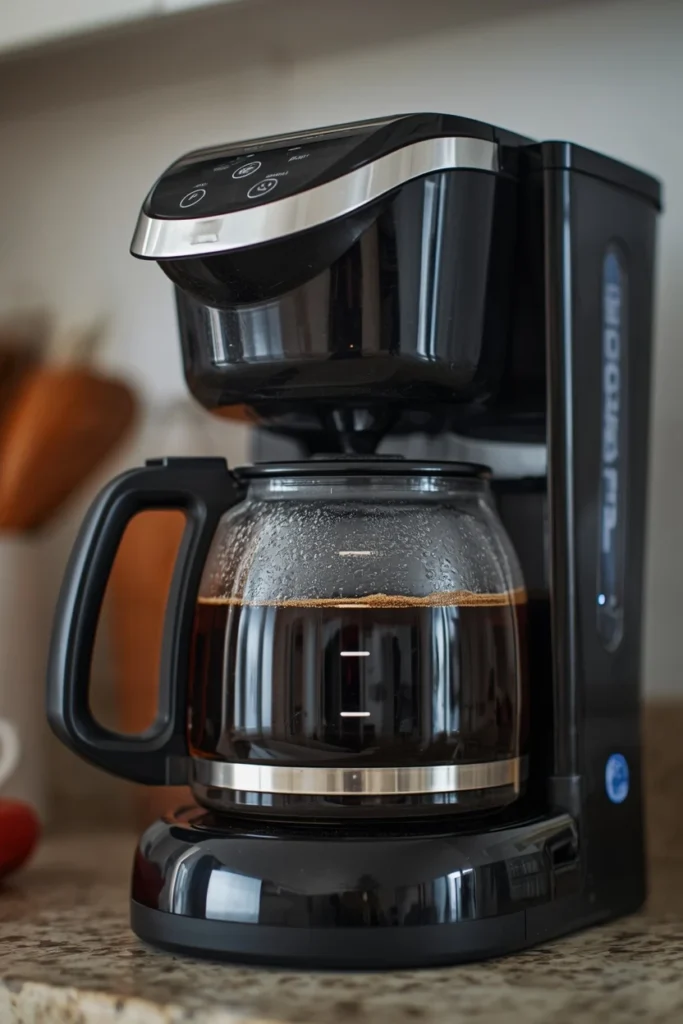
Sometimes you don’t need to wait for a monthly schedule. Your machine will tell you when something’s wrong if you pay attention.
Watch for these red flags:
- Brewing takes noticeably longer than usual
- You notice white, flaky residue around the water reservoir
- Coffee tastes bitter or oddly sour despite using fresh beans
- The machine makes unusual gurgling or hissing noises
- Steam or water leaks appear from the sides during brewing
Any one of these means it’s time to clean or descale immediately, not next weekend. I ignored a gurgling noise for two weeks once, and by the time I addressed it, my pump was struggling. Don’t be like me.
Simple Habits That Keep Your Machine Running Longer
A few small habits prevent most of these problems before they start. Building these into your routine takes almost no extra time once they become second nature.
- Use filtered water instead of straight tap water if your area has hard water
- Empty the reservoir when you’re not using the machine for several days
- Never leave used grounds sitting in the basket overnight
- Descale on a calendar reminder so you actually remember to do it
These habits sound almost too simple to matter, but they genuinely extend your machine’s life by years.
I’ve kept the same drip coffee maker running strong for four years now using exactly this routine, while my old machine died within eighteen months of neglect.
Wrapping It Up
Your coffee maker isn’t asking for much. A quick weekly wash and a monthly descaling session keep it running smoothly and keep your coffee tasting the way it should.
Skip these steps and you’re basically brewing coffee through a pipe full of chalk, which explains a lot about that bitter aftertaste you’ve been blaming on your beans.
Set a reminder on your phone right now, seriously, do it before you forget again. Your future self, sipping a genuinely great cup of coffee, will thank you for it.
How Often Should You Descale A Coffee Maker
Descale your coffee maker once a month if you have hard water, or every two to three months if your water is soft. Machines used daily need more frequent attention than machines used only on weekends.
Can You Use Vinegar Instead Of A Descaling Solution
Yes, white vinegar mixed with equal parts water works well for most standard drip coffee makers. Just run two to three rinse cycles with plain water afterward to remove any lingering smell or taste.
What Happens If You Never Clean Your Coffee Maker
Mineral deposits build up inside the water lines, coffee oils turn rancid in the basket, and bacteria can grow in damp areas. Over time, this leads to weaker brews, bad odors, and a shorter machine lifespan.
Is It Safe To Descale An Espresso Machine With Vinegar
Not always, since some espresso machines have internal seals that vinegar’s acidity can damage over time. Check your owner’s manual first, and use a commercial descaler if the manufacturer recommends it.
How Do You Know If Your Coffee Maker Needs Descaling
Watch for slower brew times, white flaky residue near the reservoir, bitter or sour tasting coffee, and unusual gurgling noises. Any of these signs means it’s time to descale right away instead of waiting for your usual schedule.