Kitchen appliances have become smarter than ever. From refrigerators that create shopping lists to smart ovens you can control from your phone, technology is transforming modern kitchens. One appliance that has seen massive evolution is the humble microwave
But with higher price tags than traditional models, many buyers ask the same question: Are smart microwaves actually worth the investment in 2026?
The answer depends entirely on your cooking habits, budget, and how much you value seamless convenience. In this comprehensive guide, we’ll explore everything you need to know before upgrading your kitchen.
What Is a Smart Microwave?
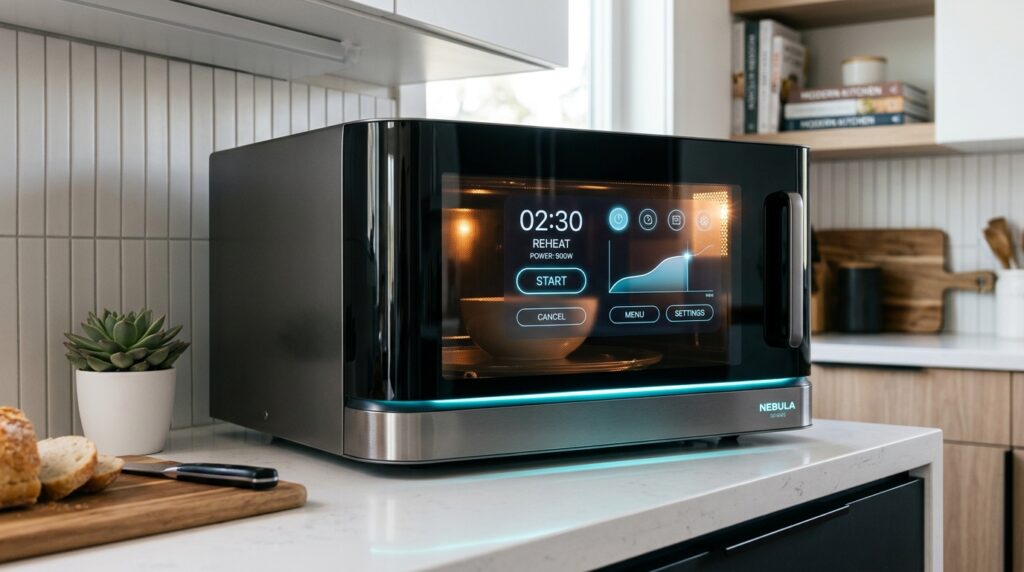
A smart microwave is a microwave oven that connects to your home’s Wi-Fi network. Unlike standard microwaves that rely purely on manual button presses, smart models communicate dynamically with your smartphone, smart home ecosystem, and even online databases.
Most modern smart microwaves offer features such as:
- Wi-Fi Connectivity: Remote access through dedicated home apps.
- Voice Control: Hands-free operation via virtual assistants.
- Scan-to-Cook Technology: Automatically scanning food barcodes to configure optimal settings.
- Multi-Stage Presets: Programs that seamlessly transition from defrosting to baking.
- Smart Notifications: Real-time push notifications sent directly to your phone or smart watch.
- Firmware Updates: Ongoing software patches that improve power management and add new presets.
How Do Smart Microwaves Work?
Once connected to your 2.4 GHz or 5 GHz Wi-Fi network, the microwave pairs with a companion mobile app (such as Samsung SmartThings, LG ThinQ, or GE SmartHQ).
Through the app, users can:
- Start and Monitor Remotely: Send commands to start, pause, or adjust cooking times.
- Access Cloud Recipes: Download custom cooking programs directly to the machine.
- Scan Barcodes: Use your phone’s camera to scan frozen meals; the app automatically pulls the exact wattage directions and sends them to the appliance.
Many models natively integrate with major smart home platforms:
- Amazon Alexa: “Alexa, reheat my coffee for one minute.”
- Google Assistant: “Hey Google, defrost two pounds of chicken.”
Key Benefits of Smart Microwaves
1. True Hands-Free Voice Commands
If your hands are covered in flour or grease from prepping dinner, you don’t have to touch a pristine control panel. Simply instruct your smart speaker to add time, pause cooking, or set specific power levels.
2. Eliminating Guesswork with Scan-to-Cook
No more squinting at the micro-text on the back of a frozen meal box. Scan-to-Cook technology automatically manages the fluctuating power stages required for complex frozen dishes, ensuring your food doesn’t come out ice-cold in the center.
3. Multi-Functional 3-in-1 and 4-in-1 Capabilities
Many high-end smart microwaves in 2026 double as air fryers, convection ovens, and broilers. Smart apps can coordinate these heating elements consecutively, making it easy to defrost, bake, and crisp a dish using a single preset command.
4. Smart Home Automation & Routines
Your microwave can trigger other events in your home. For example, you can set a routine where your kitchen lights brighten to 100% when cooking begins, and your living room smart speaker broadcasts an announcement when your meal is ready.
5. Adaptive Inverter Technology
Traditional microwaves cycle power on and off (e.g., alternating between 100% and 0% power to simulate a 50% setting). Premium smart microwaves utilize true inverter technology, delivering a continuous, steady stream of low power. This guarantees uniform defrosting without cooking the edges of your meat.
Disadvantages of Smart Microwaves
While impressive, they aren’t the perfect choice for everyone.
- Higher Upfront Cost: Smart microwaves typically cost between $180 and $450, while highly reliable standard models often sell for $70 to $150.
- Wi-Fi Dependence: While the microwave functions manually without an internet connection, you lose access to remote management, custom app notifications, and voice integration if your Wi-Fi network drops.
- The Learning Curve: Syncing apps and pairing smart assistants can be intimidating for less tech-savvy users who prefer a classic mechanical dial or a single “Add 30 Sec” button.
- Privacy Considerations: Connected devices collect usage diagnostics to manage app updates. Buyers should stick to reputable manufacturers that guarantee encrypted data and offer regular security patches.
Smart vs. Traditional Microwaves: Quick Comparison
| Feature | Smart Microwave (2026 Models) | Traditional Microwave |
| Average Price | $180 – $450 | $70 – $150 |
| Control Interface | App, Voice, and Touch Panel | Physical Buttons / Dials Only |
| Cooking Precision | Automated Humidity Sensors & Barcode Scans | Manual Timer & Basic Presets |
| Versatility | Often combines Convection, Air Fry, & Grill | Primarily Microwave Heating |
| Upgradability | Receives over-the-air firmware updates | Features remain fixed for life |
Best Smart Microwave Brands in 2026
1. Panasonic (Best for Precision Cooking)
- Known for: Market-leading Inverter technology, uniform heating patterns, and ultra-reliable Genius Sensors.
- Smart Ecosystem: Integrates seamlessly across versatile kitchen setups.
- Best For: Families who rely heavily on even defrosting and multi-stage family meal prep.
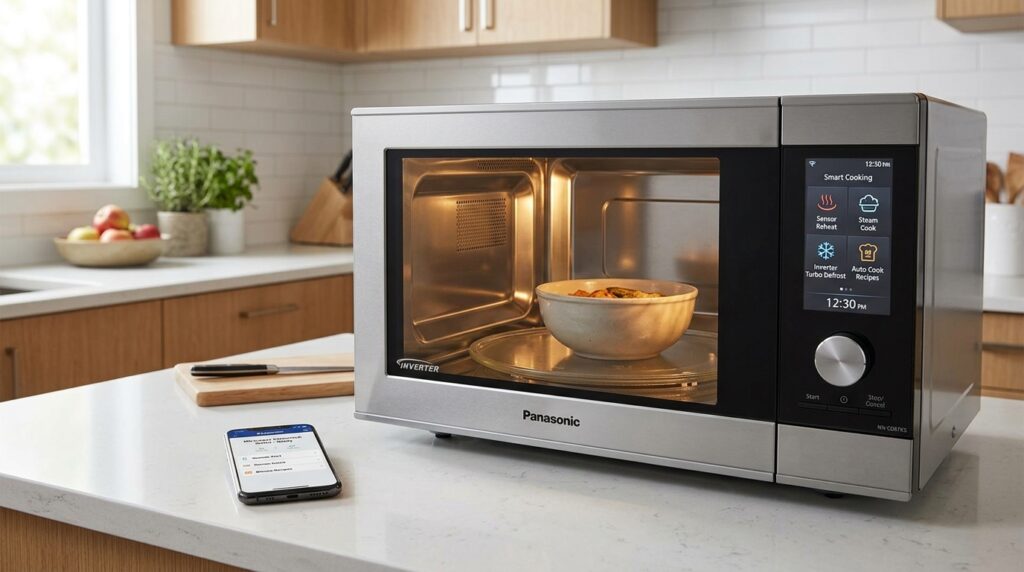
2. Toshiba (Best Value for Budget Buyers)
- Known for: Exceptional value, highly accurate smart humidity sensors, and whispered-quiet operation.
- Smart Ecosystem: Flawless app controls and direct compatibility with Amazon Alexa.
- Best For: Smart home beginners wanting high-tech features without a premium price tag.
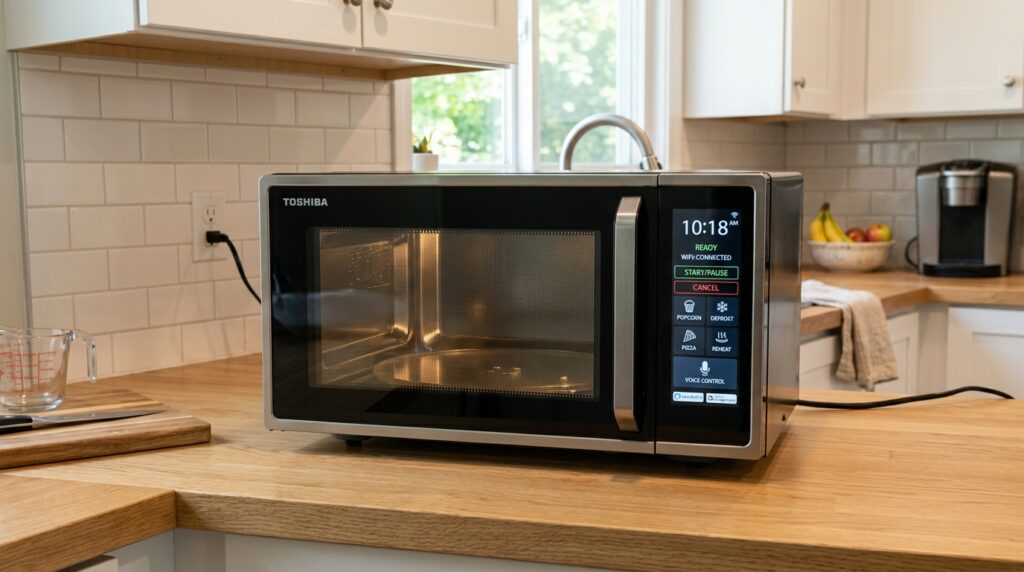
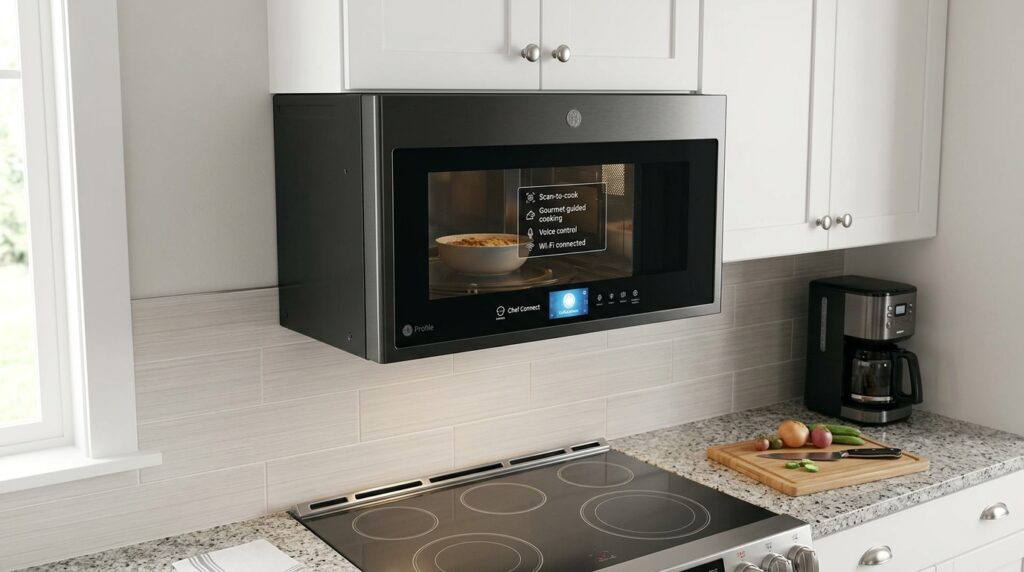
3. GE Profile (Best for Cutting-Edge Automation)
- Known for: Advanced Scan-to-Cook databases, massive recipe libraries, and heavy-duty over-the-range ventilation setups.
- Smart Ecosystem: Driven by the comprehensive SmartHQ platform.
- Best For: Smart home enthusiasts who want ultimate automation and zero guesswork.
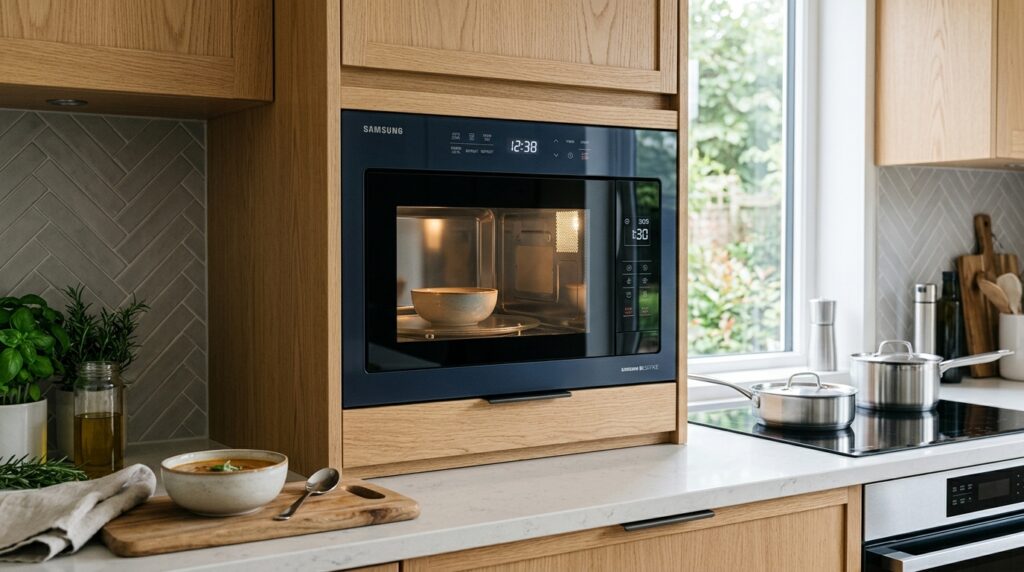
4. Samsung (Best for Ecosystem Integration)
- Known for: Sleek modern aesthetics, durable ceramic enamel interiors that resist scratching, and eco-conscious power profiles.
- Smart Ecosystem: Fully native within the Samsung SmartThings app.
- Best For: Homes already utilizing Samsung appliances, TVs, or smartphones.
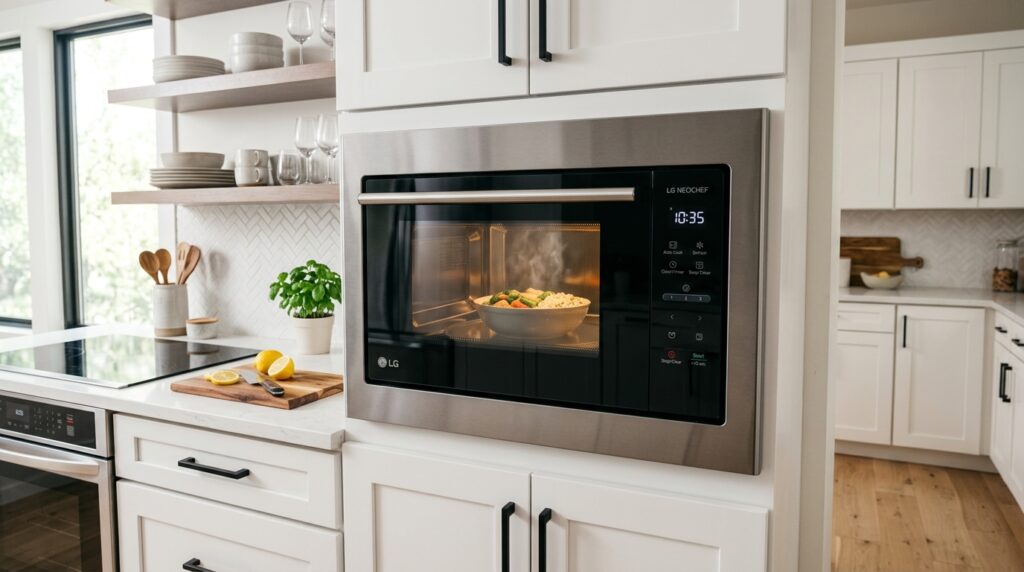
5. LG (Best for Multi-Tasking Households)
- Known for: Smart Inverter technology, EasyClean interiors, and sleek “SmoothTouch” glass interfaces.
- Smart Ecosystem: Driven by LG ThinQ, allowing appliance-to-appliance communication (e.g., syncing with your LG Smart Range).
- Best For: Busy households looking for rapid, streamlined meal prep.
Who Should Buy a Smart Microwave?
A smart microwave is an excellent addition to your kitchen if you:
- Actively use Amazon Alexa or Google Home routines.
- Cook a high volume of frozen dinners or pre-packaged meals.
- Want an appliance that can double as a secondary oven or air fryer.
- Value real-time monitoring so you can leave the kitchen while food is heating.
Who Should Skip It?
A standard, non-connected microwave is likely your best option if you:
- Only use a microwave to pop popcorn or reheat morning coffee.
- Work with a strict budget and want maximum simplicity.
- Find app configurations and smart setups frustrating.
Essential Features to Look for Before Buying
Before clicking “Add to Cart,” make sure to verify these critical hardware and software specifications:
Capacity & Installation Type
- 0.7 to 0.9 cu. ft.: Best for small apartments, studio kitchens, or dorm rooms.
- 1.2 to 1.6 cu. ft.: The sweet spot for mid-sized families and standard dinner plates.
- 2.0+ cu. ft.: Massive over-the-range or built-in configurations ideal for large families.
Wattage Performance
Always target a microwave with a sufficient power profile. Higher wattage translates directly to faster, more consistent heating.
- 700–800 Watts: Budget tier; slower cooking times.
- 900–1,000 Watts: Industry standard for average daily cooking.
- 1,100–1,200 Watts: Premium tier; optimal for rapid heating and advanced sensor programs.
Sensor Cooking vs. Timed Cooking
Avoid models that only rely on time. Look for Smart Humidity Sensors. These sensors actively measure the steam emitted by your food during the heating cycle and dynamically adjust the remaining cook time to prevent food from drying out.
Frequently Asked Questions
Can I use a smart microwave if my internet goes down?
Yes. Every smart microwave retains a fully functioning physical keypad. If your Wi-Fi goes down, it will operate just like a traditional microwave, though voice controls and smartphone alerts will be temporarily disabled.
Do smart microwaves save money on electricity bills?
Slightly. Most 2026 models feature aggressive Eco Modes that minimize standby power consumption when the LED display isn’t actively required. While the individual savings are modest, it contributes to overall household efficiency.
What is the average lifespan of a smart microwave?
With proper care and routine cleaning of the interior cavity, a premium smart microwave from a trusted manufacturer will last between 8 to 12 years.
Final Verdict: Are They Worth It?
In 2026, smart microwaves are no longer just an overpriced gimmick—they have matured into highly practical, multi-functional kitchen powerhouses. If you already use smart speakers, appreciate remote convenience, or love the versatility of a microwave that can air fry and convection bake, investing in a smart model is well worth the upgrade.
However, if your culinary needs are strictly limited to basic reheating and your budget is tight, a reliable traditional microwave will still get the job done effectively.