
You open the freezer and pull out something you bought three weeks ago. It’s now an unrecognizable brick of freezer-burned regret. Sound familiar? A good freezer should do one job: keep your food tasting like food, not like ice.
Choosing the right freezer isn’t just about picking the cheapest one that fits. Capacity, temperature control, energy efficiency, and frost management all affect how long your food stays fresh.
This guide explains what matters, which freezer types suit different needs, and what to consider before spending any money.
Why Your Freezer Choice Directly Affects Food Freshness

Most people assume any freezer will do the job equally well. That assumption costs them hundreds of dollars in wasted food every year.
The truth is that temperature stability, air circulation, and frost prevention are what separate a freezer that preserves food properly from one that just keeps things cold enough to seem frozen.
Freezer burn, for example, is not caused by extreme cold. It happens when food loses moisture to the surrounding air inside the freezer, which occurs more frequently in freezers with inconsistent temperatures or poor sealing.
A freezer that fluctuates even a few degrees regularly will degrade food quality far faster than one that holds a steady 0 degrees Fahrenheit or lower.
The Ideal Freezer Temperature
This is worth knowing before anything else. The USDA recommends keeping your freezer at 0 degrees Fahrenheit (-18 degrees Celsius) or below for safe, long-term food storage.
Many budget freezers struggle to consistently hit that mark, especially when the ambient room temperature is high, like in a garage during summer.
When you shop for a freezer, look for models that specify their tested operating temperature range.
A freezer rated to operate in ambient temperatures up to 110 degrees Fahrenheit will hold your food far better in a warm garage than one rated only for standard indoor conditions.
The Main Types of Freezers and What They Do Best
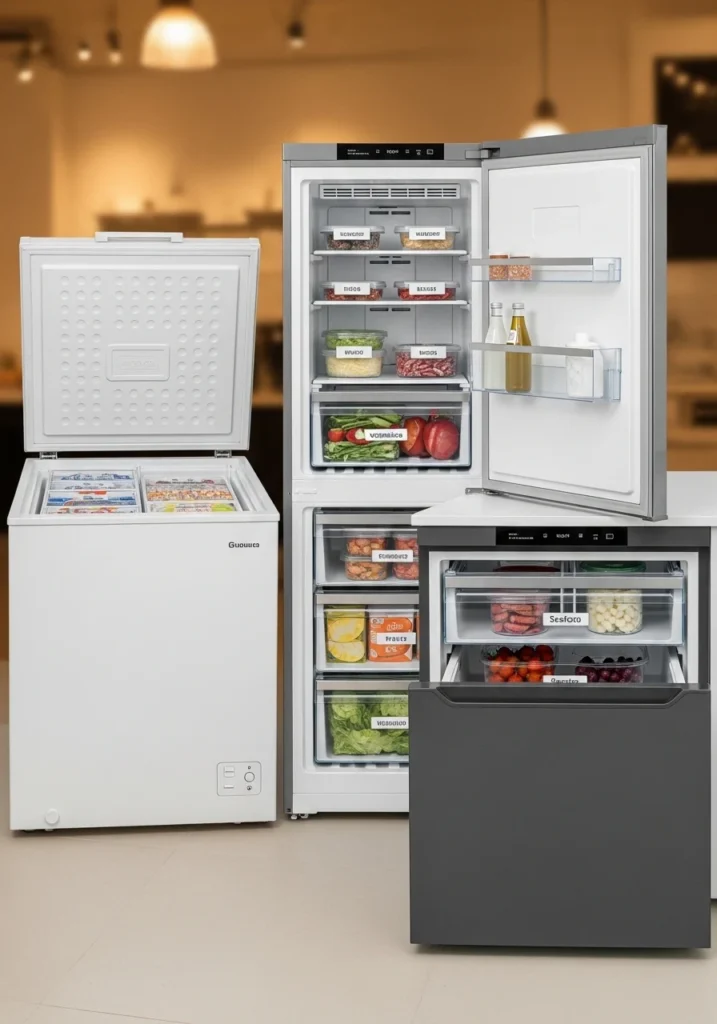
There is no single “best freezer” for everyone. Your living situation, storage needs, and budget all shape the right answer for you. Here is a clear breakdown of the main freezer types so you can figure out which one actually fits your life.
Chest Freezers
Chest freezers are the workhorses of long-term food storage, and they earn that reputation honestly. Because cold air sinks, a chest freezer retains its temperature far better than an upright every time you open the lid.
Less cold air escapes, which means less temperature fluctuation and better food preservation overall.
They also tend to offer more usable storage space per dollar than any other freezer type. The tradeoff is organization.
If you have ever tried to find one specific bag of peas buried under six months of bulk chicken purchases, you know the struggle.
Using labeled bins and baskets inside a chest freezer solves most of this problem, though it does require a little upfront effort.
Best for: Bulk buyers, families storing large quantities, anyone who meal preps seriously, or households that want the most storage per dollar spent.
Upright Freezers
Upright freezers look and function like a standard refrigerator, which makes them the most intuitive option for most people.
You get shelves, door bins, and a layout that lets you actually see what you have without excavating through layers of frozen goods.
The downside is that upright freezers lose more cold air every time you open the door because cold air falls out rather than staying put the way it does in a chest model.
This makes them slightly less efficient at maintaining consistent temperatures. However, modern upright freezers with good door seals and fast-recovery compressors handle this much better than older models did.
Best for: Anyone who values organization and easy access over maximum storage capacity, smaller households, and kitchen or utility room placement.
Drawer Freezers
Drawer freezers are a newer category that sits somewhere between convenience and capacity.
They typically come as undercounter units with pull-out drawers, and they work beautifully in kitchens where a full-size standalone freezer would be overkill.
They keep items organized by category naturally since each drawer becomes its own zone.
The capacity is limited compared to chest or full upright models, but for someone who just needs supplemental freezer space beyond what their fridge offers, a quality drawer freezer does the job with a lot of style.
Best for: Smaller households, supplemental kitchen storage, or anyone who wants freezer space without dedicating a corner of the garage to a large unit.
Refrigerator-Freezer Combos
For many households, the freezer compartment inside a standard fridge-freezer combo handles everyday needs perfectly well.
But it is worth noting that combo units prioritize refrigerator performance, and the freezer section often runs warmer than a dedicated standalone unit.
If you rely heavily on frozen food or store things for longer than a month or two regularly, a dedicated standalone freezer will preserve quality noticeably better than the freezer drawer on your fridge.
Key Features That Actually Keep Food Fresh Longer
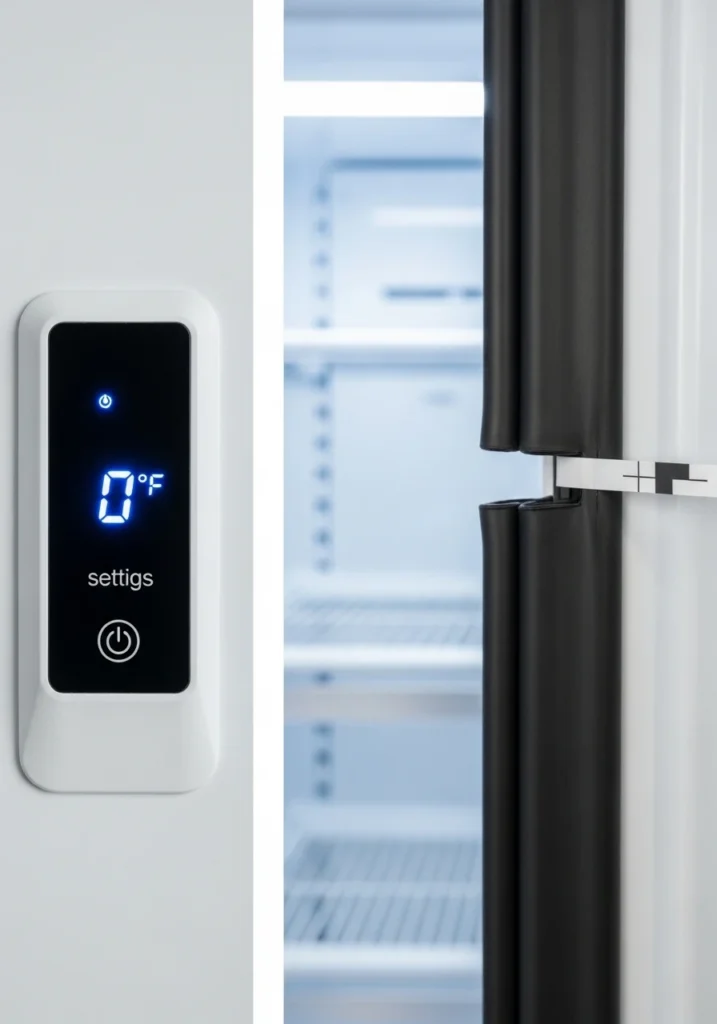
Once you decide on a freezer type, the specific features inside the unit matter a lot. Not every feature that shows up on a product page is worth paying for, so here is what genuinely makes a difference.
Manual Defrost vs. Frost-Free Technology
This is probably the biggest decision you will make beyond choosing the freezer type itself.
Manual defrost freezers build up frost over time and require you to defrost them periodically.
The upside is significant: manual defrost units tend to maintain more consistent temperatures and they are gentler on food because they do not run defrost cycles that temporarily raise the internal temperature.
Frost-free freezers run automatic heating cycles to prevent ice buildup. This is enormously convenient, no defrosting sessions required.
However, those heating cycles create minor temperature fluctuations, which can contribute to faster freezer burn on food stored for very long periods.
For food you plan to eat within a few months, a frost-free model works just fine. For very long-term storage, manual defrost wins on food quality.
Temperature Controls and Monitoring
Look for a freezer with precise, adjustable temperature controls rather than a simple dial marked “low, medium, high.” Digital controls let you set an exact temperature and know with confidence that your freezer is hitting the target.
Some newer models include built-in temperature alarms that alert you if the internal temperature rises significantly, which can save an entire freezer full of food if a power outage or door-left-open situation occurs. That feature alone is worth a premium if you store large quantities.
Door and Lid Seals
The quality of the gasket seal on a freezer door or chest lid is something most buyers overlook completely, and it is one of the most important factors in long-term performance.
A tight, well-maintained seal prevents warm air from entering and cold air from escaping, which keeps temperatures stable and reduces energy consumption.
Before buying, check reviews specifically for seal quality and longevity. A freezer with a seal that starts failing after two years will cost you far more in energy bills and wasted food than you saved on the purchase price.
Energy Efficiency Ratings
Running a freezer costs money every single month, and that cost adds up over years. Look for Energy Star certified models, which meet strict efficiency standards set by the EPA.
An Energy Star chest freezer can use as little as 100 to 200 kilowatt-hours per year, which translates to a meaningful difference on your electricity bill compared to an older or less efficient model.
Larger capacity units naturally use more energy, but the energy-per-cubic-foot figure is what matters most.
A 20-cubic-foot chest freezer that uses only slightly more energy than a 10-cubic-foot upright is a much better value proposition if you need the space.
Capacity: How Much Freezer Space Do You Actually Need?
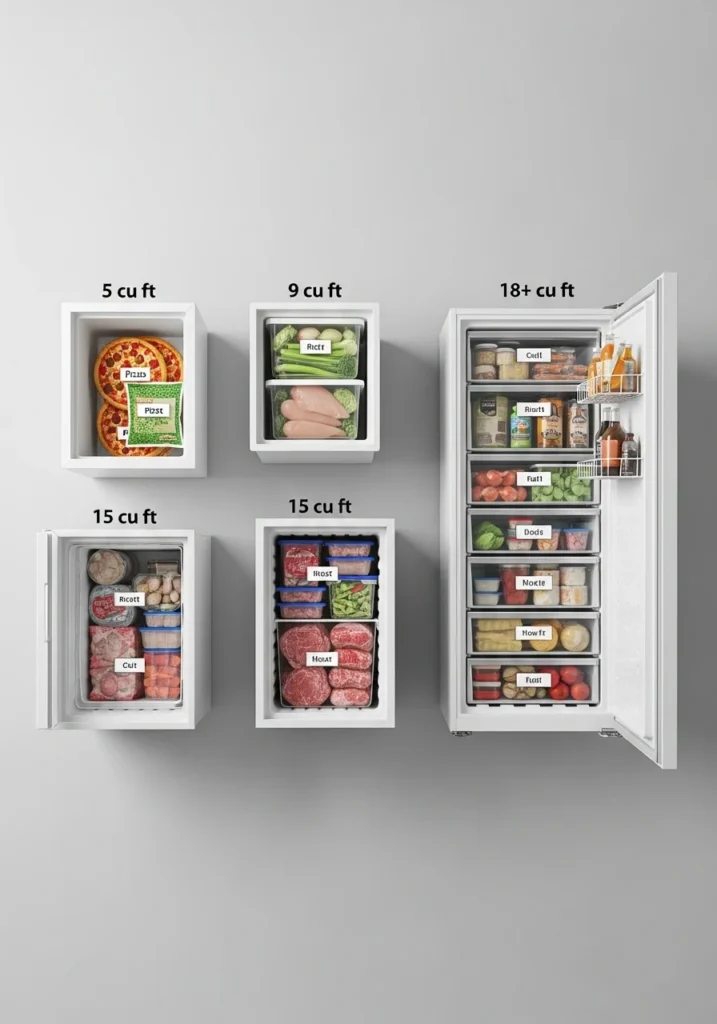
Buying too small a freezer is an obvious problem, but buying too large is also a trap many people fall into.
An oversized freezer that sits half-empty actually runs less efficiently because frozen food mass helps the unit maintain its temperature.
Here is a practical guide to sizing:
- 5 cubic feet or less: Single person or couple with light freezer use
- 5 to 9 cubic feet: Small family or moderate food stocker
- 10 to 18 cubic feet: Family of four, bulk buyers, or serious meal preppers
- 18 cubic feet and above: Large families, hunters storing game, or anyone doing significant bulk purchasing
A general industry guideline suggests roughly 1.5 cubic feet of freezer space per person in your household as a starting point. Adjust up if you buy in bulk, cook in large batches, or store seasonal produce.
Placement Matters More Than You Think
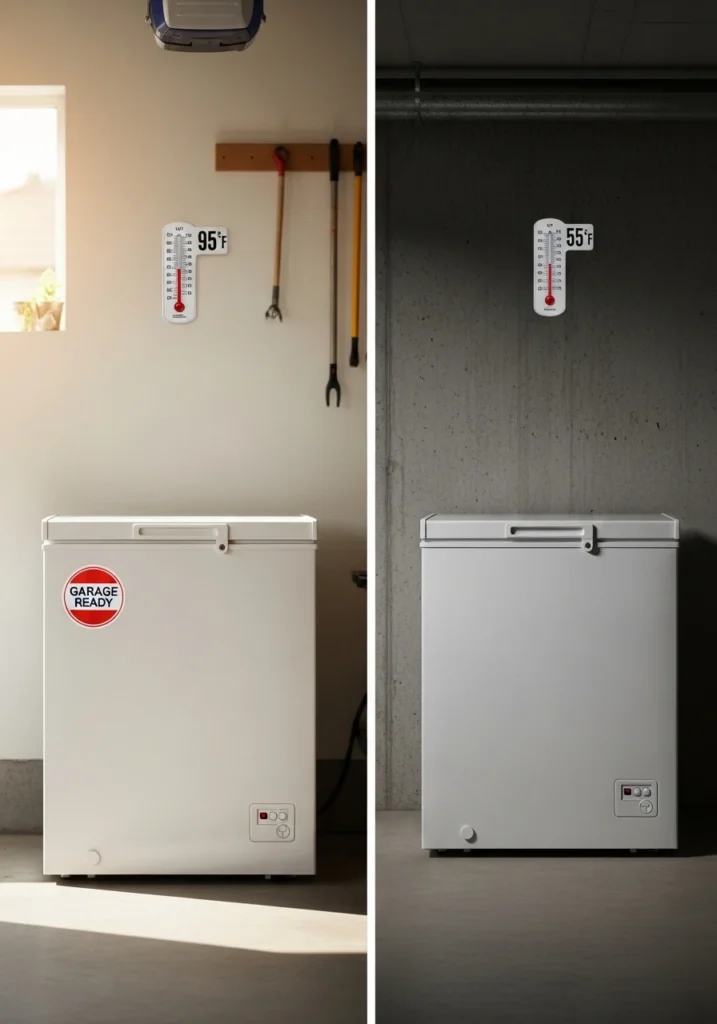
Where you put your freezer affects how well it performs and how long it lasts.
Garages are a popular choice for standalone freezers, but many budget models are not rated for the temperature extremes a garage experiences across seasons.
Look for a garage-ready freezer if you plan to keep the unit anywhere that experiences temperatures below 50 degrees Fahrenheit or above 90 degrees Fahrenheit.
Standard freezers can struggle to maintain proper internal temperatures when the ambient environment gets too cold or too hot.
Basements tend to offer more stable ambient temperatures year-round, making them an excellent location for a standalone freezer if you have the space.
Wherever you place the unit, leave a few inches of clearance on all sides for ventilation so the compressor does not work harder than it needs to.
Brands Worth Paying Attention To
Without endorsing any single product outright, a few manufacturers consistently earn strong marks for freezer performance and reliability.
Chest freezer standouts: Frigidaire, Midea, and GE consistently produce well-reviewed chest freezers across multiple capacity ranges, with solid temperature performance and reasonable energy efficiency.
Upright freezer standouts: Whirlpool and Maytag have strong reputations for long-lasting upright models.
Maytag in particular carries a reputation for durable compressors, which directly affects temperature consistency over years of use.
Premium options: For those willing to spend more, brands like Liebherr and Beko offer freezers with exceptional temperature uniformity and energy efficiency, particularly popular among serious home cooks and people storing high-value food items.
Getting the Most Out of Whatever Freezer You Choose
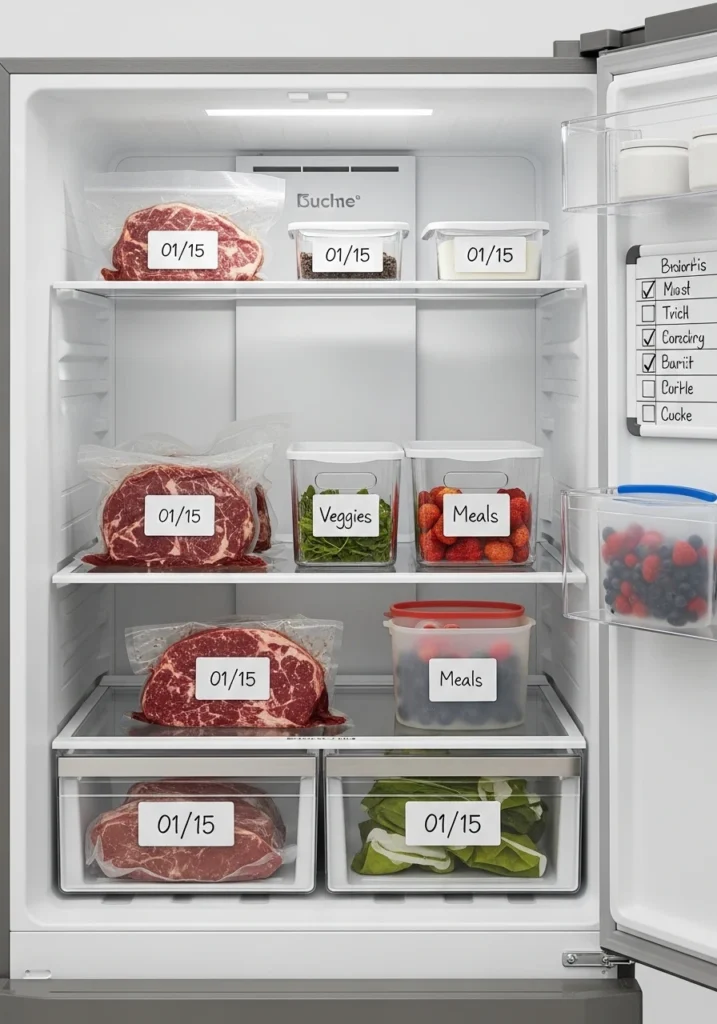
Even a great freezer performs better when you use it well. A few habits make a real difference in how long your food stays fresh:
- Wrap food properly using freezer-safe bags, vacuum seal bags, or heavy-duty freezer wrap. Standard plastic wrap lets in too much air.
- Label everything with the date so you rotate stock and use older items first.
- Keep the freezer at least two-thirds full for the most efficient temperature maintenance.
- Cool food before freezing it rather than putting hot items directly into the freezer, which raises the internal temperature and stresses other frozen items.
- Check door seals every six months by closing the door on a piece of paper and trying to pull it out. If it slides out easily, the seal needs attention.
The Bottom Line on Finding the Best Freezer
The best freezer to keep food fresh longer is one that matches your actual storage needs, holds a consistent temperature, fits your available space, and runs efficiently enough that the operating cost does not cancel out the money you save by buying in bulk.
Those four criteria will narrow down your options considerably.
A chest freezer with manual defrost wins on pure food preservation performance and energy efficiency. An upright frost-free model wins on convenience and organization.
A drawer freezer wins on kitchen integration. None of them is objectively “best” because the right answer depends entirely on how you live.
Take the time to measure your space, think honestly about how much frozen food you actually store, and check the operating temperature range before you buy.
Your food quality and your grocery budget will both thank you for it. And who knows, maybe you will finally stop discovering those mystery bricks at the back of the freezer.
How Long Can Food Actually Stay Fresh in a Freezer?
Most foods stay safe in a freezer indefinitely, but quality decreases over time.
The USDA recommends eating ground meat within three to four months, whole poultry within a year, and most cooked dishes within two to three months for the best taste and texture.
Keeping your freezer at 0 degrees Fahrenheit slows quality loss, but it doesn’t stop it completely. Labeling everything with a date and rotating your stock regularly is the best way to keep food quality high.
What Is the Difference Between a Frost-Free and a Manual Defrost Freezer?
A frost-free freezer has automatic heating cycles. These cycles run regularly to stop ice from building up on the walls. This means you never have to defrost it yourself.
In contrast, a manual defrost freezer doesn’t have these cycles. Frost builds up over time, so you must defrost it every one to two years.
However, frost-free models can have slight temperature changes during defrosting. This can lead to freezer burn on food stored for long periods.
Manual defrost freezers, on the other hand, keep temperatures more stable and usually preserve food quality better over time.
Is a Chest Freezer or an Upright Freezer Better for Keeping Food Fresh?
A chest freezer usually keeps temperatures stable. When you open the lid, cold air stays inside instead of spilling out like in an upright model. This stability helps reduce freezer burn and extends your food’s storage life.
On the other hand, upright freezers provide better organization. They have shelves and door bins, making them easier to use daily.
If your main goal is long-term food preservation, a chest freezer is the better choice. If convenience is key, then a good upright freezer with a solid door seal works well.
How Full Should a Freezer Be for the Best Performance?
Keeping your freezer at least two-thirds full helps maintain its temperature efficiently. The mass of frozen food acts as a thermal buffer. This means the unit doesn’t have to work hard every time you open the door.
The frozen items stabilize the internal temperature quickly. An almost-empty freezer relies on its compressor to recover temperature after each opening.
This uses more energy and causes larger temperature swings. If your freezer is mostly empty, fill the space with bags of ice or ice packs. This helps it perform better.
Can You Put a Freezer in a Garage, and Does It Affect Food Preservation?
You can put a freezer in your garage, but it must be rated for the temperatures your garage has all year. Most standard freezers work best in temperatures between 60 and 90 degrees Fahrenheit.
They may have trouble keeping food safe when it’s very hot in summer or very cold in winter.
Look for a garage-ready freezer. These have a wider temperature range, usually from about 0 to 110 degrees Fahrenheit. If you use a non-rated freezer in extreme temperatures, it may not work well.
This can lead to inconsistent performance, higher energy bills, and food quality issues.