
Choosing a washing machine for a small family sounds straightforward until you realise how many variables actually matter.
Get the capacity wrong and you are either running half-empty cycles that waste water and electricity, or stuffing in too much laundry and ending up with clothes that are still damp in the middle.
Get the load type wrong and you have a machine that does not suit your space, your budget, or your daily routine.
For small families of 2 to 4 people, the right washing machine sits in a specific sweet spot: efficient enough to keep running costs low, large enough to handle a full family load in one cycle, and durable enough to run reliably for years without constant maintenance.
We have reviewed and ranked the 5 best washing machines for small families in 2026, covering front-load, top-load, semi-automatic, and premium options across a range of budgets so you can find the right fit for your home without second-guessing the decision.
Best Washing Machines for Small Families
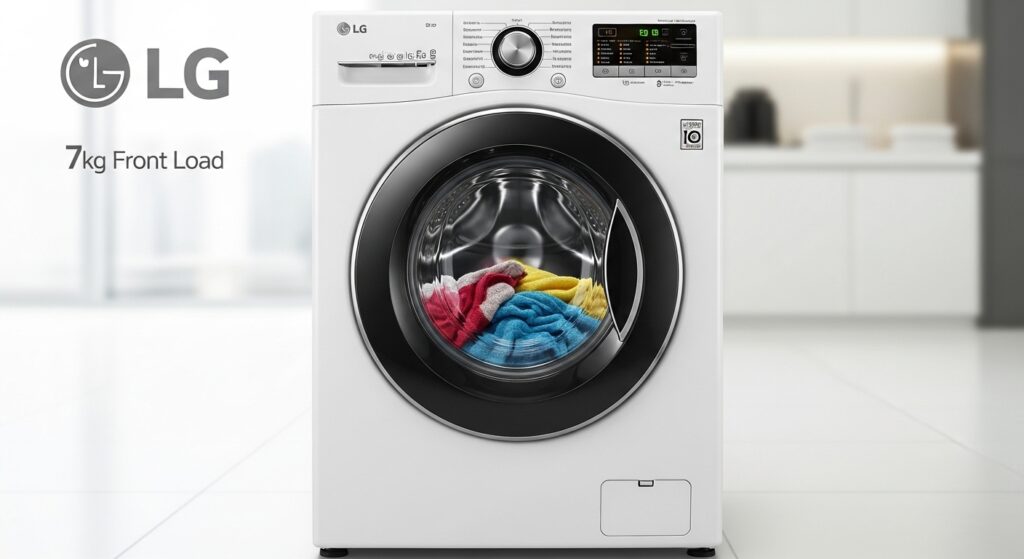
1. LG 7kg Front Load Washing Machine – Best Overall
Why it’s great:
The LG 7kg front load washing machine is ideal for small families of 2–4 people. It delivers excellent cleaning performance while using less water and electricity.
Key Features:
- 7kg capacity – perfect for small households
- Inverter motor for energy savings
- Multiple wash programs
- Quiet operation
- Child lock safety feature
Best For:
Small families who want reliability, energy efficiency, and modern features.
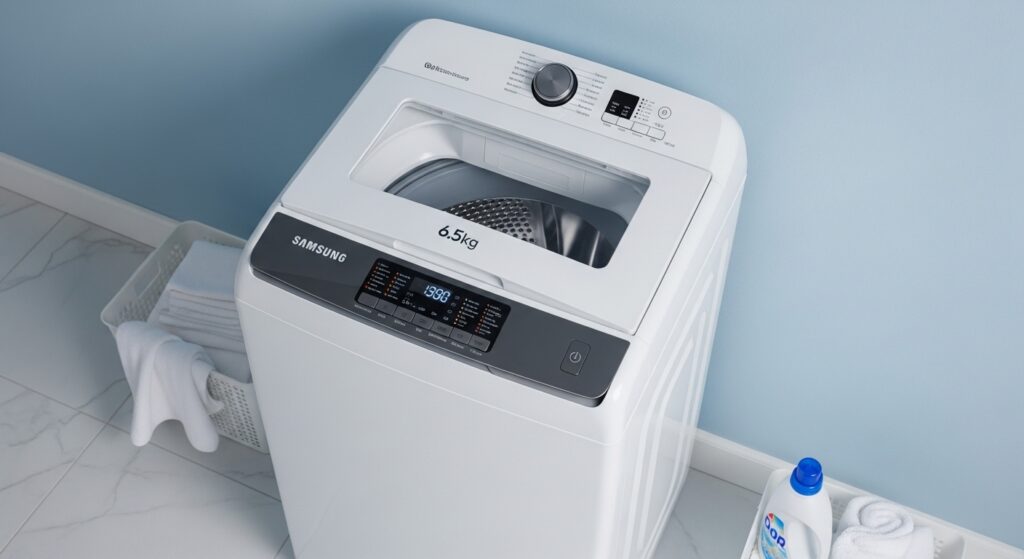
2. Samsung 6.5kg Top Load Washing Machine – Best Budget Option
Why it’s great:
This Samsung top-load washer offers excellent performance at an affordable price, making it ideal for budget-conscious families.
Key Features:
- 6.5kg capacity
- Durable body
- Quick wash function
- Low water consumption
- Easy-to-use controls
Best For:
Families looking for a reliable washer at a lower cost.
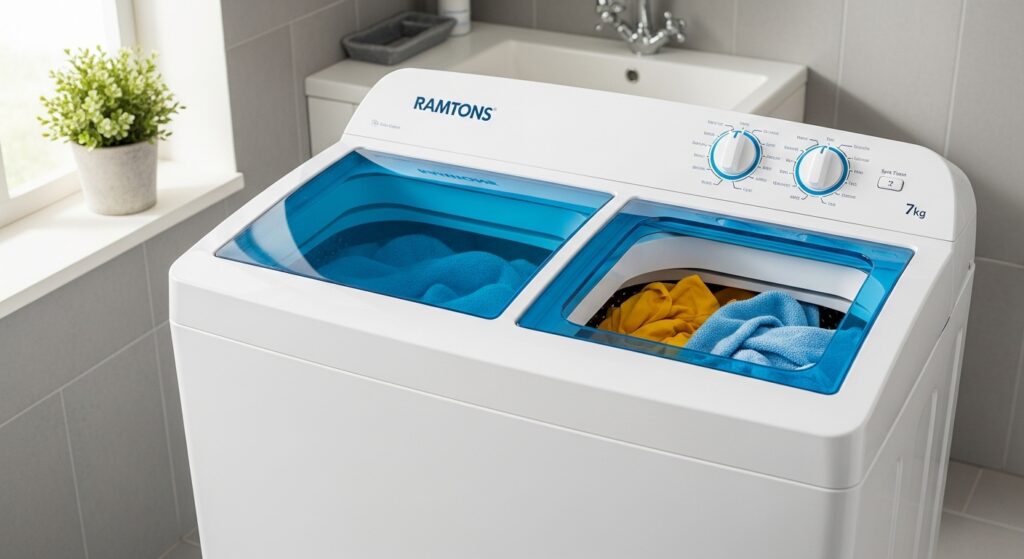
3. Ramtons 7kg Semi-Automatic Washing Machine – Best Value Choice
Why it’s great:
Ramtons machines are popular in many homes due to affordability and durability. This model is great for families looking to save money.
Key Features:
- 7kg capacity
- Semi-automatic operation
- Low power consumption
- Suitable for areas with limited water pressure
- Affordable pricing
Best For:
Families who want an economical washing machine.
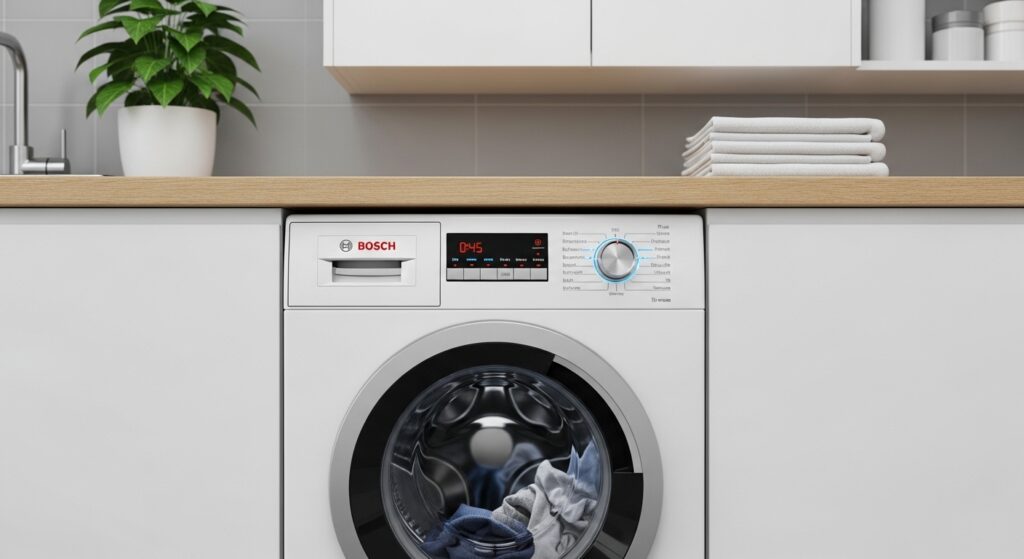
4. Bosch 7kg Front Load Washing Machine – Best Premium Choice
Why it’s great:
Bosch machines are known for durability and advanced technology, making them a premium choice for small families.
Key Features:
- Energy-efficient motor
- Silent operation
- Advanced fabric care
- Long lifespan
- Sleek modern design
Best For:
Families who want premium performance and durability.
5. Mika 6kg Top Load Washing Machine – Best Compact Option
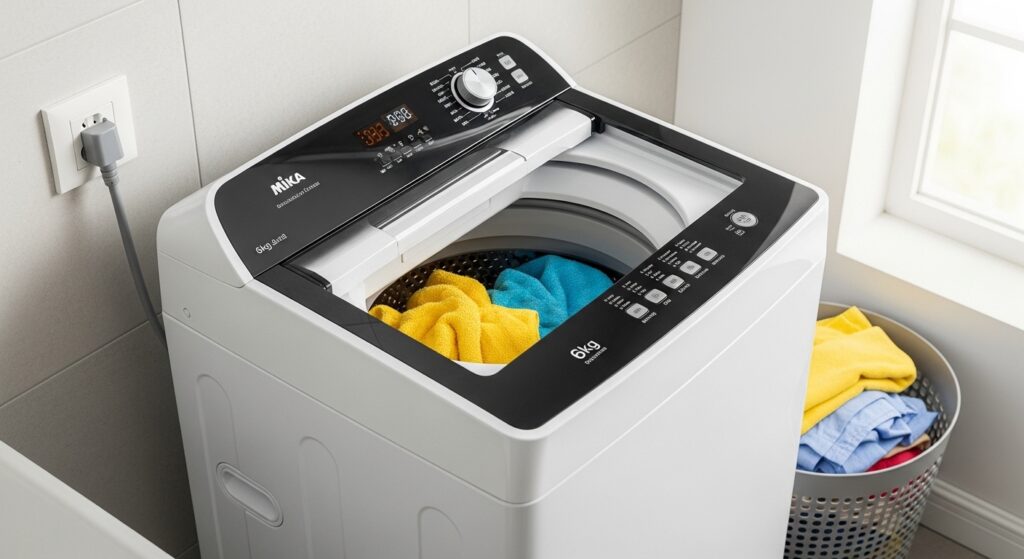
Why it’s great:
This compact washing machine is perfect for small spaces like apartments and studio homes.
Key Features:
- Compact design
- 6kg capacity
- Low electricity consumption
- Simple controls
- Affordable maintenance
Best For:
Small apartments and limited spaces.
Buying Guide: How to Choose a Washing Machine for Small Families
Before buying a washing machine, consider the following important factors.
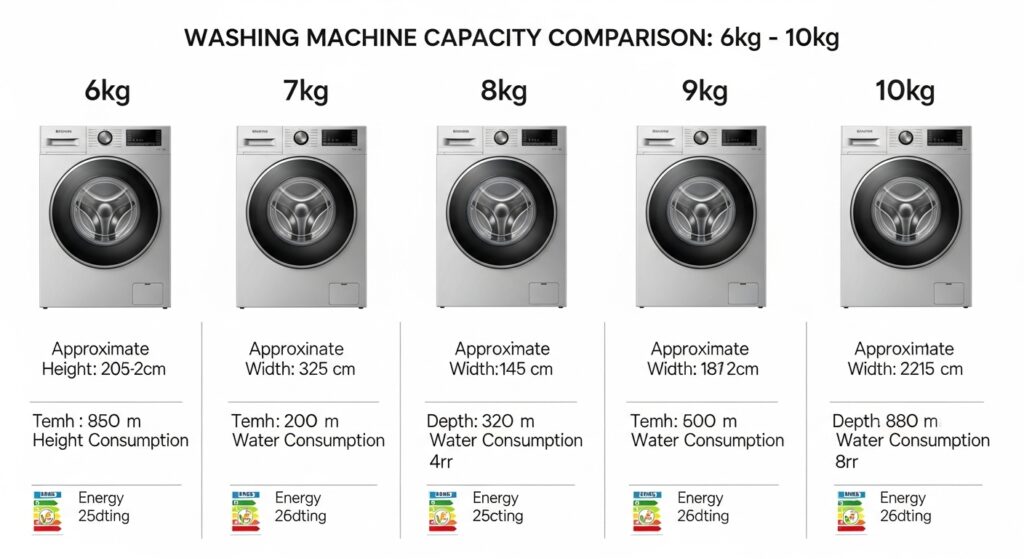
1. Capacity Matters More Than Most Buyers Realise
Washing machine capacity is measured in kilograms and refers to the maximum dry weight of laundry the drum can handle in a single cycle.
- 5 to 6kg is sufficient for 1 to 2 people doing laundry 4 to 5 times per week. For a small family that washes regularly, this often means splitting loads which adds time and increases energy costs per week overall.
- 7kg is the practical sweet spot for families of 3 to 4 people. It handles a full set of daily clothing, bed linen for one bed, or a mixed family load in a single cycle without overloading the drum.
- 8kg and above suits families of 4 or more, or households that prefer washing less frequently in larger batches. Bulky items like duvets, curtains, and heavy towels are better handled at this capacity.
A useful real-world reference point: 7kg fits roughly 35 T-shirts, or a full set of bed linen plus several changes of clothing for a small family.
2. Energy Efficiency: The Cost You Pay Every Month
The purchase price of a washing machine is a one-time cost.
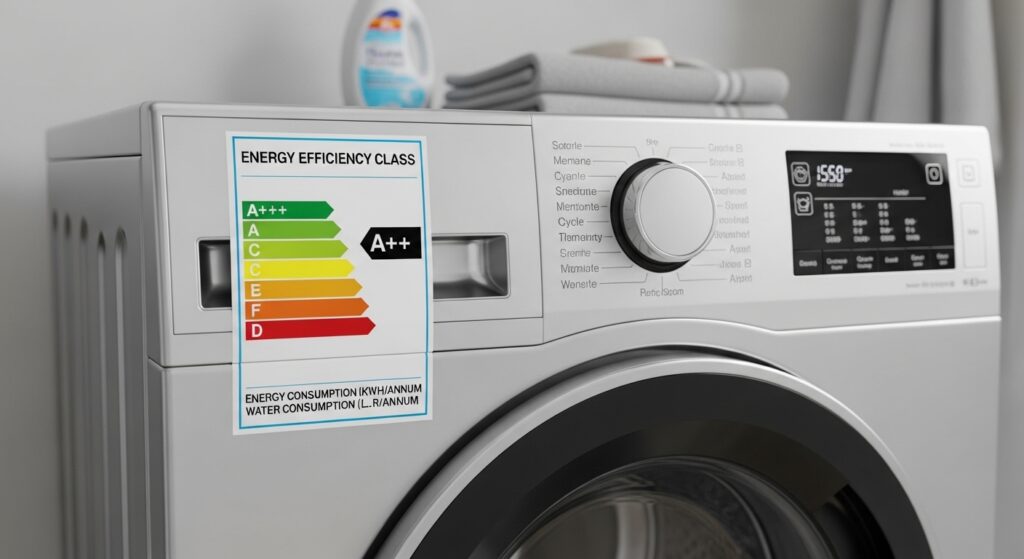
The energy and water it consumes is a cost you pay every month for the life of the machine, which makes energy efficiency one of the most financially important factors in your decision.
Eco programs available on many mid-range and premium machines use lower temperatures and longer cycle times to achieve the same cleaning result with less energy.
If you are not in a hurry, using the eco program for every standard wash is one of the simplest ways to reduce household energy consumption.
Look for machines rated A or above on the EU energy label (or equivalent local rating).
The difference between an A-rated and a D-rated machine can translate to meaningful savings on electricity bills over a 10-year lifespan.
Front-load washers are consistently more energy and water efficient than top-loaders because they tumble clothes through a smaller volume of water rather than submerging them in a full drum of water.
For households with high laundry frequency, this difference adds up noticeably over a year.
3. Front Load vs Top Load: Choosing the Right Design for Your Home
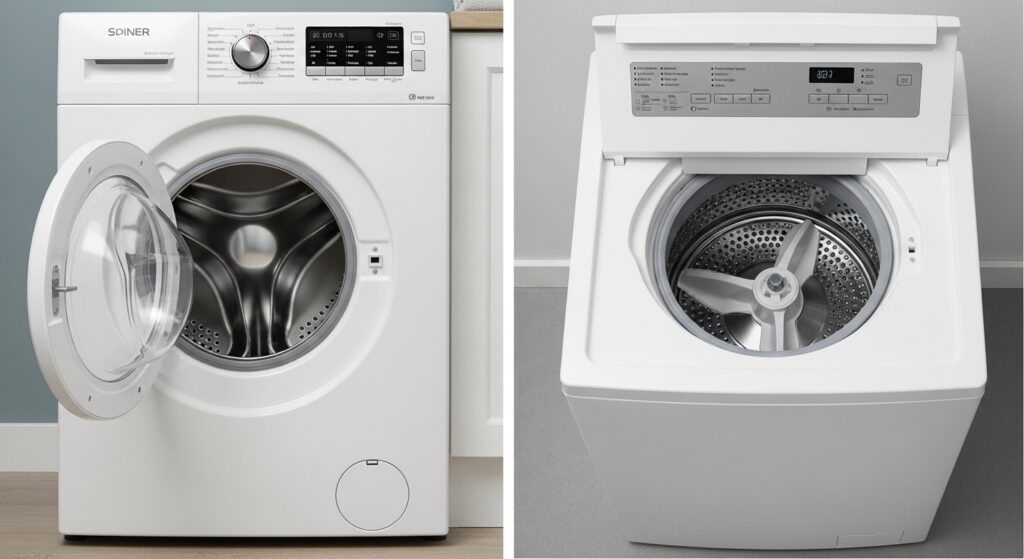
This is one of the most debated decisions in washing machine buying, and the right answer genuinely depends on your specific situation.
Front Load Machines:
- More energy and water efficient per cycle
- Gentler on fabrics due to tumble-action washing
- Can be stacked with a dryer to save floor space
- Typically quieter during operation
- Higher upfront cost and longer cycle times
- Require bending down to load and unload, which can be a consideration for elderly users or those with back issues
Top Load Machines:
Semi-automatic top-loaders (like the Ramtons) require manual water filling and transferring clothes between wash and spin tubs, which is more labour-intensive but significantly cheaper to purchase and run
- Easier to load and unload without bending
- Shorter cycle times on average
- Generally lower purchase price
- More water usage per cycle
- Cannot be stacked with a dryer
4. Noise Levels: Often Overlooked Until It Is Too Late
Washing machine noise is measured in decibels (dB). As a reference point, 40 to 50 dB is similar to quiet conversation, while 70 dB is closer to a running dishwasher at full cycle.
- Most modern front-load machines operate between 47 and 56 dB during a wash cycle and up to 72 dB during a spin cycle. Premium machines like the Bosch Series range tend to sit at the quieter end.
- If your washing machine will be placed in or near a living area, bedroom, or thin-walled apartment, noise rating is a serious practical consideration. Look for models specifically marketed as quiet or inverter motor-equipped, as inverter motors run more smoothly and quietly across all cycle speeds.
- Top-loaders and semi-automatic machines are generally noisier during agitation and spin cycles than front-loaders at the same price point.
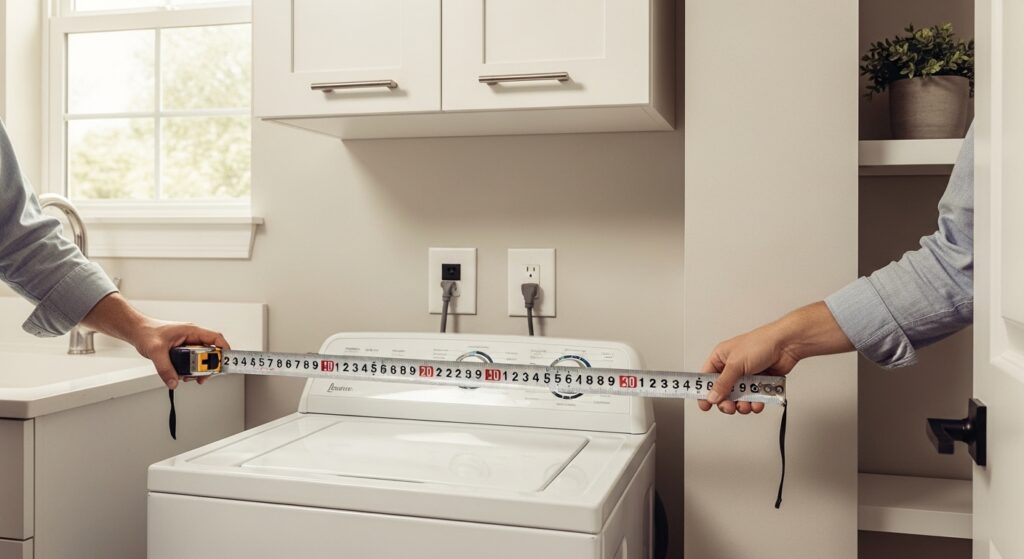
5. Available Space: Measure Before You Buy
This sounds obvious but is one of the most common causes of post-purchase regret.
Semi-automatic top-loaders like the Ramtons tend to be slightly more compact in footprint and do not require a fixed plumbing connection, making them flexible for homes without dedicated laundry plumbing.
Standard washing machines are approximately 60cm wide, 60cm deep, and 85cm tall.
Always measure your intended installation space including clearance for the door or lid to open fully, water inlet and outlet hose connections at the back, and ventilation space on the sides.
Front-loaders require clear space in front of the machine equal to the door swing radius, typically 30 to 35cm. In tight laundry rooms or under-counter installations, this can be a genuine constraint.
Benefits of Choosing the Right Washing Machine
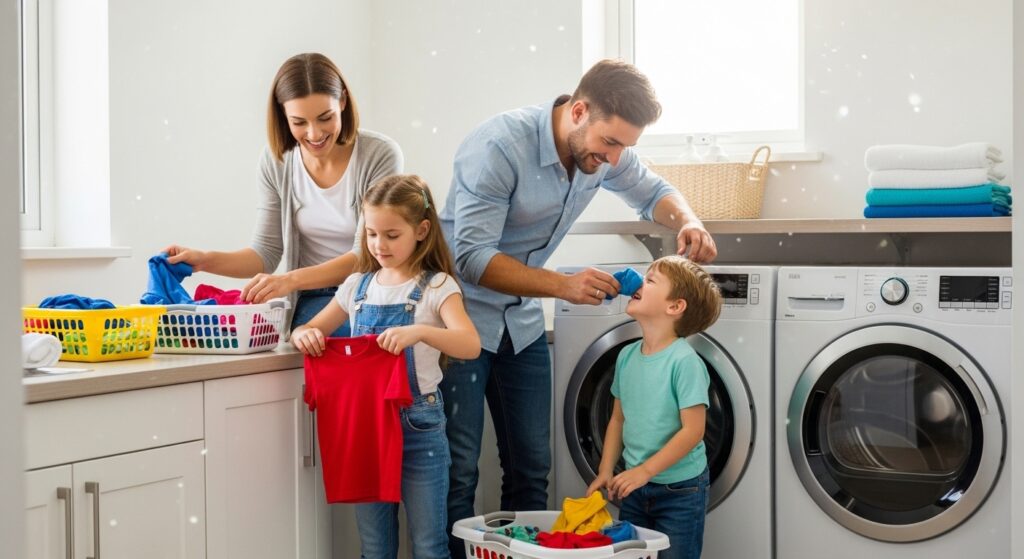
Choosing the right washing machine offers several advantages:
- Saves electricity and water
- Protects clothes from damage
- Reduces washing time
- Improves convenience
- Long-term cost savings
Recommended Capacity for Small Families
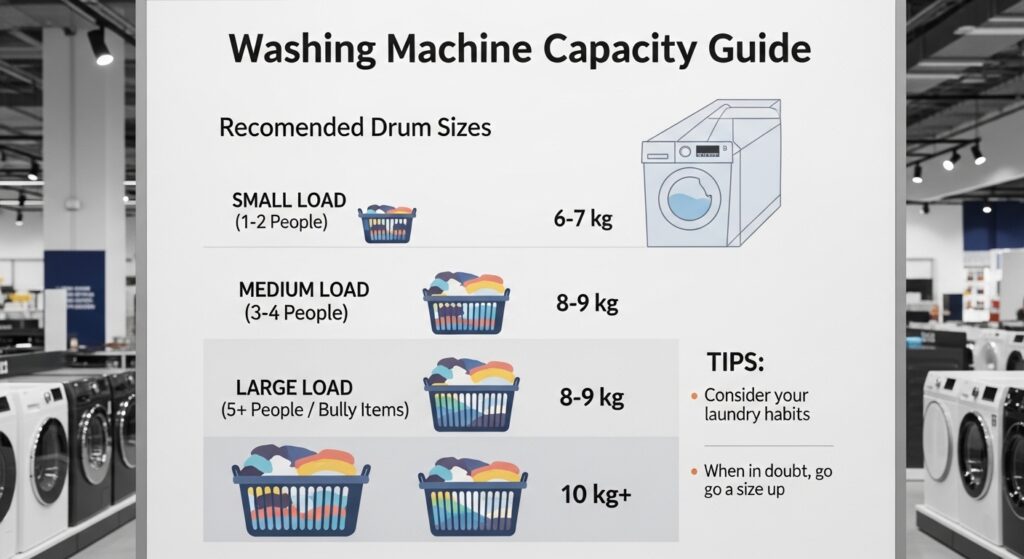
| Family Size | Recommended Capacity |
|---|---|
| 1–2 People | 6kg |
| 3–4 People | 7kg |
| 4–5 People | 8kg |
Final Thoughts
Choosing the best washing machine for a small family depends on your budget, available space, and laundry needs. Models with 6kg to 7kg capacity are ideal for small households because they provide efficient cleaning without excessive water and power consumption.
If you’re looking for reliability, energy efficiency, and long-term savings, investing in a quality washing machine from a trusted brand is a smart choice.
FAQs
Q1: What Washing Machine Capacity Is Best for a Family of 4?
For a family of 4, a 7kg to 8kg capacity washing machine is the recommended range. A 7kg machine handles a full daily load for most 4-person households in a single cycle, including clothing and light linen.
If your family generates bulkier laundry regularly (such as sports kits, school uniforms, towels, and bedding all in the same week), stepping up to 8kg gives you the headroom to wash larger loads without splitting them.
As a practical guide, never fill the drum more than three-quarters full on a standard wash cycle, as overpacking reduces cleaning performance and puts extra strain on the motor over time.
Q2: Is a Front Load or Top Load Washing Machine Better for Small Families?
Both work well for small families, but they suit different priorities. Front-load machines use significantly less water and electricity per cycle, are gentler on fabrics, and produce cleaner results on heavily soiled items.
They cost more upfront but pay back the difference in lower running costs over their lifespan.
Top-load machines are easier to use physically (no bending), have shorter cycle times, and are available at lower price points, making them the more practical choice for budget-conscious households or those who prioritise convenience over efficiency.
Semi-automatic top-loaders are the most affordable option overall and are particularly well-suited to households without fixed laundry plumbing.
Q3: How Much Electricity Does a Washing Machine Use Per Month?
A typical 7kg front-load washing machine rated at around 2kWh per cycle, run 5 times per week, uses approximately 40 kWh per month.
At an average electricity rate of KSh 20 per kWh (relevant to the Kenyan market), this translates to roughly KSh 800 per month in electricity costs for laundry alone.
Energy-efficient A-rated machines and using eco or cold-wash programs can reduce this by 30 to 40%.
Top-loaders and semi-automatic machines vary widely depending on water heating method, but models without built-in heaters (that use cold water only) are significantly cheaper to run on a monthly basis.
Q4: How Long Should a Washing Machine Last?
A well-maintained washing machine from a reputable brand should last 8 to 12 years under normal household use.
Premium brands like Bosch and LG tend to sit at the higher end of this range due to build quality and component durability. Budget and mid-range machines typically last 6 to 8 years before requiring significant repairs.
To maximise the lifespan of any washing machine: avoid consistently overloading the drum, clean the drum and door seal monthly, leave the door ajar after cycles to prevent mould buildup, and descale the machine every 3 to 6 months in areas with hard water.
Q5: What Is a Semi-Automatic Washing Machine and Is It Worth Buying?
A semi-automatic washing machine has two separate tubs: one for washing and one for spinning.
Unlike fully automatic machines, it requires you to manually fill the wash tub with water, transfer clothes to the spin tub after washing, and drain water between cycles.
This makes it more labour-intensive than a fully automatic machine but significantly cheaper to purchase and operate.
Semi-automatic machines do not require a fixed water connection, making them ideal for homes without dedicated laundry plumbing or for renters who move frequently.
For budget-conscious small families in markets like East Africa where brands like Ramtons are widely available and affordable, a semi-automatic machine is a highly practical and cost-effective choice.