
Picture this: your old oven takes twenty minutes to preheat, the door hinge squeaks like a horror movie prop, and you’ve burned three batches of cookies this month alone.
Sound familiar? If you’re staring at your kitchen wondering whether a built-in wall oven could fix your cooking woes and finally give your space that sleek, high-end look, you’re exactly where you need to be.
I spent months researching wall ovens before renovating my own kitchen, and let me tell you, the options out there range from genuinely brilliant to overpriced junk with a fancy touchscreen.
This guide cuts through the noise and gives you the real deal on the best built-in wall ovens for a modern kitchen, based on actual features that matter and a few lessons I learned the hard way.
Why Built-In Wall Ovens Are Taking Over Modern Kitchens
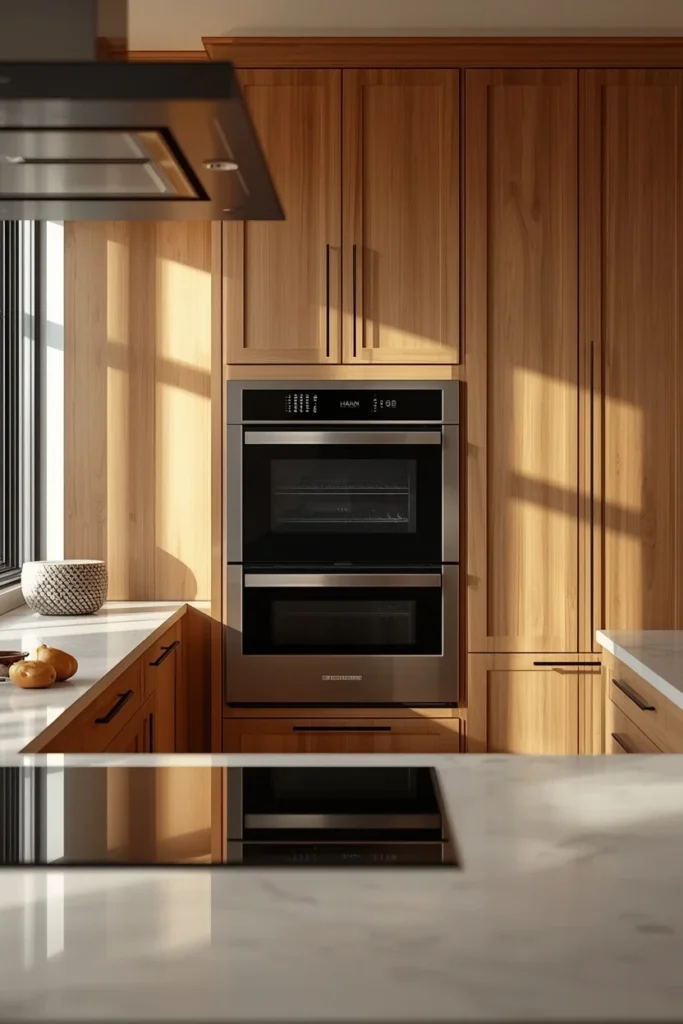
Freestanding ranges used to be the default, but built-in wall ovens have quietly become the star of kitchen renovations everywhere.
They sit at eye level, they free up counter space, and they just look expensive even when they weren’t. Who doesn’t want that?
Ergonomics play a huge role here too. Bending over to check on a roast gets old fast, especially if your back has opinions about it.
A wall oven puts the cooking surface right where your hands and eyes already are, and that small change makes a bigger difference than you’d expect.
There’s also the design flexibility factor. You can pair a wall oven with a separate cooktop, giving your kitchen layout way more breathing room.
I did this in my own remodel, and honestly, it felt like unlocking a cheat code for small kitchen design.
Key Features to Look for Before You Buy
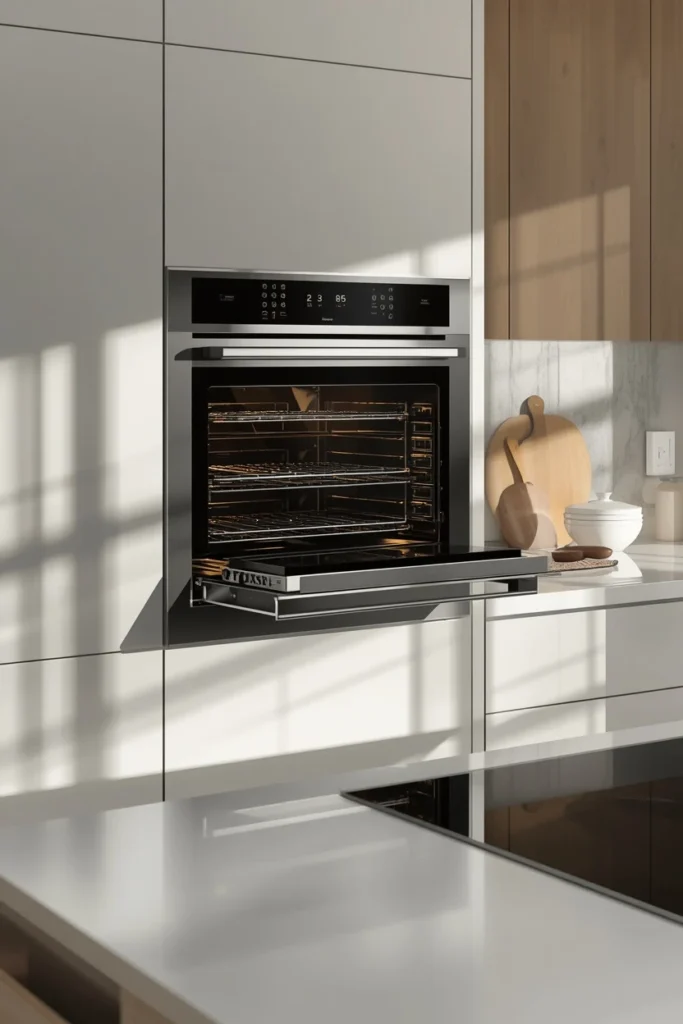
Shopping for a wall oven without knowing what to look for is like walking into a car dealership blind.
You’ll end up paying for features you don’t need and missing the ones you actually do. Here’s what separates a genuinely great oven from a glorified metal box.
Convection Cooking
True convection uses a third heating element along with the fan, which means more even heat distribution and faster cooking times.
Standard convection just recirculates the existing heat, and while it’s better than nothing, it’s not the same league. If you bake often, this feature alone is worth prioritizing.
Size and Capacity
Wall ovens typically come in 24-inch, 27-inch, and 30-inch widths, and this decision shapes your whole kitchen layout.
A 30-inch oven gives you serious capacity for holiday cooking, but it also eats up more cabinet space. Measure twice, because returning a built-in appliance is nobody’s idea of a fun weekend.
Single vs. Double Ovens
This one comes down to how you actually cook, not how you imagine cooking on your best day. Consider these points:
- Single ovens work great for smaller households or kitchens with limited space
- Double ovens let you cook two dishes at different temperatures simultaneously, a lifesaver during big family dinners
- Double ovens take up more wall space and cost noticeably more upfront
- Some models offer a combo option, pairing a standard oven with a smaller convection or microwave unit
Smart Features
Wi-Fi connectivity, voice control, and app-based monitoring sound impressive on paper, but do you really need to preheat your oven from the grocery store checkout line? Maybe.
I’ll admit I use mine more than I expected to. Just don’t pay a premium for smart features if you’re not going to actually use them.
Top Built-In Wall Oven Picks for 2026
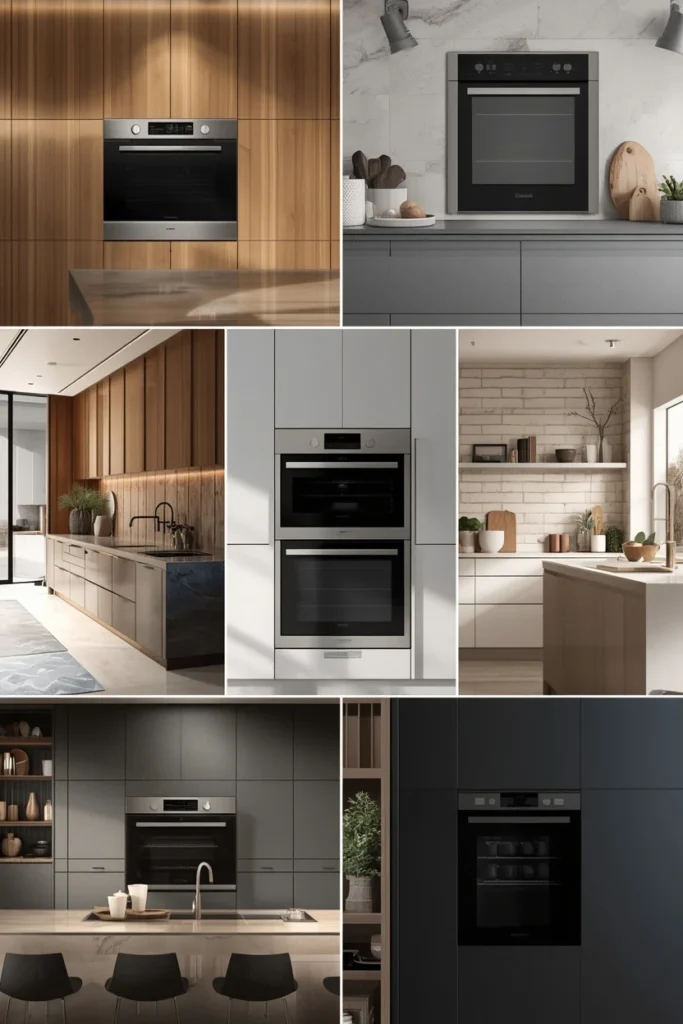
Now for the fun part. I’ve narrowed this down to models that consistently earn praise for performance, reliability, and design, not just because they look good in a showroom.
1. GE Profile Smart Wall Oven
This one nails the balance between smart technology and no-nonsense performance.
The true European convection setting cooks evenly without babysitting, and the touchscreen interface actually makes sense, unlike some competitors I won’t name.
It also pairs with a phone app that lets you monitor cooking progress remotely.
Standout features include:
- No-preheat air fry setting built directly into the oven
- Self-clean cycle that doesn’t smell like a chemistry experiment gone wrong
- Available in single and double configurations
2. Bosch 800 Series Double Wall Oven
Bosch built a reputation on precision engineering, and this oven delivers exactly that.
The European convection with 3D technology distributes heat from multiple directions, which means your cookies bake evenly whether they’re on the top rack or bottom.
I’ve heard from more than one home baker who swears by this specific feature.
The design leans minimalist too, with a clean control panel that doesn’t try too hard to impress you. Sometimes restraint is the better design choice, and Bosch clearly understands that.
3. KitchenAid Double Wall Oven with Even-Heat True Convection
KitchenAid has a long track record with serious home cooks, and this model reflects that heritage. The Even-
Heat system uses a hidden bake element along with the convection fan, producing consistent results across every rack.
If you’ve ever pulled out an unevenly baked cake and questioned your life choices, this feature solves that specific problem.
It also includes a temperature probe that alerts you when your roast hits the perfect internal temperature. No more guessing, no more cutting into meat to check if it’s done and hoping for the best.
4. Café Modern Glass Wall Oven
If aesthetics matter as much as function to you, and honestly why wouldn’t they, the Café Modern line stands out immediately.
The glass front design with customizable hardware finishes lets you match your oven to your kitchen’s exact style, whether that’s brushed bronze or matte black. It’s basically the fashion-forward option in the wall oven world.
Performance holds up too, with a 10-mode convection system and a self-clean function that handles serious grease buildup. This one photographs beautifully, but it also earns its keep in daily use.
5. LG Studio Built-In Wall Oven
LG doesn’t always get the credit it deserves in the appliance world, but this wall oven quietly outperforms pricier competitors.
The ProBake Convection technology relocates the heating element and fan to the rear, improving airflow and eliminating hot spots. Multiple batches of cookies later, I can confirm the even browning claim holds up.
It also comes with an intuitive control panel and a genuinely useful EasyClean cycle that cuts down cleaning time significantly. For the price point, it delivers more value than the brand name might suggest.
Single Oven vs. Double Oven: Which One Actually Fits Your Life?
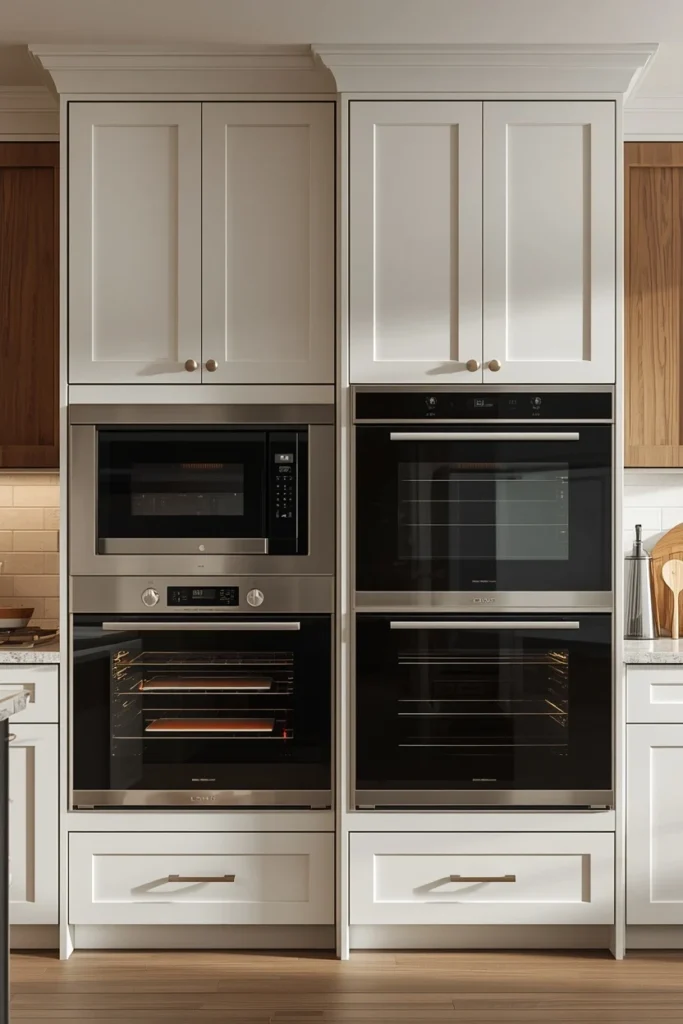
Let’s settle this debate once and for all, because it trips up more people than it should. A single wall oven makes sense if you cook for one or two people most nights, or if kitchen space comes at a premium.
It’s simpler, cheaper, and honestly, plenty of capacity for everyday meals.
A double wall oven earns its keep during holidays, dinner parties, or if you meal prep on a serious level. Cooking a casserole at 350 while roasting vegetables at 425 in the second oven saves real time.
Just know you’re sacrificing storage space for that convenience, so weigh it against how often you’ll actually use the second oven.
Installation Considerations Nobody Talks About Enough
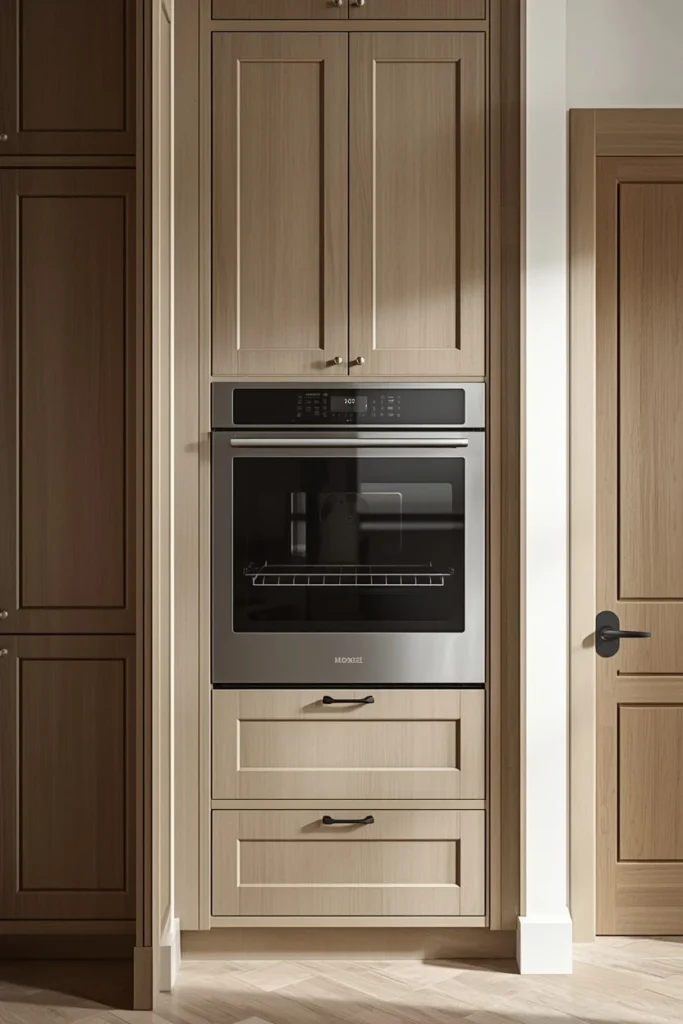
Wall ovens require dedicated cabinetry, proper electrical wiring, and enough clearance for ventilation, and skipping this step causes headaches down the road.
Most models need a 240-volt outlet, and older homes sometimes need an electrician to update the wiring before installation. Budget for this cost upfront rather than discovering it mid-renovation.
Also consider the height placement during installation. Too low and you’re back to bending over, too high and loading a heavy roasting pan becomes a genuine safety concern.
Most kitchen designers recommend positioning the oven so the bottom rack sits roughly at hip height, which keeps things comfortable for most adults.
Final Thoughts
A built-in wall oven genuinely transforms both the function and look of a modern kitchen, and the right model depends entirely on how you cook, how much space you have, and how much you’re willing to spend.
Whether you go with the smart convenience of a GE Profile, the engineering precision of Bosch, or the stylish glass front of Café, prioritize the features that match your actual cooking habits over the ones that just look good in marketing photos.
Renovations are stressful enough without appliance regret creeping in six months later.
Take your measurements, be honest about your cooking style, and pick the oven that fits your kitchen and your life, not just your Pinterest board.
What Size Wall Oven Fits Most Kitchens?
A 30-inch wall oven fits most standard kitchen layouts and gives you enough capacity for everyday cooking and larger gatherings.
If your kitchen runs on the smaller side, a 24-inch or 27-inch model still handles daily meals without eating up too much cabinet space.
Always double check your cabinetry measurements before ordering, since even an inch off can cause installation headaches.
Is A Double Wall Oven Worth The Extra Cost?
It depends entirely on how often you cook for a crowd or juggle multiple dishes at once. If holidays and dinner parties are a regular thing in your house, a double wall oven saves real time and cuts down on kitchen chaos.
For everyday cooking with one or two people, a single oven usually covers everything you need without the added expense.
Do Built-In Wall Ovens Need Special Electrical Wiring?
Most built-in wall ovens require a dedicated 240-volt outlet, and older homes sometimes need an electrician to update the wiring before installation.
Skipping this step causes delays and unexpected costs mid-renovation. It’s worth having an electrician inspect your setup before you commit to a specific model.
What Is The Difference Between Convection And True Convection?
True convection uses a third heating element along with the fan, which creates more consistent airflow and even cooking results.
Standard convection only recirculates existing heat, so it helps a bit but doesn’t perform at the same level. If baking is a regular part of your routine, true convection makes a noticeable difference.
How High Should A Wall Oven Be Installed?
Most kitchen designers recommend positioning the oven so the bottom rack sits close to hip height for comfortable loading and unloading.
Installing it too low forces you to bend over constantly, while installing it too high creates a safety risk with heavy dishes. Getting this measurement right during planning saves a lot of frustration later.