
Gas stoves have their charm, but induction cooktops often outperform them. They boil water faster, use less energy, and keep your kitchen cooler.
Once you switch, going back to gas or electric feels like choosing a flip phone after a smartphone.
If you’re shopping for an induction cooktop, the choices can be overwhelming. This article simplifies things. It explains what matters in an induction cooktop and highlights top picks for various budgets and cooking styles. Let’s dive in.
Why Induction Cooktops Beat Gas and Electric Every Time
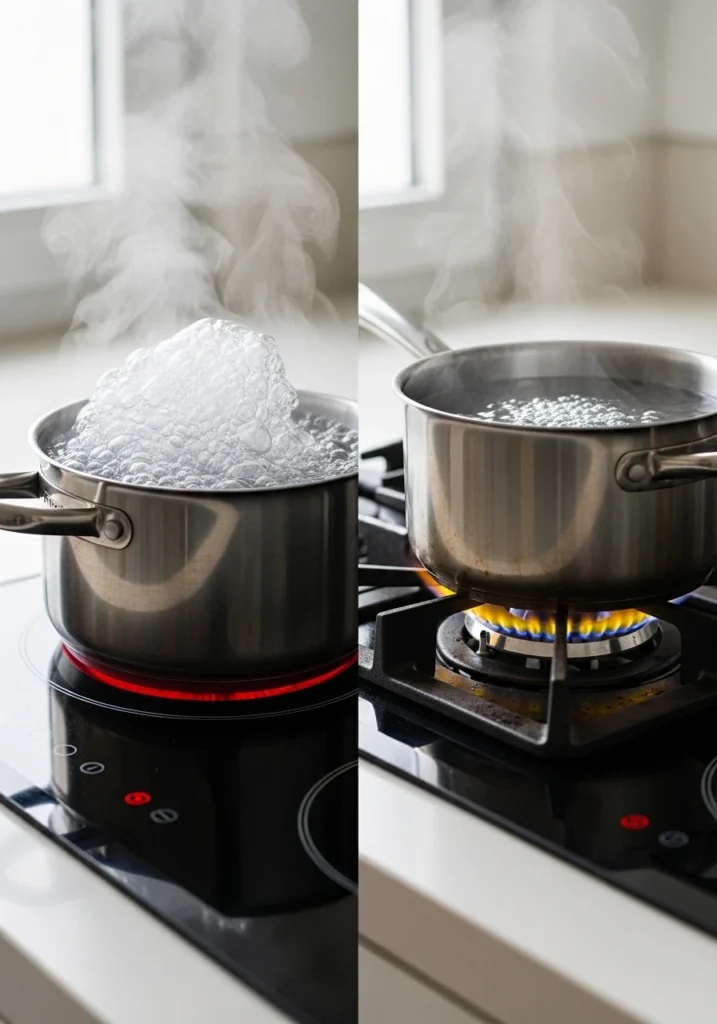
Before we talk specific models, it helps to understand why induction cooking deserves all the hype.
Unlike gas or traditional electric, induction cooktops use electromagnetic energy to heat the cookware directly rather than heating a burner that then heats the pan. The result is faster, more precise, and far more efficient cooking.
Here is what that means in practical terms:
- 90% energy efficiency compared to about 70% for gas and 74% for electric coil
- Water boils in roughly half the time it takes on a gas burner
- The cooktop surface stays cool to the touch around the pan, so spills do not burn on and cleanup takes about 30 seconds
- Precise temperature control that responds instantly, unlike gas flames that take time to adjust
That last point matters more than people realize. If you have ever tried to hold a delicate beurre blanc at exactly the right temperature on a gas burner, you know the frustration.
Induction makes that kind of cooking significantly easier.
What to Look for in the Best Induction Cooktop
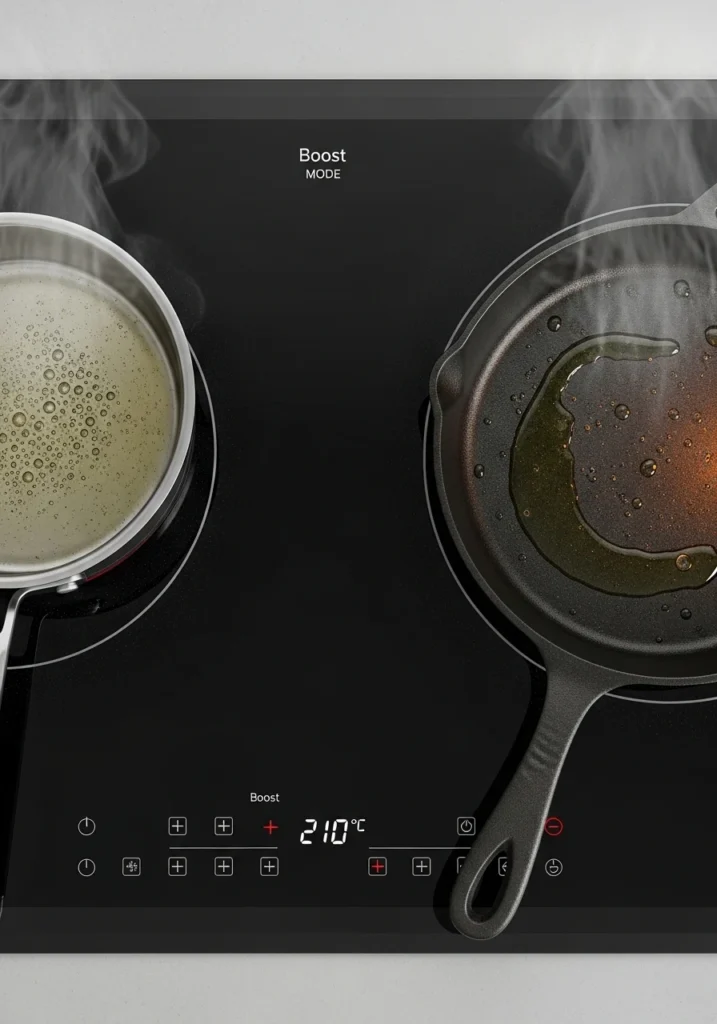
Shopping for an induction cooktop without knowing what features to prioritize is a recipe for buyer’s remorse.
Here is what genuinely matters versus what sounds impressive in a spec sheet but rarely affects your daily cooking.
Power Output and Heating Zones
Wattage determines how fast your cooktop heats. Most quality induction cooktops offer between 1,800 and 3,700 watts per zone. For everyday cooking, 1,800 to 2,200 watts handles most tasks comfortably.
If you cook large batches, sear proteins frequently, or want that aggressive boil, look for a zone rated at 3,000 watts or higher.
The number of cooking zones matters depending on your kitchen habits. A two-burner portable induction cooktop works beautifully for small kitchens, apartments, or as a supplemental cooking surface.
A four or five-zone built-in induction cooktop suits families or anyone who regularly cooks multiple dishes at once.
Temperature Control and Power Levels
More power levels equal more control. Budget models often offer 5 to 6 heat settings, which can feel limiting when you need something between a simmer and a medium boil.
Better models offer 10 to 17 power levels, and some allow you to set a specific temperature in degrees rather than just a numbered level.
Boost or turbo modes deserve a special mention. These push the burner to maximum wattage for fast boiling and are genuinely useful when you are in a rush.
Just do not expect to simmer delicately on boost mode. That is not what it is for.
Safety Features
Induction cooktops are inherently safer than gas because there is no open flame, but good safety features still matter:
- Automatic shut-off when no pan is detected or after a set period of inactivity
- Child lock to prevent accidental activation
- Residual heat indicators that warn you the surface is still warm after cooking
- Overheating protection that cuts power if the unit gets too hot
These are not just marketing checkboxes. If you have kids in the kitchen or you tend to get distracted mid-cook, these features genuinely matter.
Cookware Compatibility
Induction only works with magnetic cookware. Cast iron, most stainless steel, and enameled cookware all work fine. Aluminum, copper, and glass do not, unless they have a magnetic base layer added.
The quickest test: hold a magnet to the bottom of your pan. If it sticks, you are good to go. Most people find they already own compatible cookware, but it is worth checking before you commit to a new cooktop.
Best Induction Cooktops by Category
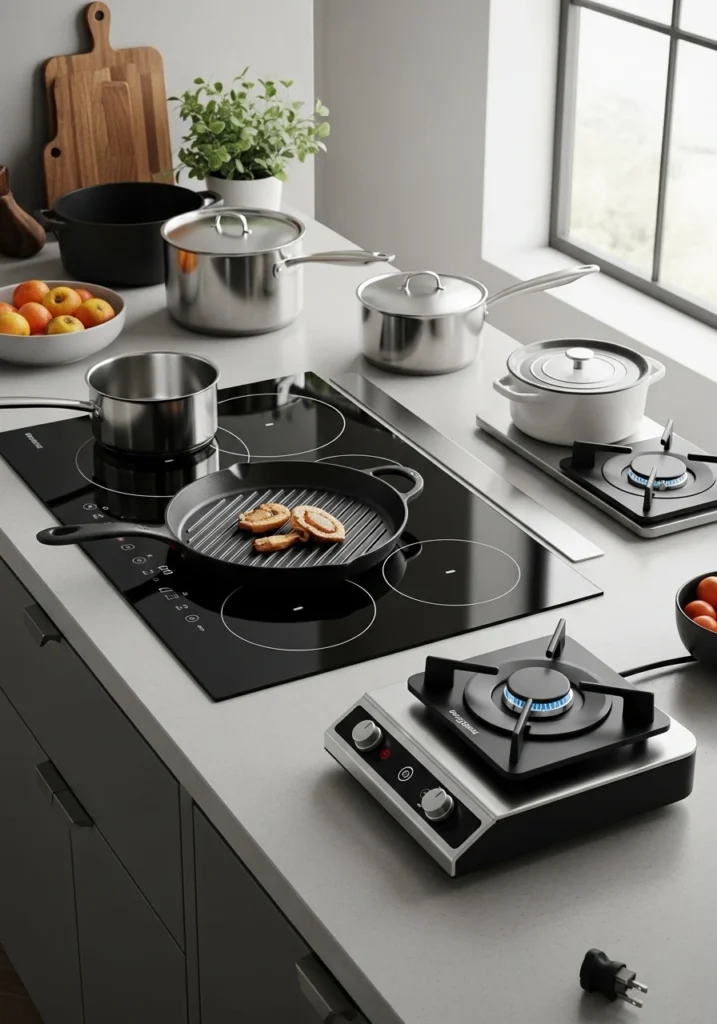
Let’s talk specific models. Rather than ranking everything from one to ten, it makes more sense to break recommendations down by use case because the right cooktop for a studio apartment looks nothing like the right one for a serious home cook.
Best Portable Induction Cooktop: Duxtop 9600LS
The Duxtop 9600LS consistently earns its place at the top of the portable induction cooktop category, and it does so without any flashy gimmicks.
It offers 20 power levels and 20 temperature settings, ranging from 100 to 460 degrees Fahrenheit, which gives you genuinely nuanced control for a portable unit.
Key specs worth knowing:
- 1,800 watts of maximum power
- Digital touch panel with a clear LED display
- Built-in count-up and countdown timer
- Child safety lock
- Compatible with all induction-ready cookware
At its price point, the Duxtop 9600LS delivers control that rivals units costing twice as much. The build quality feels solid, not plasticky, and the touch controls respond reliably.
If you want a portable induction burner that will actually last, this is the one to buy.
Best Two-Burner Portable Option: Cuisinart ICT-60
If one burner leaves you feeling limited, the Cuisinart ICT-60 steps in as one of the best two-burner portable induction cooktops on the market.
It gives you two independently controlled cooking zones in a compact footprint that fits on most countertops without eating up the whole surface.
Standout features include:
- 1,300 watts per zone for a combined 2,600 watts
- 15 heat settings per zone
- Brushed stainless steel surface that cleans up easily
- Countdown timer on each zone independently
The Cuisinart ICT-60 handles the multi-burner cooking that a single portable unit cannot, making it a smart pick for small kitchens, vacation homes, or anyone who wants induction flexibility without a full installation.
Best Built-In Induction Cooktop: Bosch 800 Series
When it comes to built-in induction cooktops, the Bosch 800 Series sits in a category of its own for anyone who values cooking performance and thoughtful design in equal measure.
Bosch engineers this cooktop for serious home cooks, and it shows in every detail.
What makes it exceptional:
- FlexInduction zones that combine two burners into one large zone for oversized pots and griddle pans
- 17 power levels per zone for precise, granular control
- Up to 3,700 watts on the boost zone
- SpeedBoost function that delivers maximum heat almost instantly
- Integrated timer for each zone with automatic shut-off
- Sleek black ceramic glass surface that wipes clean effortlessly
The Bosch 800 Series costs significantly more than a portable unit, but it earns every dollar if you cook regularly and want a cooktop that handles everything from a precise chocolate melt to an aggressive sear without breaking a sweat.
Best Budget Built-In Option: GE Profile PHP9030DJBB
Not everyone wants to spend Bosch money, and the GE Profile PHP9030DJBB proves you do not have to.
This 30-inch built-in induction cooktop delivers solid performance at a noticeably lower price point than premium European brands.
Key features:
- Four cooking zones including one 3,700-watt power boil element
- Sync-Burners feature that links two elements for larger cookware
- 9 power levels per zone
- Hot surface indicator lights for safety
- Fits a standard 30-inch cutout for straightforward installation
The GE Profile lacks some of the ultra-fine control you get from Bosch, but it handles everyday cooking tasks reliably and brings a meaningful upgrade over any gas or electric coil cooktop at a comparable price.
Best High-End Option: Miele KM 6366
If budget is not a constraint and you want the best induction cooktop available for home use, the Miele KM 6366 delivers a cooking experience that is genuinely hard to match.
Miele builds this unit for professional-level performance in a residential kitchen.
Highlights include:
- TempControl function that holds precise temperatures automatically, perfect for delicate sauces
- CombiZone that merges two zones into one extended cooking area
- Up to 7,200 watts of combined power across the cooktop
- 17 power levels with boost function
- Elegant design that integrates seamlessly into high-end kitchen builds
The Miele is the kind of cooktop that makes you want to cook more often. That might sound ridiculous, but using a tool that responds exactly as you expect it to makes the whole process genuinely more enjoyable.
Energy Efficiency: The Numbers That Actually Matter
One of the strongest arguments for induction cooking is the energy savings, and this is where the conversation gets genuinely interesting for anyone paying attention to utility bills.
Induction cooktops transfer about 90% of generated energy directly to the food. Gas stoves transfer roughly 40 to 55% because so much heat escapes around the sides of the pan.
That gap is enormous when you add it up over months of cooking.
On a practical level, switching from gas to induction typically reduces cooking-related energy consumption by 30 to 50%. For households that cook daily, that produces meaningful savings over a year.
And if your home runs on renewable electricity, induction cooking becomes one of the cleaner cooking methods available.
Tips for Getting the Most Out of Your Induction Cooktop
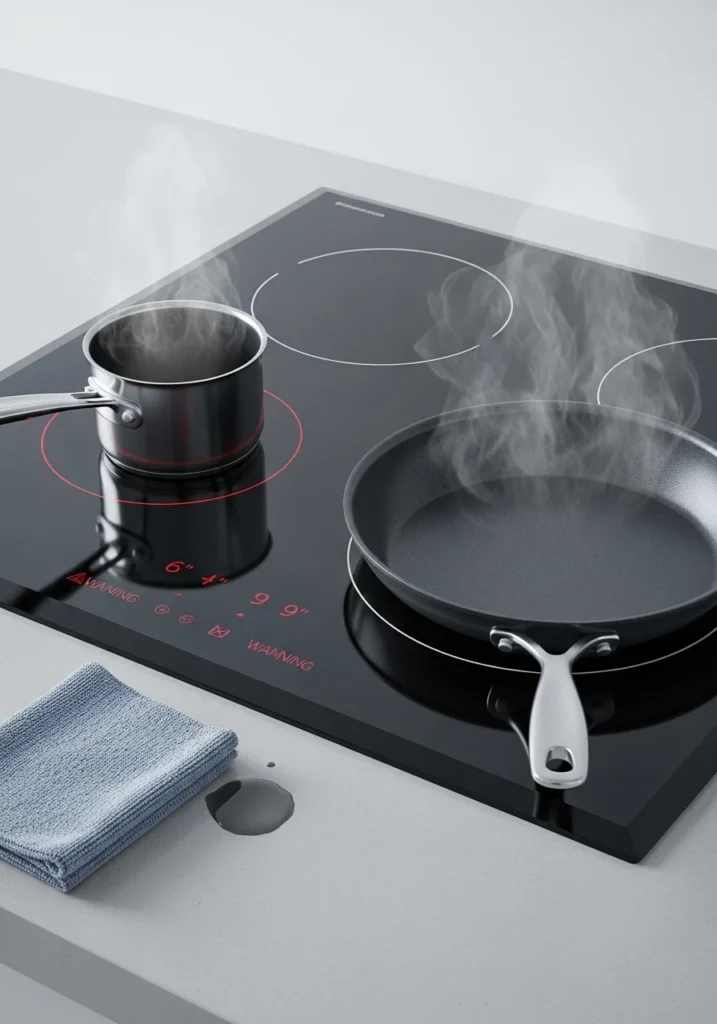
Owning a great induction cooktop only gets you halfway there. Here is how to actually use it well.
- Use flat-bottomed cookware. Warped pans reduce contact with the cooking zone and lower efficiency significantly.
- Match pan size to zone size. A small pan on a large zone wastes energy and can trigger error codes on some models.
- Use the boost function for boiling, not simmering. Boost pushes maximum wattage and gives you zero fine control.
- Let the residual heat finish the job. After you switch off, the pan retains heat for several minutes. Use that for gentle finishing cooking instead of running the cooktop longer than necessary.
- Clean spills while the surface is still slightly warm but not hot. They wipe off in seconds at that stage. Wait until they cool and harden, and you will work a lot harder for the same result.
Making the Final Decision
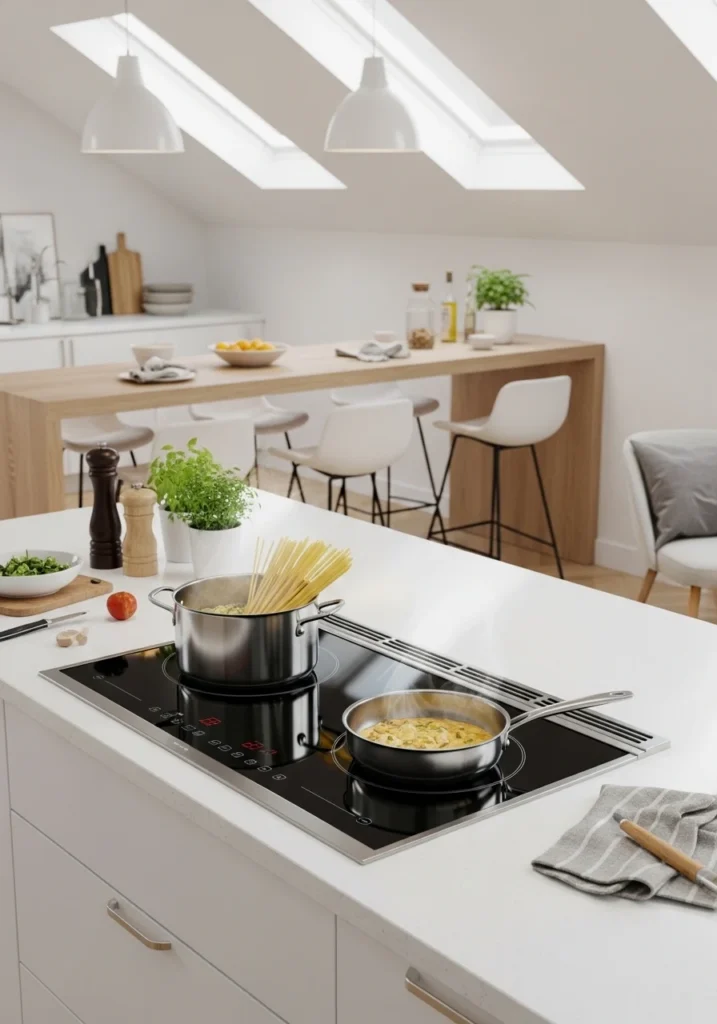
The best induction cooktop for you depends on your kitchen setup, your cooking habits, and your budget. Here is a simple way to think about it:
- Small kitchen or renting: Start with the Duxtop 9600LS or the Cuisinart ICT-60.
- Homeowner wanting a full upgrade on a reasonable budget: The GE Profile PHP9030DJBB delivers without demanding a second mortgage.
- Serious home cook who wants long-term performance: The Bosch 800 Series is worth every penny.
- No-compromise cooking: The Miele KM 6366 sets the standard.
Whichever direction you go, you are choosing a cooktop technology that genuinely outperforms what most people grew up with.
Fast heating, precise control, easy cleanup, and lower energy bills make induction cooking one of those rare kitchen upgrades that actually delivers on its promises.
And once you boil pasta in four minutes, you will wonder what took you so long to make the switch.
What Is the Best Induction Cooktop for Home Use?
The best induction cooktop for home use depends on your budget and kitchen setup. For a built-in option with professional performance, the Bosch 800 Series is a great choice.
It offers 17 power levels, FlexInduction zones, and a 3,700-watt boost function. If budget matters, the GE Profile PHP9030DJBB provides reliable performance at a lower price.
It doesn’t sacrifice the core benefits of induction cooking.
Are Induction Cooktops Worth the Money?
Yes, induction cooktops are a smart investment for most home cooks. They boil water faster than gas or electric coil. Induction models use up to 90% of energy efficiently, while gas only uses about 55%.
They also keep the cooking surface cool, which reduces burns and makes cleanup easy. In the long run, the energy savings and durability of quality induction units make them worth the cost.
What Cookware Works on an Induction Cooktop?
Induction cooktops need magnetic cookware. Cast iron, enameled cast iron, and most stainless steel pans work well. However, aluminum, copper, and glass cookware won’t work unless they have a magnetic base layer.
The easiest way to check is to hold a refrigerator magnet to the bottom of your pan. If it sticks firmly, your cookware is compatible with induction.
How Much Energy Does an Induction Cooktop Use Compared to Gas?
Induction cooktops send around 90% of their energy directly to the cookware. In contrast, gas stoves only transfer 40 to 55% because heat escapes around the pan’s sides.
Switching from gas to induction usually cuts cooking energy use by 30 to 50%. For families that cook daily, this change leads to significant savings on monthly utility bills over a year.
Can You Use a Portable Induction Cooktop as Your Primary Cooking Surface?
A portable induction cooktop can work as a main cooking surface, especially in small kitchens, studio apartments, or rentals where built-in options aren’t possible.
A two-burner model like the Cuisinart ICT-60 can handle most daily cooking tasks easily. However, it has fewer cooking zones than a full built-in unit. This means you need to plan if you want to cook several dishes at once.