
Top Picks for Fast, Reliable, and Modern Cooking
A microwave is one of those kitchen appliances that reveals its true value the moment you stop underestimating it.
Beyond reheating leftovers, the right model can defrost proteins in minutes, steam vegetables perfectly, cook entire meals, and even crisp and brown food the way a conventional oven would.
The wrong one sits on your counter taking up space and burning the edges of everything you put in it.
In 2026, the microwave market spans everything from no-frills budget countertop models under $80 to smart sensor-equipped multi-function ovens that adjust cooking time and power automatically based on what is inside.
Knowing what actually matters in a microwave, and what is just marketing, saves you both money and counter space.
We tested and ranked the 5 best microwaves of 2026 across overall performance, value, smart features, and multi-function capability so you can find the right fit for your kitchen without the guesswork.
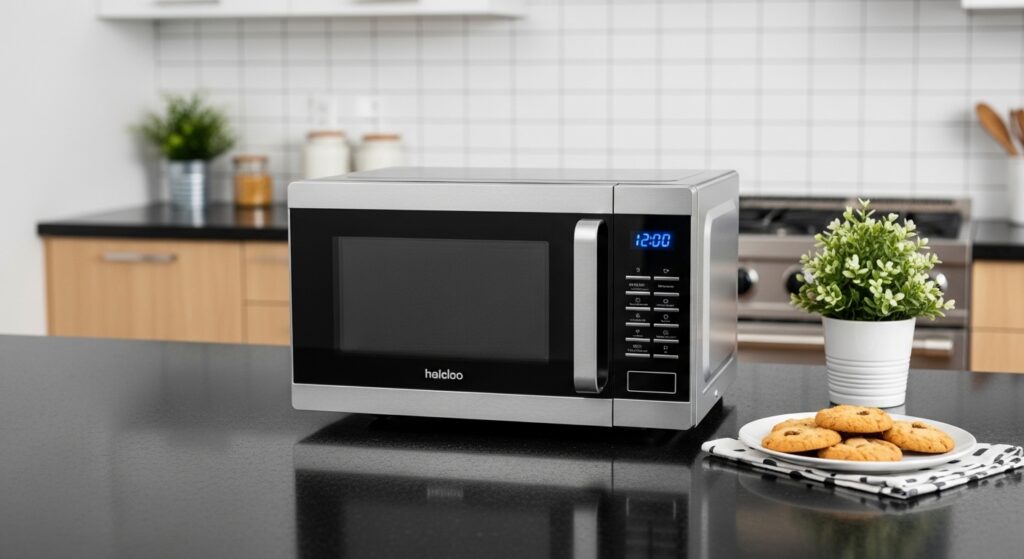
Best Overall Microwave
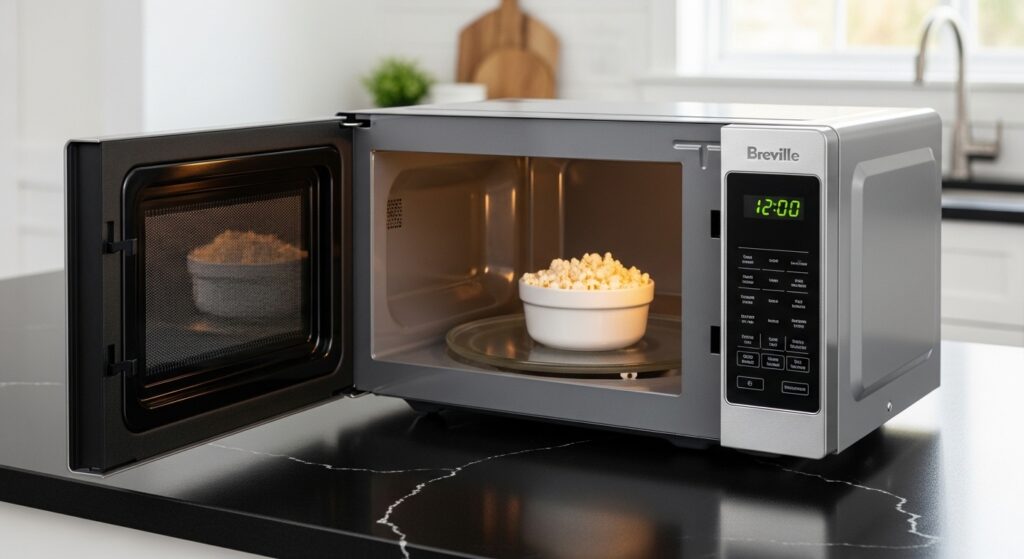
Breville Smooth Wave Countertop Microwave
The Breville Smooth Wave stands out as one of the best microwaves in 2026 due to its advanced controls, quiet operation, and sleek design.
It features responsive dials and an LED display that makes cooking programs easy to select. Many users appreciate its quiet performance and intuitive interface.
Key Features:
- Smart sensor cooking
- Quiet soft-close door
- Easy-to-use dial controls
- Modern LED display
Best For:
Families and households looking for a premium everyday microwave.
Best Mid-Range Microwave
Panasonic NN-SC67NS Microwave
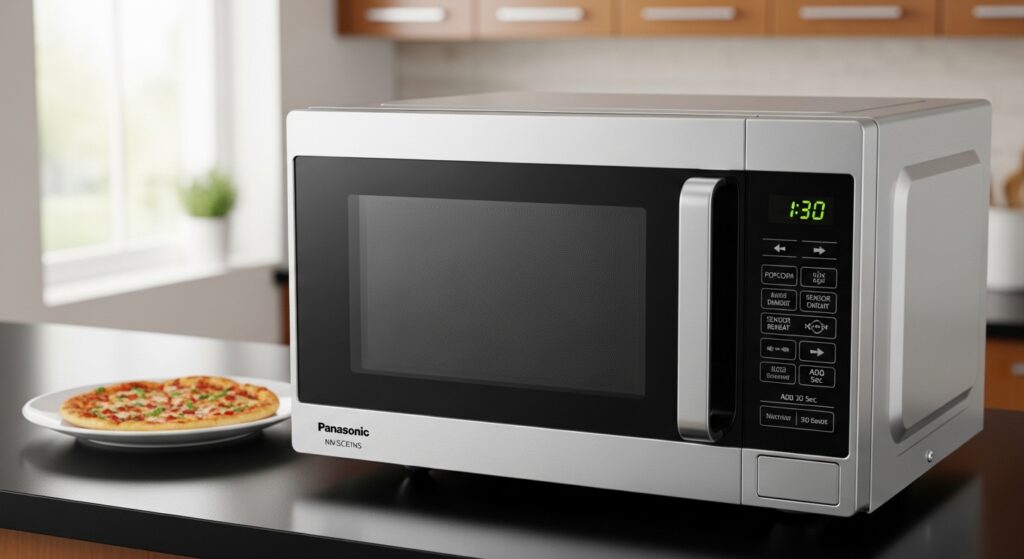
Panasonic NN-SC67NS Countertop Microwave
Reliable mid-range microwave featuring smart sensor cooking and balanced performance.
The Panasonic NN-SC67NS offers strong performance at a reasonable price, making it ideal for most households.
Panasonic models are well known for their inverter technology, which delivers consistent heating and better defrosting results.
Key Features:
- Inverter technology
- Sensor cooking
- Medium capacity
- Efficient power use
Best For:
Everyday cooking, reheating, and defrosting.
Best Budget Microwave
Sharp SMC1162HS Microwave
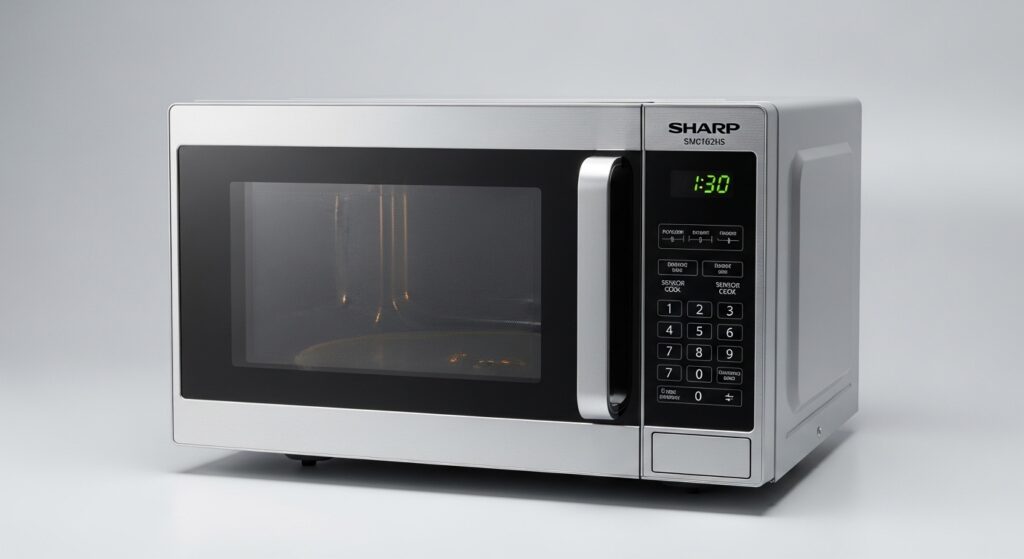
Sharp SMC1162HS Countertop Microwave
Affordable microwave with essential features and reliable heating performance.
The Sharp SMC1162HS is a solid choice for buyers looking for affordability without sacrificing performance. Budget microwaves like this still offer good heating efficiency and easy controls, making them ideal for smaller kitchens.
Key Features:
- Affordable pricing
- Compact design
- Simple controls
- Reliable heating
Best For:
Students, small households, or budget buyers.
Best Smart Microwave
LG NeoChef Microwave
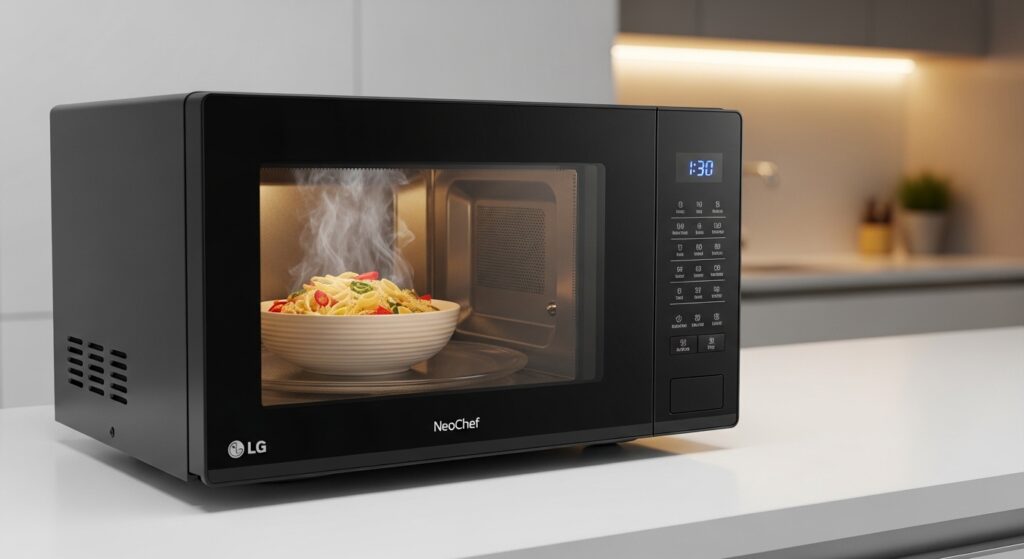
LG NeoChef Smart Inverter Microwave
Smart inverter microwave known for even heating and advanced sensor technology.
The LG NeoChef series is widely praised for its smart inverter technology, which improves heating consistency and reduces cold spots in food. It also features touch controls and advanced sensor cooking for automated heating.
Key Features:
- Smart inverter technology
- Sensor cooking
- Sleek modern design
- Easy-to-clean interior
Best For:
Tech-savvy households and modern kitchens.
Best Multi-Function Microwave
GE 3-in-1 Microwave Oven
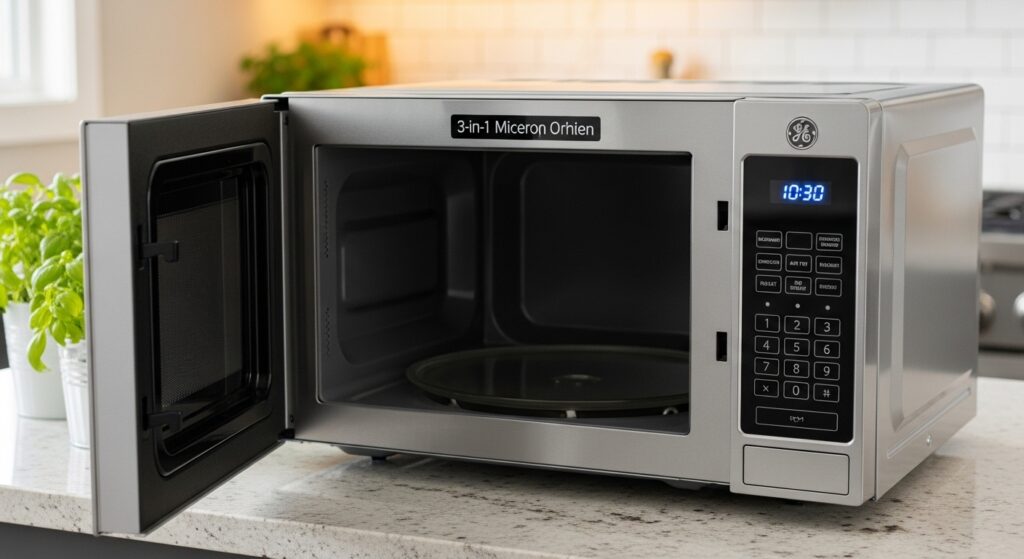
GE 3‑in‑1 Microwave with Convection & Air Fry
Versatile multi-function microwave offering convection and air fry cooking in one unit.
The GE 3-in-1 Microwave combines microwave, convection oven, and air fryer functions into one appliance. This makes it perfect for small kitchens where space-saving appliances are essential.
Key Features:
- Microwave + convection + air fry
- Space-saving design
- Multi-cooking modes
- Great versatility
Best For:
Homes needing multiple cooking functions in one appliance.
Microwave Comparison Table (2026)
| Feature | Breville Smooth Wave Countertop Microwave | Panasonic NN-SC67NS Countertop Microwave | Sharp SMC1162HS Countertop Microwave | LG NeoChef Smart Inverter Microwave | GE 3‑in‑1 Microwave with Convection & Air Fry |
|---|---|---|---|---|---|
| Type | Countertop | Countertop | Countertop | Countertop | Multi-function |
| Smart Sensor | Yes | Yes | Yes | Yes | Yes |
| Inverter Technology | No | Yes | No | Yes | Yes |
| Best For | Premium Use | Everyday Use | Budget Use | Smart Kitchens | Multi-function Cooking |
| Ease of Use | Excellent | Very Good | Good | Very Good | Excellent |
How to Choose the Best Microwave in 2026
When buying a microwave, keep these factors in mind:
1. Wattage (Power): Why This Is the Most Important Spec
Wattage is the single most impactful specification in a microwave and the one most buyers underestimate. It determines how quickly and how evenly your food cooks.
- 700 to 900 watts: Entry-level power range. Adequate for reheating beverages, defrosting, and simple reheating tasks. Noticeably slower on dense foods like frozen meals, casseroles, or whole vegetables. Expect longer cooking times and less even results compared to higher-wattage models.
- 900 to 1100 watts: The practical sweet spot for most households. Fast enough for everyday cooking tasks, consistent enough for sensor-based programs to work reliably, and available across a wide price range from budget to mid-range models.
- 1100 to 1250 watts and above: Premium power range that produces noticeably faster and more even cooking results. Worth the investment for households that use their microwave daily for full meal preparation, not just reheating.
A useful rule of thumb: most standard microwave recipes are written for a 1000-watt microwave. If your model is lower, increase the stated cooking time by 10 to 15%. If it is higher, reduce by a similar margin.
2. Capacity: Matching the Microwave to Your Household
Microwave capacity is measured in cubic feet and determines both the physical size of the interior and what you can realistically fit inside.
- 0.5 to 0.9 cubic feet: Compact models suited to singles, couples, dorm rooms, or small kitchens with limited counter space. Can handle mugs, small plates, and bowls but will not fit a standard dinner plate in most cases.
- 1.0 to 1.5 cubic feet: The standard range for most households of 2 to 4 people. Fits a 12-inch dinner plate comfortably, handles family-sized portions, and accommodates most standard microwave-safe cookware.
- 1.6 to 2.2 cubic feet: Large capacity for families or heavy microwave users. Fits larger casserole dishes, multiple plates simultaneously, and oversized containers. Takes up significantly more counter space.
Always check the stated turntable diameter alongside cubic feet, as some models have a large interior volume but a small turntable that limits practical usability.
3. Smart Features: What Is Worth Paying For and What Is Not
Smart connectivity (Wi-Fi enabled models) allows you to control the microwave via a smartphone app or voice assistant.
A genuinely useful feature for households deeply invested in a smart home ecosystem, but an unnecessary expense for most standard kitchen setups.
Sensor cooking is the single most useful smart feature available on microwaves and genuinely worth paying for.
Sensor cooking uses a humidity sensor to detect when food is releasing steam, automatically adjusting power level and cooking time to stop at the precise moment food is done.
This eliminates the guesswork of manual timing and produces consistently better results across a wide range of foods.
Inverter technology (featured on the Panasonic NN-SC376S and similar models) delivers continuous power at a set level rather than cycling the magnetron on and off to simulate lower power.
The practical result is more even cooking and defrosting, with fewer hot and cold spots and significantly better results on delicate foods like fish, butter, and chocolate.
Pre-set cooking programs are convenient but less impactful than sensor cooking or inverter technology. A long list of presets adds to the perceived value but rarely justifies a significant price premium on its own.
Types of Microwaves Available in 2026
Countertop Microwaves
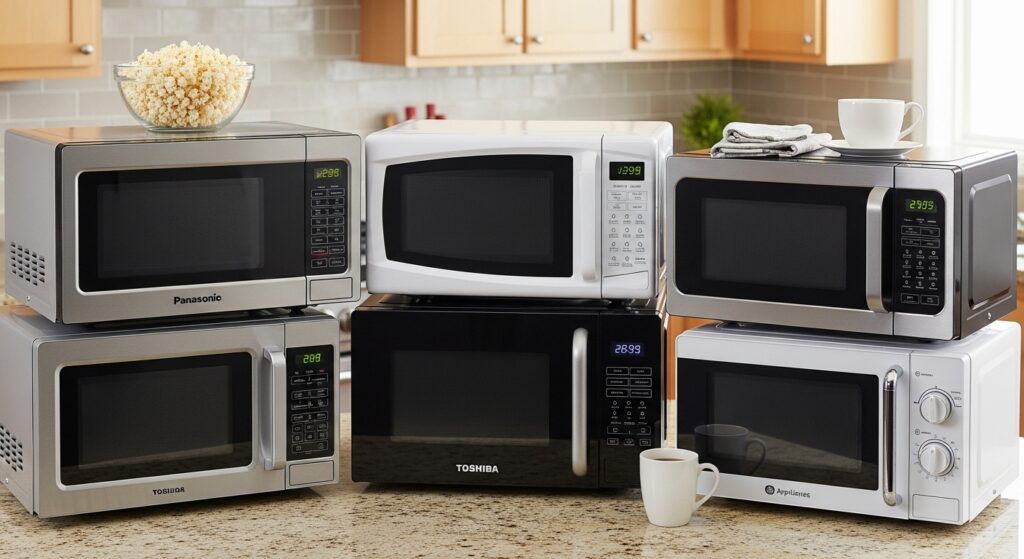
Countertop Microwaves: The most common type, sitting directly on your counter and plugging into a standard outlet. Available across the widest range of sizes, price points, and feature sets.
Easy to install (no installation required), portable, and replaceable without renovation. The trade-off is counter space, which can be significant in smaller kitchens. All five models reviewed in this guide are countertop units.
Over-the-Range Microwaves
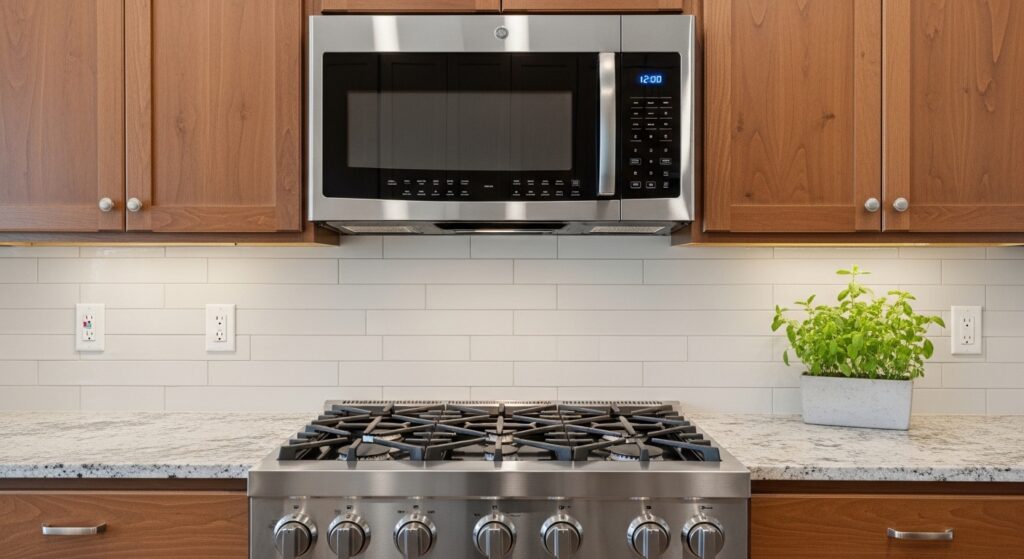
Over the Range Microwaves: Installed above your cooktop in place of a range hood, combining microwave functionality with ventilation. Frees up counter space and creates a cleaner, more integrated kitchen aesthetic.
Requires professional installation and is not portable. Typically more expensive than comparable countertop models.
The ventilation performance on most over-the-range microwaves is adequate but generally inferior to a dedicated range hood, which is worth factoring in if cooking odour and smoke extraction matter to you.
Built-In Microwaves: Installed directly into cabinetry for a fully integrated look. The premium option for kitchen renovations and new builds.
Highest installation cost and least flexibility for future replacement, but produces the cleanest visual result in a fitted kitchen.
Advantages of Modern Microwaves
Speed and convenience: Modern high-wattage microwaves with sensor cooking reduce meal preparation time by 60 to 70% compared to conventional oven cooking for everyday tasks.
Defrosting a kilogram of meat that takes 4 to 6 hours in a refrigerator takes 8 to 12 minutes in a 1000-watt microwave with an inverter defrost function.
Energy efficiency: Microwaves use significantly less electricity than conventional ovens because they heat food directly rather than heating the surrounding air.
A typical microwave uses 0.1 to 0.2 kWh for a standard reheating task, compared to 1.0 to 1.5 kWh for an oven preheating and cooking the same portion.
Nutrient preservation: Shorter cooking times and lower heat exposure means water-soluble vitamins (particularly Vitamin C and B vitamins) are better preserved in microwave-cooked vegetables than in boiled or oven-roasted equivalents.
Steaming vegetables in a microwave is one of the most nutritionally sound cooking methods available.
Versatility in 2026 models: Multi-function models like the GE 2-in-1 combine microwave speed with convection oven browning capability, effectively replacing two appliances with one unit.
For small kitchens without space for a separate oven, this is a genuinely compelling value proposition.
Final Verdict: Which Microwave Should You Buy in 2026?
If you want overall performance, choose the Breville Smooth Wave.
For budget-friendly reliability, the Sharp SMC1162HS is a strong choice.
If you want advanced technology, the LG NeoChef delivers excellent results.
And for maximum versatility, the GE 3-in-1 Microwave stands out.
Q1: What Wattage Microwave Do I Need for Everyday Cooking?
For most households, 900 to 1100 watts covers everyday cooking needs comfortably.
This range handles reheating, defrosting, steaming vegetables, cooking frozen meals, and basic microwave recipes without excessive waiting time.
If you use your microwave primarily for reheating beverages or simple warm-ups, 700 to 800 watts is sufficient and typically comes at a lower price point.
If you cook full meals in your microwave regularly, or use it as a primary cooking appliance in a small kitchen, investing in a 1100 to 1250-watt model with sensor cooking produces noticeably better and faster results.
Q2: What Is Inverter Technology in a Microwave and Why Does It Matter?
Inverter technology changes the way a microwave delivers power at lower settings. Traditional microwaves simulate reduced power by cycling the magnetron fully on and fully off in rapid intervals.
This creates uneven cooking, with the outer edges of food getting hot while the centre remains cold.
Inverter microwaves deliver a continuous stream of power at the exact wattage selected, producing significantly more even cooking and defrosting results throughout the entire food item.
This matters most when cooking delicate foods (fish, eggs, chocolate), defrosting proteins, or reheating layered dishes like lasagne where even heat distribution makes a visible difference to the final result.
Q3: Is a Countertop or Over the Range Microwave Better?
It depends entirely on your kitchen layout and priorities. Countertop microwaves offer greater flexibility, a wider range of features at comparable prices, and require no installation.
They are the right choice for renters, for kitchens without a suitable installation space above the cooktop, and for anyone who wants the freedom to upgrade or replace without renovation.
Over the range microwaves are the better choice for homeowners undertaking kitchen renovations who want to free up counter space and create an integrated look.
The ventilation they provide is adequate for light cooking but should not be considered a substitute for a dedicated range hood in a kitchen used for heavy daily cooking.
Q4: How Long Should a Microwave Last?
A quality microwave from a reputable brand should last 7 to 10 years under normal household use. Budget models typically last 4 to 6 years before magnetron or control panel issues become common.
To extend the lifespan of any microwave: never run it empty (this damages the magnetron), always use microwave-safe containers, clean the interior regularly to prevent grease and food residue buildup on the waveguide cover, and avoid slamming the door as latch damage is one of the most common causes of premature microwave failure.
Q5: Can a Microwave Replace a Conventional Oven?
A standard microwave cannot fully replace a conventional oven because it cannot brown, crisp, or caramelise food surfaces the way dry oven heat does.
However, a multi-function convection microwave (like the GE 2-in-1 reviewed in this guide) combines microwave speed with convection heating to deliver browning and crisping results comparable to a conventional oven.
For small kitchens, studio apartments, or secondary cooking spaces where a full oven is not practical, a quality convection microwave is a genuinely capable alternative that handles the vast majority of everyday cooking tasks including roasting, baking, and grilling alongside standard microwave functions.