
Your dishwasher cleans everything except itself. Ironic, right?
I learned this the hard way when my “clean” dishes started coming out with a weird film, and I finally admitted the appliance responsible for sparkling plates was hiding a swamp behind its own door.
If you’ve ever pulled out a glass that looked cloudier than when it went in, you already know the problem.
I’m going to walk you through exactly how I fixed mine, and how you can get your dishwasher back to doing its actual job: making things sparkle, not adding grime to them.
Why Your Dishwasher Needs Regular Cleaning
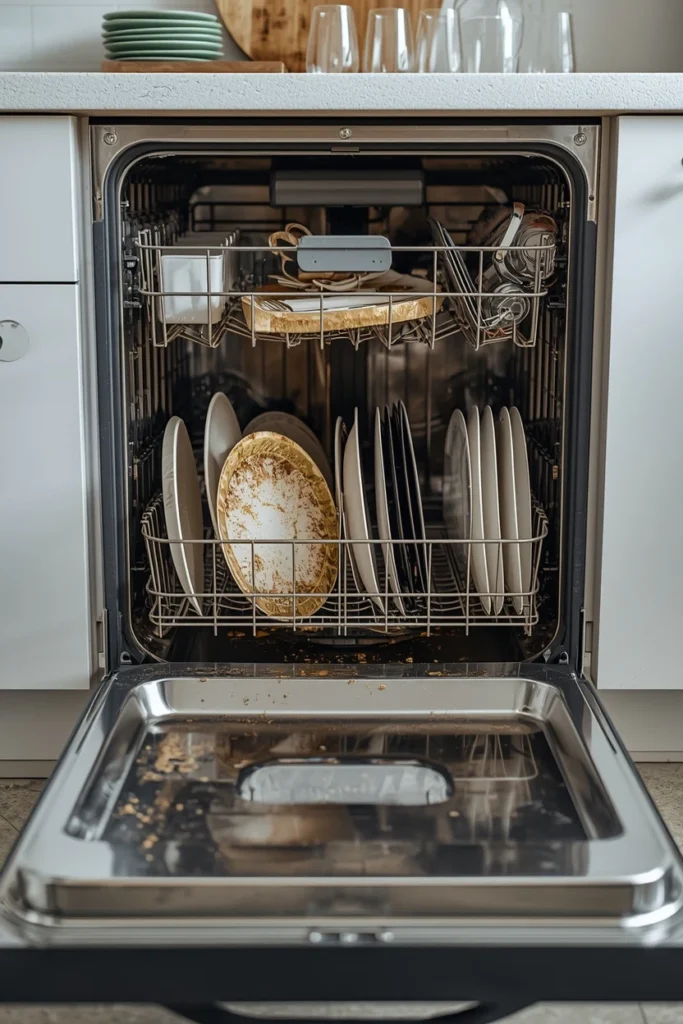
Here’s the thing nobody tells you when you buy a dishwasher: it doesn’t magically stay clean just because it’s full of soap and hot water.
Food particles, grease, and mineral deposits build up in the filter, spray arms, and door seals over time. That buildup doesn’t just sit there quietly either, it actively works against you.
A dirty dishwasher can cause:
- Cloudy glasses and dishes that look worse after washing than before
- Persistent odors that make opening the door genuinely unpleasant
- Reduced water pressure from clogged spray arm holes
- Mold and mildew growth in damp, dark corners you never think to check
Sound familiar? If you’re nodding along, don’t worry. This isn’t a sign you’re a bad homeowner. It’s just a sign nobody handed you the manual for the part that actually matters.
What You’ll Need Before You Start
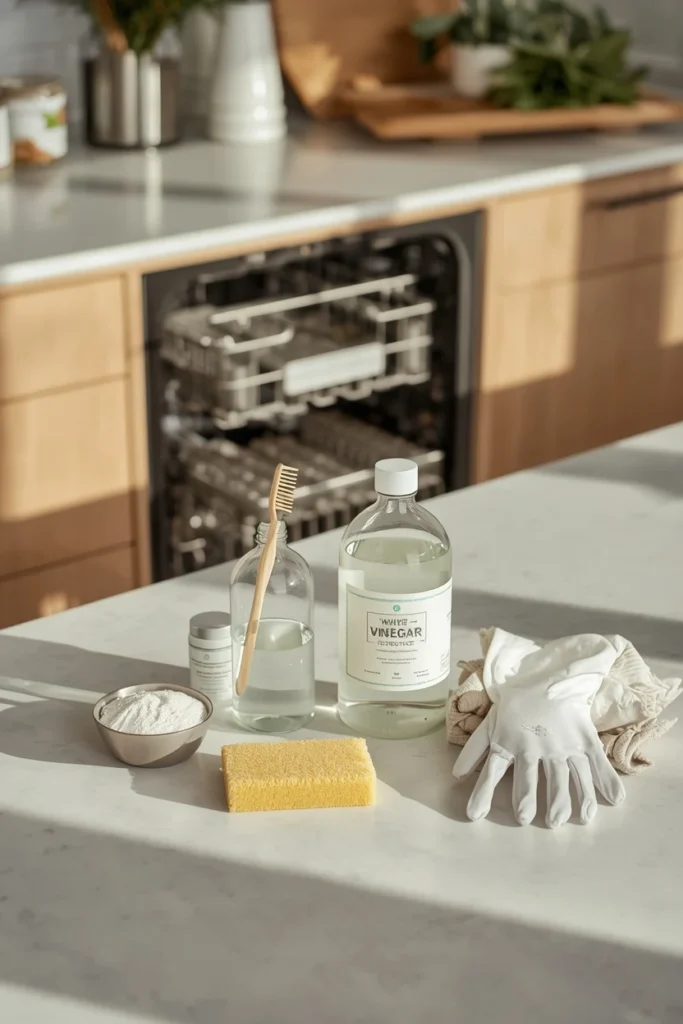
You don’t need a cabinet full of specialty cleaners for this. I’ve tried the fancy dishwasher cleaning pods, and honestly, a few pantry staples work just as well most of the time.
Grab these before you begin:
- White vinegar (your new best friend)
- Baking soda
- An old toothbrush for scrubbing tight spots
- Microfiber cloth or sponge
- Rubber gloves if you’re squeamish about gunk (no judgment here)
That’s really it. Some people swear by commercial dishwasher cleaners, and those work fine too, but I’ve never found them necessary for a routine deep clean.
Step 1: Empty the Dishwasher Completely
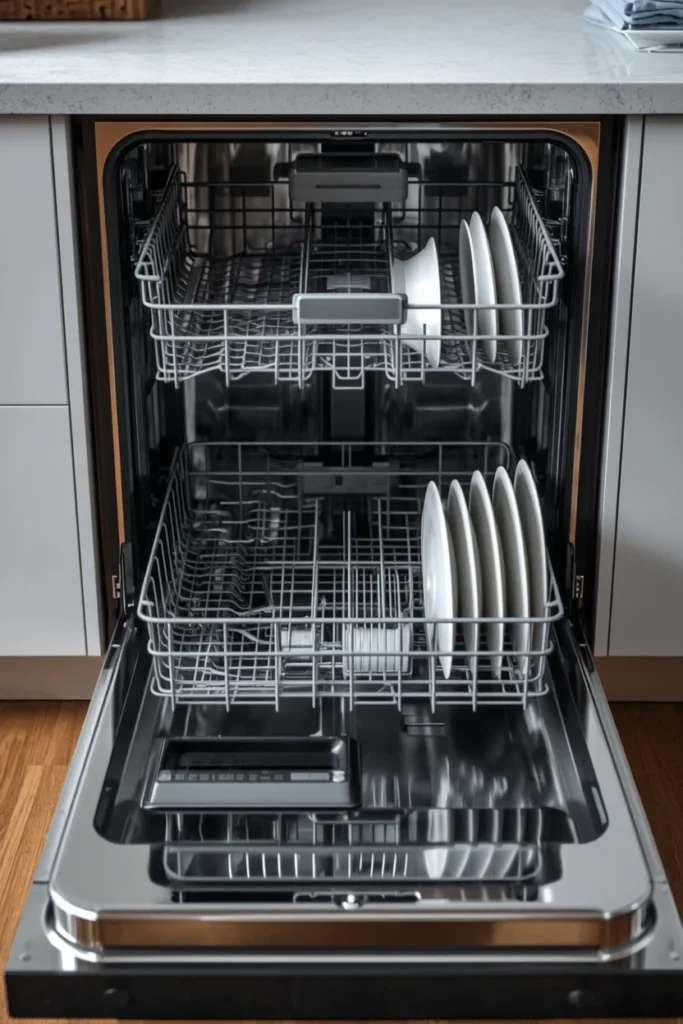
Start with an empty machine. Take out every plate, cup, and utensil before you touch anything else.
Trying to clean around dishes is like mopping a floor with furniture still on it: technically possible, but why make it harder on yourself?
Once it’s empty, take a good look inside. Check the bottom of the tub, the door seal, and the spray arms. This quick visual inspection tells you exactly where the worst buildup is hiding.
Step 2: Clean and Remove the Filter
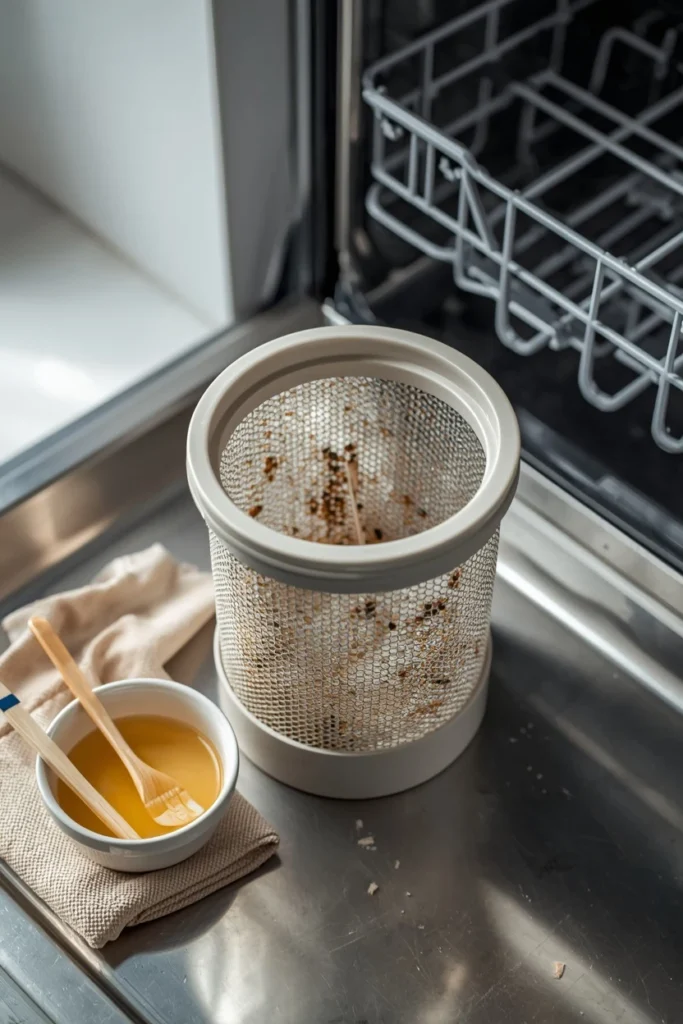
This is the step most people skip, and it’s honestly the most important one.
Your dishwasher has a removable filter at the bottom, usually near the spray arm, that catches food debris before it recirculates through the wash cycle. If you’ve never removed yours, brace yourself.
How to Clean the Filter Properly
- Twist and lift the filter out according to your model’s instructions (check the manual if you’re unsure)
- Rinse it under hot running water to knock loose debris free
- Use your toothbrush to scrub away stuck-on gunk in the mesh
- Soak it in warm, soapy water for ten minutes if it’s particularly nasty
- Rinse again and pop it back into place
I’ll be honest, the first time I did this, I found things in there I still can’t identify. But that’s exactly why cloudy dishes happen.
A clogged filter means dirty water just keeps circulating instead of draining away, and it recoats every dish in the load.
Step 3: Wipe Down the Door and Seals
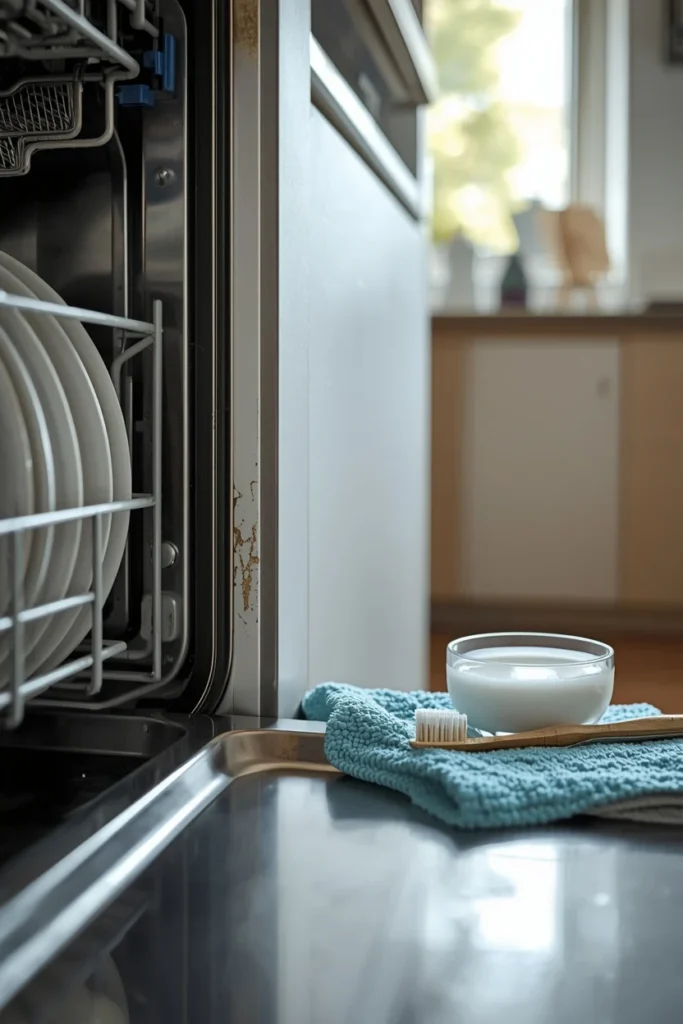
Grease and grime love to hide along the rubber door gasket, and that spot rarely gets a second thought. Dip a cloth in warm soapy water and wipe along the entire seal, paying attention to the folds where moisture collects.
Mold thrives in these damp, rubbery crevices, so don’t be shy about scrubbing. If you spot black spots, that’s mildew, and it needs more than a quick wipe.
A mix of vinegar and water handles it well, and your toothbrush can get into the tighter grooves.
Don’t forget the edges of the door itself and the control panel area. Splashed sauce and stray food bits love to collect right where you’d never think to look.
Step 4: Run a Vinegar Cycle
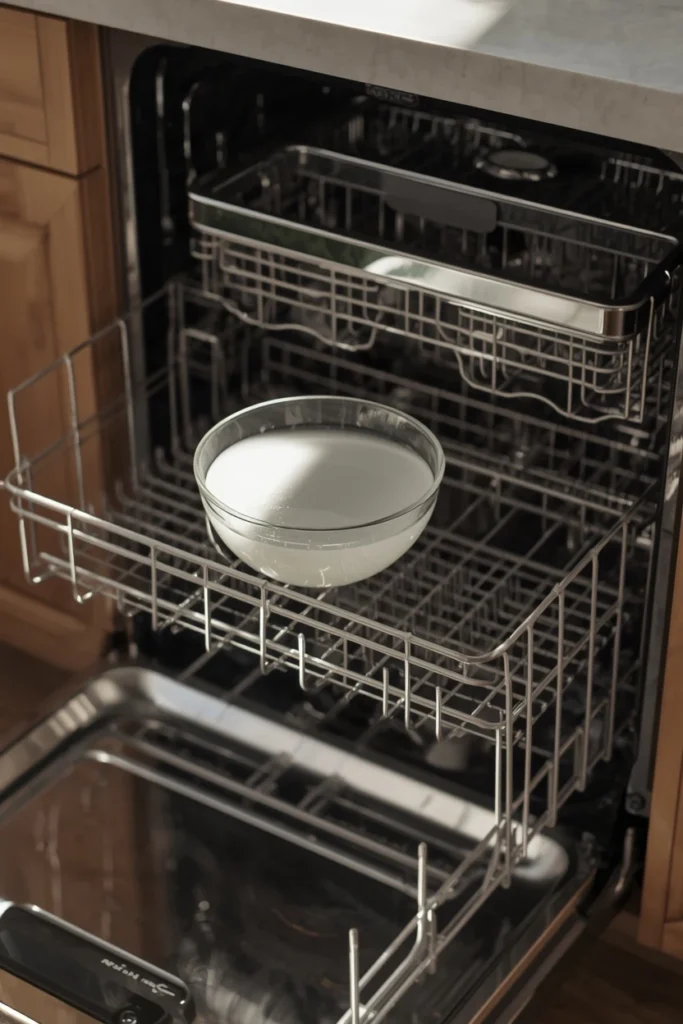
Once the filter and seals are handled, it’s time for the deep clean everyone actually asks about. This step tackles grease, hard water deposits, and lingering odors in one shot.
Here’s what I do every single time:
- Place a dishwasher-safe bowl filled with two cups of white vinegar on the top rack
- Run a full hot water cycle with no other dishes inside
- Let the vinegar work its magic through the entire wash
Ever wondered why vinegar gets recommended for basically everything in a kitchen? It’s mildly acidic, which means it cuts through mineral buildup and grease without damaging your dishwasher’s interior.
I was skeptical the first time, thinking it was some overhyped internet trick, but the difference in smell alone converted me instantly.
Step 5: Sprinkle Baking Soda for a Fresh Finish
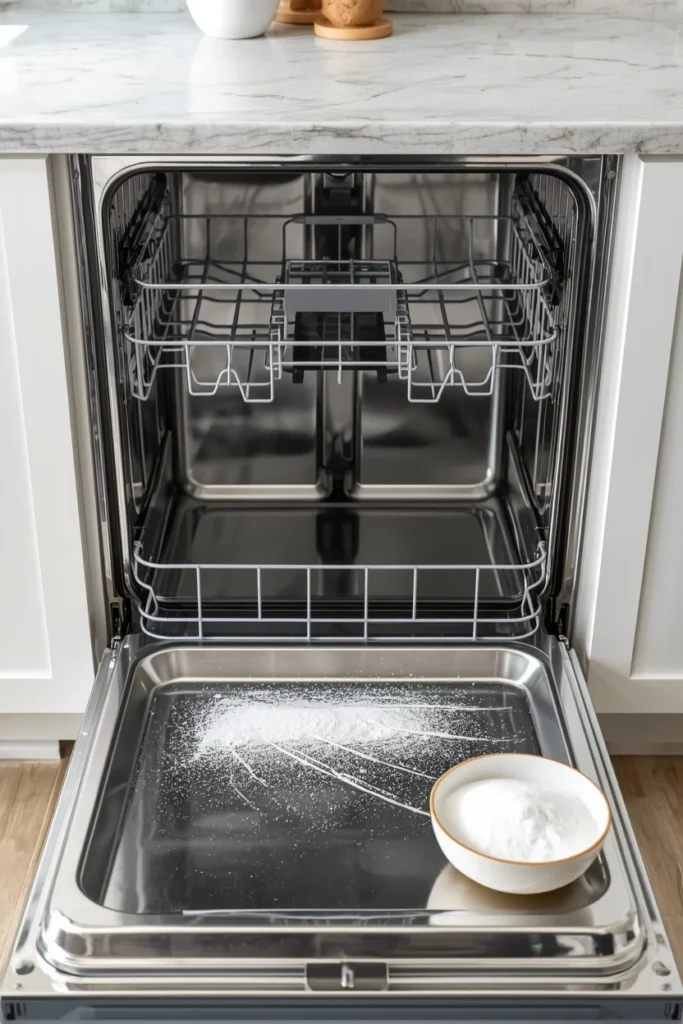
After the vinegar cycle, follow up with a light coating of baking soda across the bottom of the tub. Run a short, hot cycle without any dishes.
This step tackles any lingering odor the vinegar didn’t fully knock out and leaves the interior smelling genuinely fresh, not fake-lemon-fresh, actually fresh.
I like to think of vinegar as the heavy lifter and baking soda as the finishing touch. Together, they handle grease, odor, and residue better than most single-purpose products I’ve tried.
Step 6: Clean the Spray Arms
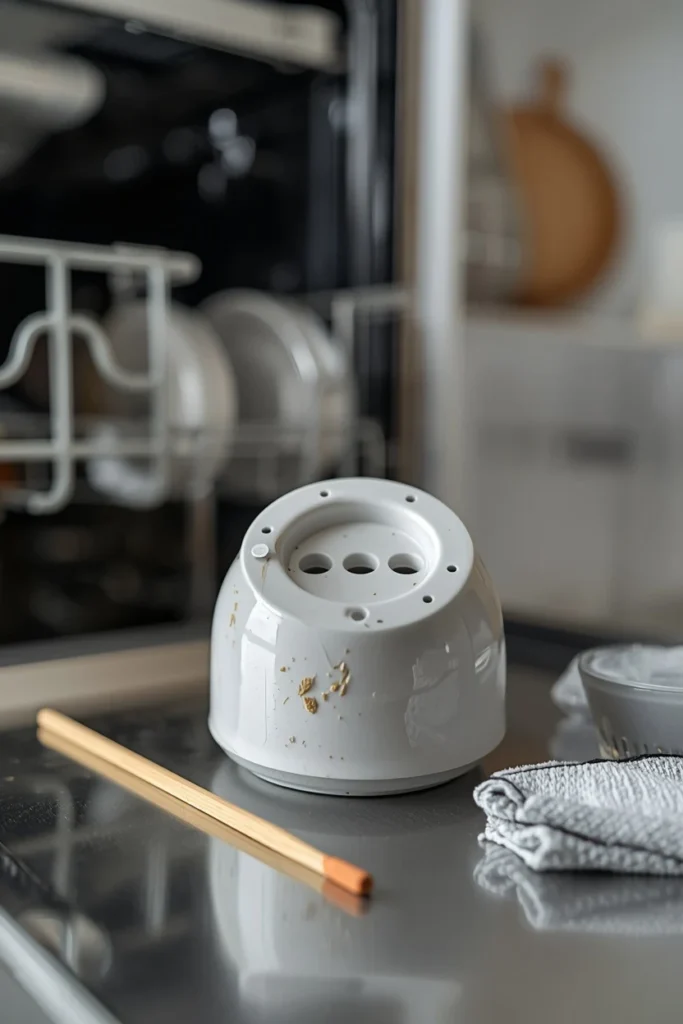
The spray arms are the unsung heroes of your dishwasher, and they clog more often than you’d expect.
Small holes along the arms can fill with mineral deposits or food particles, which directly reduces water pressure during the wash.
To clean them:
- Remove the spray arms if your model allows it (most modern dishwashers do)
- Use a toothpick or thin wire to clear out each individual hole
- Rinse thoroughly under running water
- Reattach securely before running your next load
Skipping this step is like trying to water your lawn with a clogged hose. The water’s technically coming out, just not enough of it, and not where you need it most.
Step 7: Wipe the Exterior and Control Panel
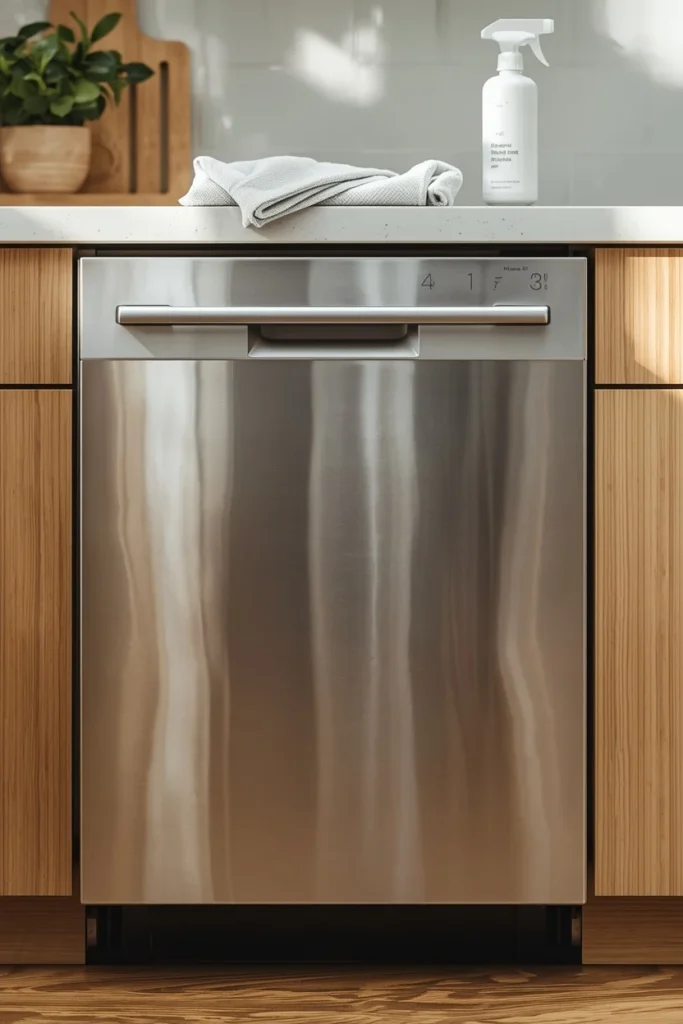
The outside matters too, especially if your dishwasher sits front and center in your kitchen. A stainless steel cleaner works well for stainless models, while a simple soapy cloth handles most other finishes just fine.
Wipe down the handle, buttons, and control panel where hands touch most often. This isn’t just about looks. Fingerprints and grease buildup on buttons can actually interfere with touch-sensitive controls on newer models.
How Often Should You Clean Your Dishwasher?
I clean my filter every two weeks and run a full vinegar cycle once a month. That schedule keeps everything running smoothly without turning dishwasher maintenance into a part-time job.
A general rule of thumb:
- Filter cleaning: Every two weeks
- Deep clean with vinegar and baking soda: Monthly
- Door seal and gasket wipe-down: Weekly, or whenever you notice buildup
- Spray arm check: Every couple of months, or if you notice weaker water pressure
Adjust based on how often you run your dishwasher. A household running it daily needs more frequent attention than one running it twice a week.
Final Thoughts
A clean dishwasher isn’t a luxury, it’s the actual foundation of getting sparkling dishes every single time.
Skip this maintenance, and you’re basically asking your appliance to clean your plates with dirty water, which defeats the entire purpose of owning one.
Set a reminder on your phone, keep a bottle of vinegar under the sink, and treat this like the five-minute task it really is.
Your dishes, your glasses, and your nose will thank you. And next time someone compliments how spotless your wine glasses look, you can just smile and not mention the toothbrush.
How Often Should You Clean Your Dishwasher?
Clean the filter every two weeks and run a full vinegar deep clean once a month. Households that run their dishwasher daily may need to check the filter and seals a bit more often to keep buildup under control.
What Is The Best Natural Cleaner For A Dishwasher?
White vinegar works best as a natural cleaner because its mild acidity cuts through grease and mineral deposits without damaging the interior.
Baking soda pairs well with it, tackling odors and giving the tub a fresh finish after the vinegar cycle.
Why Does My Dishwasher Smell Bad Even After Cleaning?
A lingering smell usually means the filter or door seal still has trapped food debris hiding in a spot you missed.
Check the rubber gasket folds and the underside of the filter closely, since both areas trap moisture and grime even after a quick wipe down.
Can You Use Bleach To Clean A Dishwasher?
Bleach can damage stainless steel interiors and rubber seals over time, so it’s best avoided unless your manufacturer specifically approves it.
Vinegar and baking soda handle grease, odor, and mineral buildup just as effectively without the risk.
How Do You Clean A Dishwasher Filter?
Remove the filter according to your model’s instructions, rinse it under hot water, and scrub stuck-on debris with an old toothbrush.
Soak it in warm soapy water for about ten minutes if it’s heavily soiled, then rinse again before placing it back.