
I once stood in my kitchen with a can of chemical oven cleaner, coughing, eyes watering, wondering why I was torturing myself for a spotless oven. That was the day I swore off the toxic spray for good.
If you have ever asked yourself whether a natural oven cleaner can actually cut through burnt-on grease without gassing out your whole house, you are in the right place.
I have spent years testing pantry staples against decades of baked-on grime, and I promise you this is not another list of vague “just use vinegar” tips.
This is the real method, the real ratios, and the honest truth about what works and what just smells nice while doing nothing.
Why Store-Bought Oven Cleaners Are Overrated
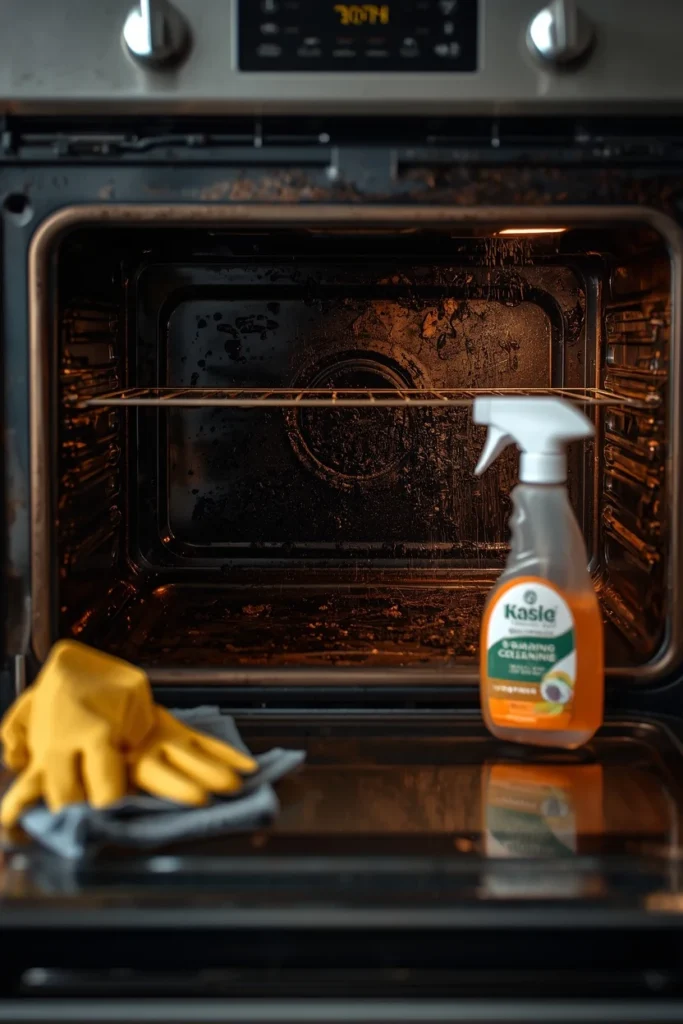
Let’s talk about those cans for a second. Most commercial oven cleaners rely on sodium hydroxide, otherwise known as lye, which is powerful enough to burn skin on contact.
Sure, it melts grease fast, but at what cost to your lungs and your countertops?
I have ruined a rubber oven seal with that stuff before. The fumes lingered for two days, and I ended up airing out the kitchen like I had a chemical spill. Doesn’t exactly scream “safe for the room where you make dinner,” does it?
Here’s the thing: natural ingredients can absolutely deep clean an oven when you use them correctly and give them time to work. The trick is not skipping steps just because baking soda sounds too simple to be effective.
The Baking Soda and Vinegar Method That Actually Works
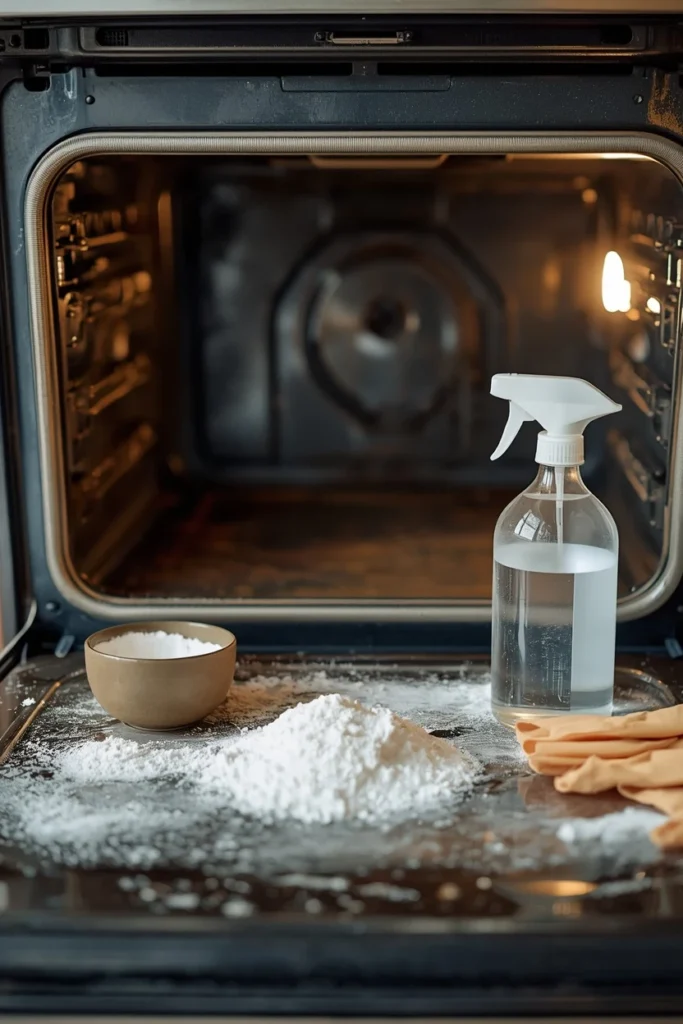
This is the method I turn to every single time, and it has never let me down on a standard residential oven. It takes patience, but patience beats a chemical burn any day.
What You’ll Need
- Baking soda (about half a cup)
- White vinegar (a few tablespoons)
- Water
- A spray bottle
- A damp cloth or non-scratch sponge
- Rubber gloves, because nobody wants grease-stained hands
Step by Step
- Remove the oven racks and set them aside for a separate soak.
- Mix the baking soda with a small amount of water until it forms a thick, spreadable paste. Think frosting consistency, not soup.
- Spread the paste generously over the interior surfaces of the oven, avoiding the heating elements.
- Let the paste sit for at least 12 hours, or overnight if your oven has seen better days.
- Fill your spray bottle with vinegar and mist the dried paste until it starts to foam and bubble.
- Wipe everything away with a damp cloth, rinsing as you go.
Why does this combination work so well? The baking soda breaks down grease and lifts stains, while the vinegar reacts with it to loosen everything that has bonded to the metal.
It’s basic chemistry doing the heavy lifting instead of your elbow.
I will be honest, the first time I tried this I did not let the paste sit long enough, and I ended up scrubbing harder than I wanted to. Give it the full overnight rest. Your future self will thank you.
For the Really Bad Grease: Add Dish Soap Power
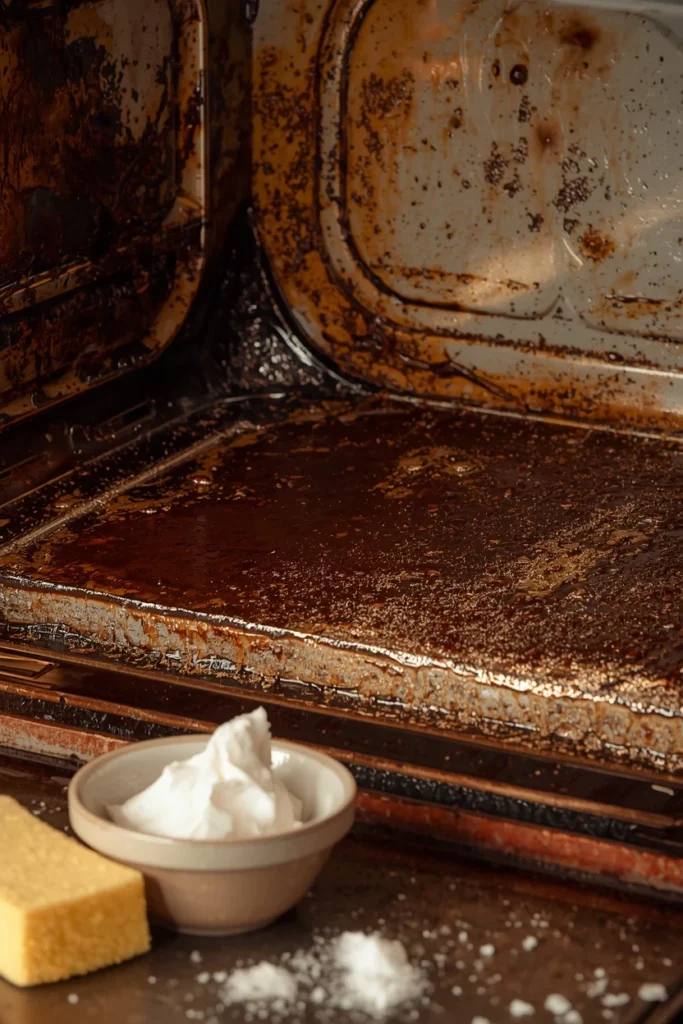
Sometimes baking soda and vinegar need backup, especially if your oven has not seen a deep clean in months. That is where a few drops of natural dish soap come in handy.
Mix your baking soda paste with a splash of dish soap instead of plain water. The soap adds extra grease-cutting power without introducing anything harsh. This combo has saved me on ovens that looked genuinely hopeless.
- Works best on caked, years-old grease buildup
- Cuts through oil residue faster than baking soda alone
- Rinses away cleanly with warm water
Does it smell as pleasant as a citrus spray? Not really. But it gets the job done without turning your kitchen into a gas chamber.
Lemon and Salt for Stubborn Baked-On Grime
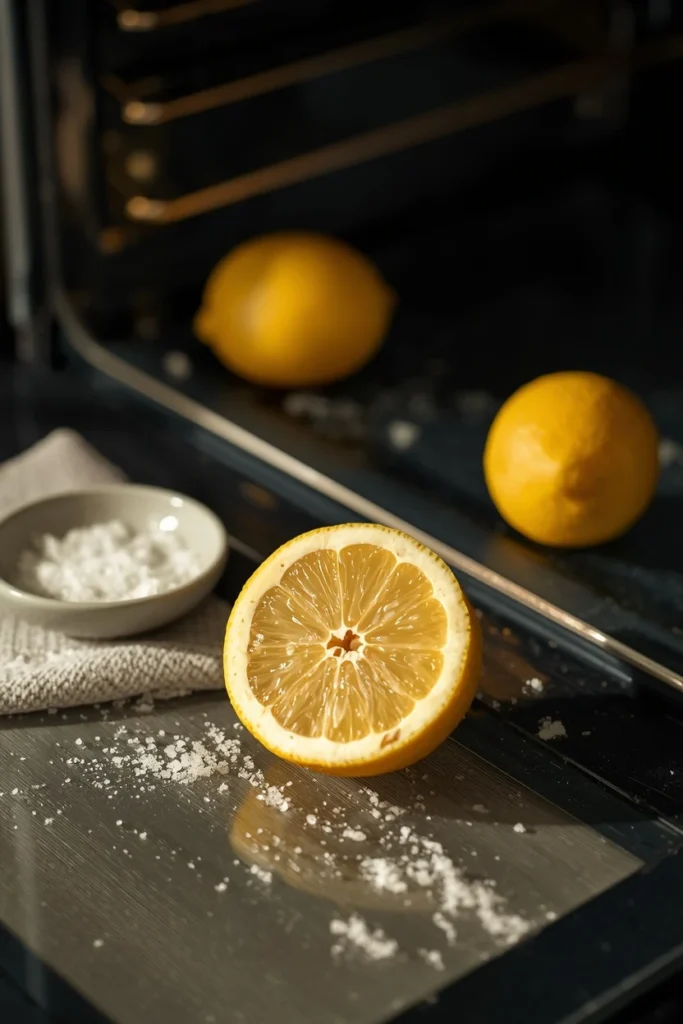
Lemons are not just for lemonade and pretending you are healthy. The citric acid inside them acts as a natural degreaser, and when you pair it with coarse salt, you get a gentle abrasive that will not scratch your oven’s interior.
Cut a lemon in half, sprinkle coarse salt directly onto the cut side, and scrub away at stubborn spots. The acid breaks down the grime while the salt provides just enough grit to lift it off.
I use this specifically on glass oven doors and small trouble spots that do not need the full baking soda treatment.
This method also leaves your kitchen smelling genuinely fresh instead of like a science experiment gone sideways. Bonus points for using up lemons before they go bad in the fridge.
Steam Cleaning Trick for Glass Oven Doors
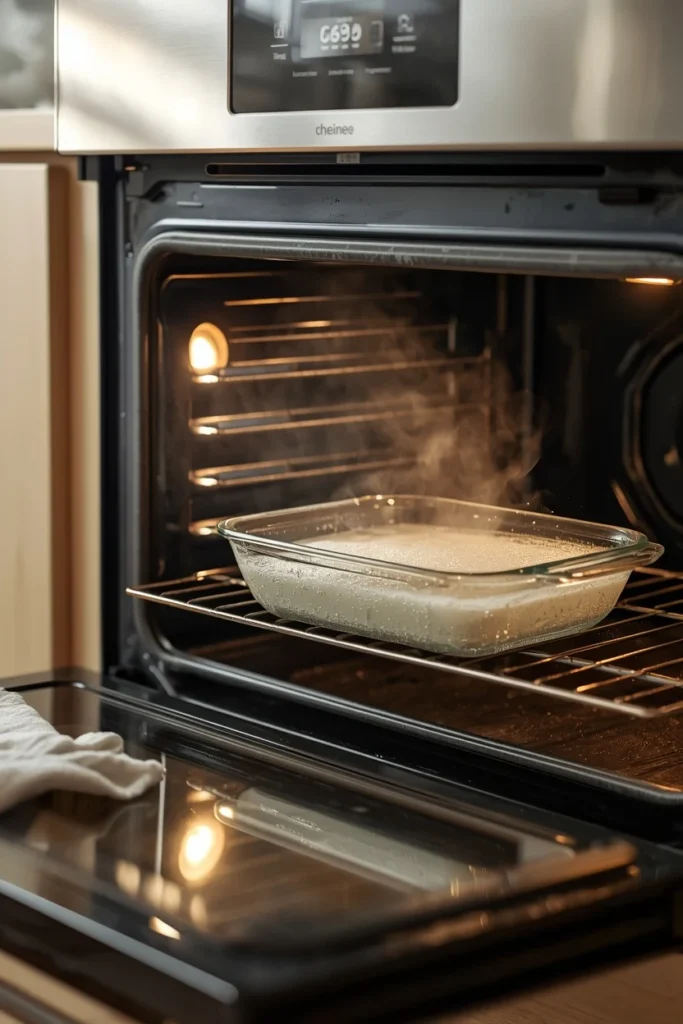
Glass oven doors are their own special headache. Baking soda paste can leave streaks if you are not careful, so I switch strategies here.
Fill an oven-safe dish with water and a splash of vinegar, then place it inside the oven.
Heat the oven to around 250 degrees Fahrenheit for 20 minutes to create steam. This loosens grime on the glass without you having to scrub aggressively.
Once the oven cools, wipe the glass with a microfiber cloth. You will notice the buildup practically slides off. Ever tried scraping dried grease off cold glass? It is a nightmare, and steam solves that problem instantly.
Mistakes People Make With Natural Cleaners
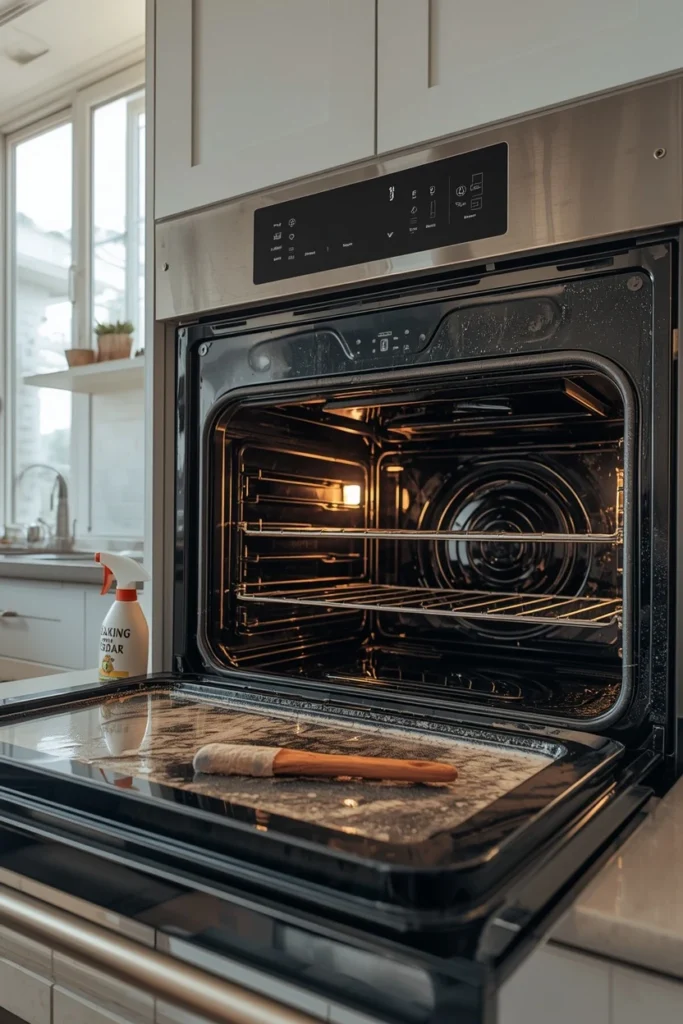
I have made plenty of these mistakes myself, so let me save you the trouble. Natural cleaning is effective, but only when you respect the process.
- Rushing the sitting time. Baking soda paste needs hours to break down grease, not minutes.
- Using too much vinegar at once. It creates a mess of foam that runs everywhere before it can actually work.
- Scrubbing with abrasive tools. Steel wool will scratch enamel coatings, so stick to sponges or cloths.
- Ignoring the racks. A shiny oven interior looks pointless next to grimy racks.
- Skipping ventilation. Even natural cleaners benefit from an open window or a running vent fan.
Natural does not mean instant. If you want the deep clean results, you have to give the ingredients time to actually do their job.
How Often Should You Deep Clean Your Oven
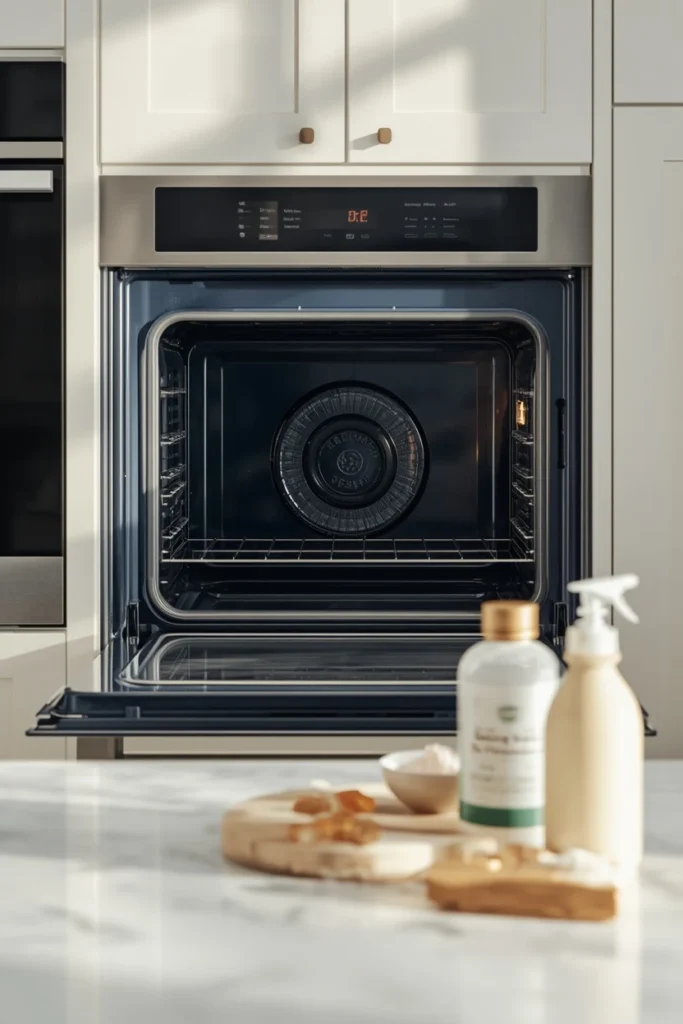
Nobody wants to deep clean their oven every week, and honestly, you don’t need to. For most households, a deep clean every one to three months keeps things manageable.
If you bake frequently or tend to have spills that go unnoticed until they turn to smoke, lean toward the shorter end of that range. Light households that mostly reheat leftovers can stretch it out longer.
Either way, wiping up spills immediately after they happen saves you from a much bigger job later.
I keep a small dish of baking soda paste ready in my kitchen for quick spot treatments between full cleans. It has cut my deep cleaning sessions down significantly, and my oven still looks decent months later.
Final Thoughts
A natural oven cleaner genuinely can tackle baked-on grease, stubborn stains, and grimy glass doors without exposing you to harsh chemicals.
Baking soda and vinegar remain the reliable foundation, while dish soap, lemon, salt, and steam handle the specific trouble spots that need extra attention.
Give your oven the overnight treatment it deserves instead of reaching for a can that smells like a chemistry lab accident.
Your lungs, your countertops, and honestly your dinner will all thank you for it. Now go grab that box of baking soda sitting in your fridge and put it to actual use for once.
Does Baking Soda And Vinegar Really Clean An Oven?
Yes, it genuinely works. Baking soda breaks down grease and lifts baked-on stains, while vinegar reacts with the dried paste to loosen everything from the surface.
Give the paste enough time to sit and you will see real results, not just a nicer smell.
How Long Should I Leave Baking Soda Paste In The Oven?
Leave the paste for at least 12 hours, and overnight works even better for heavily soiled ovens. Rushing this step is the most common mistake people make, since the paste needs time to actually break the grease down.
Is A Natural Oven Cleaner As Effective As Store-Bought Cleaners?
For most household grease and grime, yes.
Commercial cleaners rely on harsh chemicals like sodium hydroxide to work faster, but natural ingredients get you the same clean without the fumes or the risk to your skin and lungs.
How Often Should I Deep Clean My Oven Naturally?
Most households do well with a deep clean every one to three months. If you bake often or deal with regular spills, lean toward the shorter end of that range, and wipe up messes right away to cut down on future scrubbing.
Can I Use This Method On A Glass Oven Door?
Yes, though a steam method or a lemon and salt scrub works better on glass than baking soda paste, which can leave streaks.
Heating a dish of water and vinegar inside the oven creates steam that loosens grime without scratching the glass.