Finding the right blender shouldn’t feel like a research project, but with hundreds of models flooding the market in 2026, it’s easy to overspend on features you’ll never use, or worse, buy something that can’t even crush ice properly.
Whether you’re blending daily green smoothies, cold-pressed juices, nut butters, or protein shakes, the blender you choose directly impacts your results, and your morning routine.
The difference between a great blender and a frustrating one comes down to motor power, blade design, and how well it handles real-world ingredients.
We’ve tested and ranked the top 5 blenders of 2026 across performance, value, noise level, and ease of cleaning, so you can make one confident decision and get back to what matters: drinking something delicious.
At a Glance: Blender Comparison Table
| Blender | Best For | Power | Capacity | Ideal Users |
|---|---|---|---|---|
| Vitamix Ascent X4 | Overall Performance | High-End Motor | Large | Families & Daily Users |
| Ninja Professional Plus | Best Value | Powerful | Large | Budget-Conscious Buyers |
| NutriBullet Pro | Single-Serve Smoothies | Compact Power | Personal Size | Students & Small Kitchens |
| Braun TriForce Power Pro | Versatility | High Performance | Large + Personal Cup | Multi-Purpose Users |
| Ninja Detect Power Blender | Smart Features | Intelligent Blending | Large | Tech-Savvy Kitchens |
Best Overall Blender for Smoothie
1.Vitamix 5200 Blender
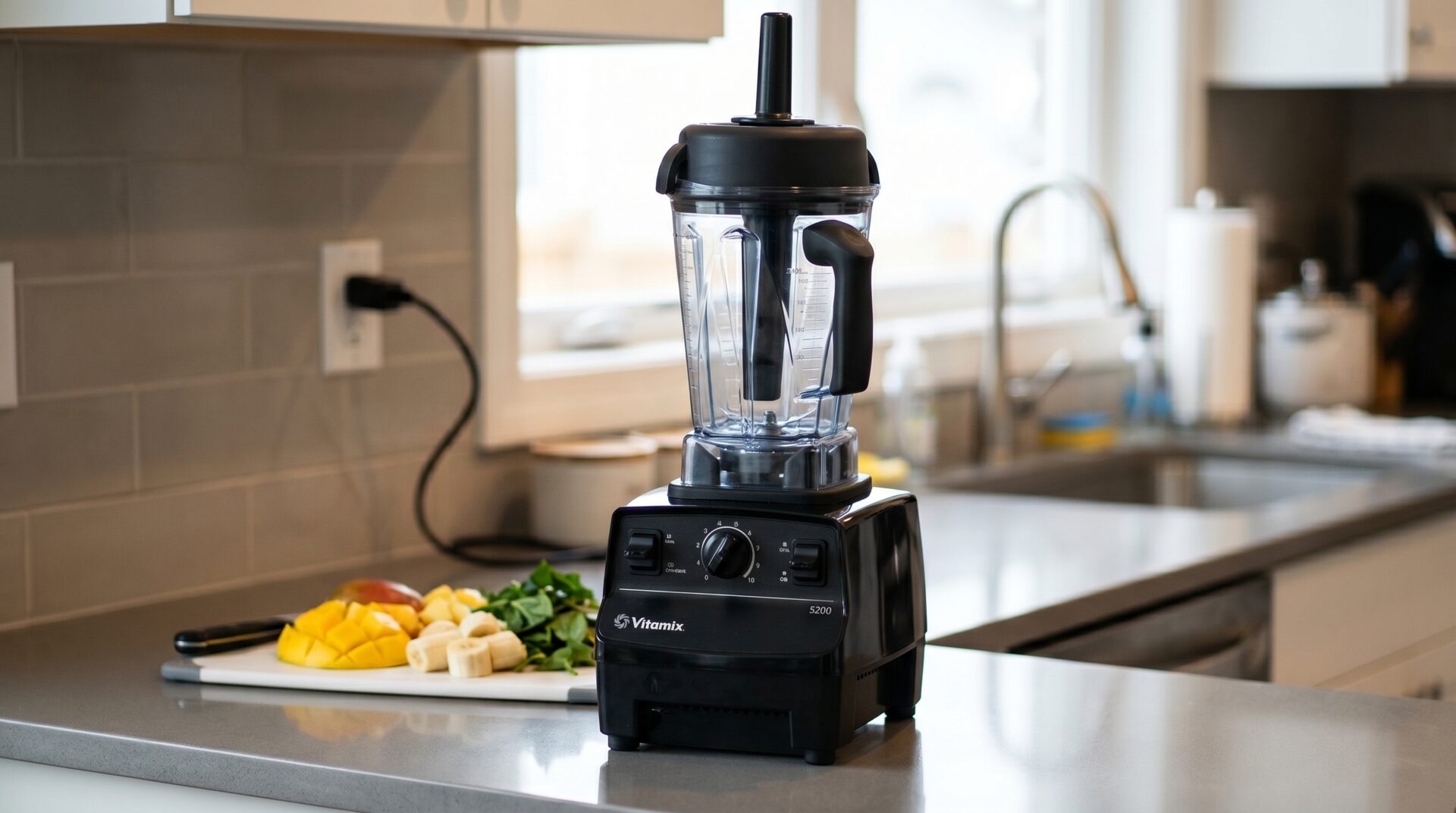
The Vitamix Ascent X4 stands out as a robust and reliable blender, introduced in 2026. This model is an ideal choice for those who make smoothies daily and desire café-quality results right in their kitchen.
Its powerful motor takes on tough ingredients with ease, effortlessly crushing ice, frozen fruits, nuts, and leafy greens. This capability ensures that every drink is ultra-smooth, free from any unwanted chunks or textures.
Key Features
- High-speed motor: Delivers consistent performance for various blending needs.
- Self-cleaning function: Simplifies maintenance, saving you time after use.
- Smart blending technology: Adjusts settings automatically for optimal results.
- Durable premium design: Built with quality materials for longevity.
- Large container: Perfectly sized for families, accommodating larger servings.
Pros:
- 7-year manufacturer warranty: For a blender in this price range, a 7-year warranty is industry-leading and reflects the build quality. Most budget blenders carry a 1-year warranty at best.
- Variable speed control with 10 settings: This isn’t just a convenience feature; it gives you precise control over texture. Low speeds are ideal for chunky salsas and dressings, while high speeds produce the silky-smooth consistency serious smoothie drinkers demand. Most competitors offer only 3–4 speed presets.
- Self-cleaning in under 60 seconds: Add warm water and a drop of dish soap, run it for 30 seconds, and it’s done. This is a genuine daily quality-of-life advantage, no disassembling blades, no hand-washing awkward jar corners.
Cons:
- Large footprint: Its tall, narrow jar design means it may not fit under standard kitchen cabinets when assembled. Measure your counter clearance before purchasing.
- High price point: The Vitamix 5200 sits at the premium end of the market. While it justifies the cost through longevity and performance, it’s a harder sell for casual or occasional users who don’t blend daily.
Best For
This blender is perfect for families, fitness enthusiasts, and anyone passionate about making smoothies.
Why We Recommend It
For those seeking a worthwhile long-term investment in smoothies and juices, the Vitamix Ascent X4 combines outstanding performance with impressive durability.
It ensures that each blend meets high standards, making it a valuable addition to any kitchen.
2. Ninja Professional Plus Blender – Exceptional Value Blender
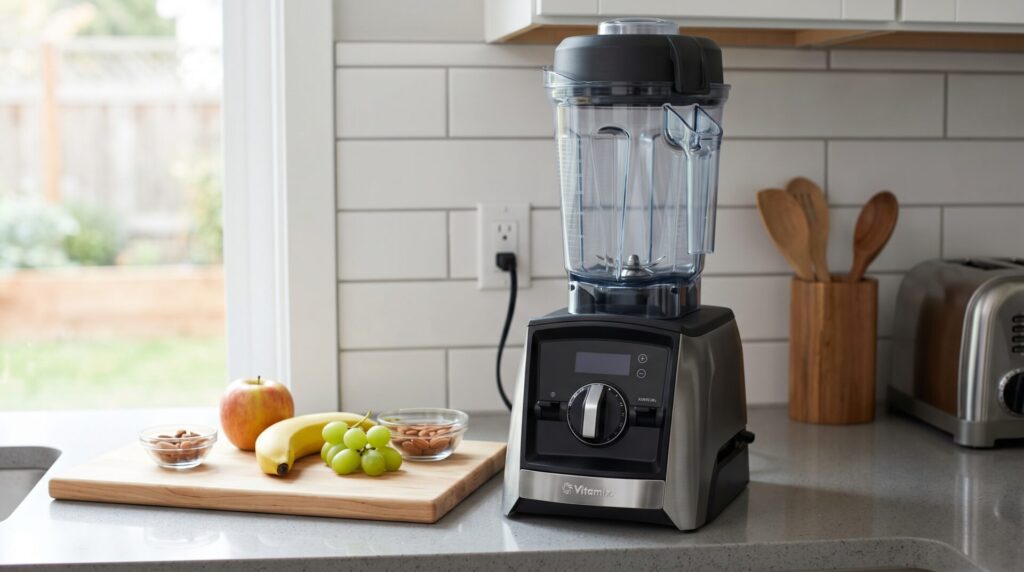
The Ninja Professional Plus Blender delivers outstanding blending capabilities without the high price tag often seen in premium brands.
Its powerful motor excels at crushing ice, crafting frozen drinks, preparing protein shakes, and blending fruit smoothies.
Key Features
- Auto-iQ preset programs for effortless operation
- Robust ice-crushing blades for smooth textures
- Generous pitcher capacity for large batches
- User-friendly controls for seamless blending
Pros:
- Total Crushing blades: The stacked blade design is specifically engineered to pulverize ice from every angle simultaneously, giving you smooth, chip-free frozen drinks without the gritty ice chunks you’d get from a single-blade setup.
- 1400-watt motor at a mid-range price: This is one of the most powerful motors available under $100. It handles frozen fruit, ice, and leafy greens without stalling, something cheaper blenders routinely fail at.
- Auto-iQ pre-set programs: These one-touch programs (Blend, Ultra Blend, Pulse) take the guesswork out of smoothie-making. They’re calibrated for specific results, meaning less manual monitoring and more consistent output every time.
Cons:
- Lid can leak under heavy loads: A few users report minor leakage around the lid when blending very full loads at high speed. Always leave space at the top and lock the lid firmly before blending.
- Loud operation: At full power, the Ninja Professional Plus is noticeably loud. If you blend early mornings in a home with light sleepers or thin walls, this is a real consideration, not just a minor inconvenience.
Best For
Cost-conscious shoppers seeking reliable performance without breaking the bank.
Why We Recommend It
This blender strikes a remarkable balance between cost and capability, making it an excellent choice for any kitchen in 2023.
3. NutriBullet Pro – Top Personal Blender
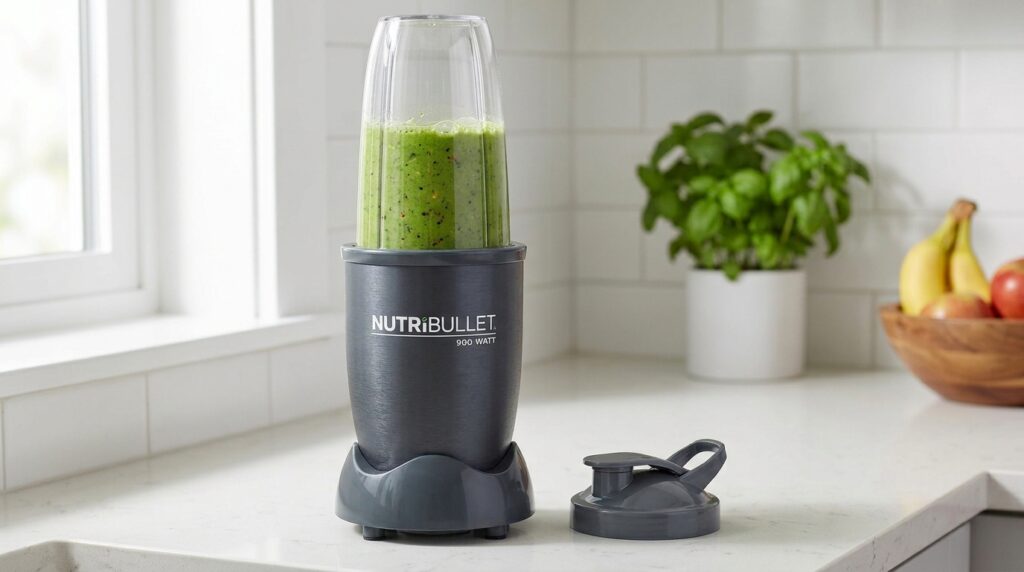
The NutriBullet Pro is ideal for making quick smoothies and protein shakes in the morning.
Its compact size suits apartments, offices, dorm rooms, and small kitchens perfectly.
Why We Recommend It
If convenience and speed matter most, the NutriBullet Pro is one of the best compact smoothie blenders available.
The Braun TriForce Power Pro stands out as an exceptional mid-range blender, offering a blend of high performance and affordability.
It effortlessly tackles tough ingredients, including spinach, kale, nuts, and frozen fruits, ensuring a smooth blend every time.
Key Features
It includes multiple blending settings and precision programs for various recipes.
The large pitcher accommodates family-sized servings, while a personal cup allows for convenient single servings. Its robust motor ensures consistent blending results.
Pros:
- 900-watt motor for its size class: This is impressive for a personal blender. It handles frozen berries, spinach, and protein powder reliably, which is more than many similarly priced compact blenders can claim.
- Compact, countertop-friendly design: The NutriBullet Pro takes up roughly the same footprint as a large coffee mug. For small kitchens, studio apartments, or dorm rooms, this is the difference between a blender that lives on your counter and one that stays in a cabinet.
- Blend-and-go cup system: You blend directly in the cup you drink from, no extra glasses to wash. For weekday mornings when time is tight, this workflow is genuinely faster than any full-size blender setup.
Cons:
- Blade cups wear over time: The blade assembly screws onto the cup and can develop hairline cracks with heavy use. Replacement cups are inexpensive, but it’s worth noting this isn’t as durable long-term as a traditional jar blender.
- No large-batch capability: If you’re making smoothies for two or more people, the NutriBullet Pro’s single-serve cups become a bottleneck. You’ll need to blend in multiple rounds, which negates the time-saving benefit.
Best For
Ideal for those seeking high-quality blending without the hefty price tag of luxury brands.
Why We Recommend It
The Braun TriForce Power Pro delivers outstanding smoothie performance, making it a more budget-friendly choice compared to ultra-premium options. It’s a reliable addition to any kitchen for smoothie enthusiasts.
4. Ninja Detect Power Blender – Best Smart Blender
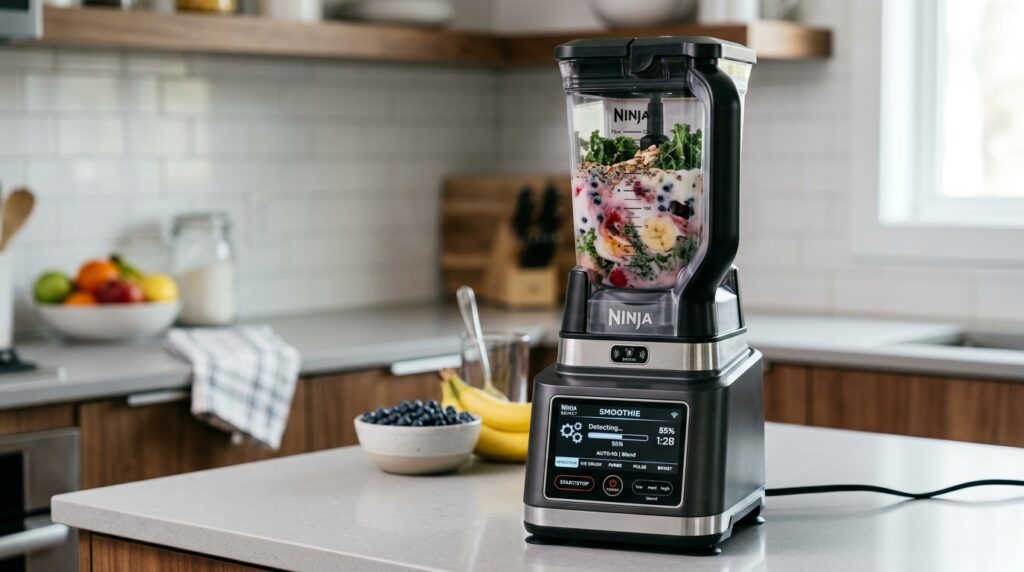
The Ninja Detect Power Blender uses smart sensor technology to automatically adjust blending speed based on ingredient thickness.
This helps create consistently smooth drinks with minimal effort.
Key Features
- Intelligent blending sensors
- Automatic speed adjustments
- Modern digital controls
- Strong blending power
Pros
Smart blending technology
Consistent smoothie texture
User-friendly controls
Powerful performance
Cons
Higher price than standard Ninja models
Advanced features may not be necessary for everyone
Best For
Modern kitchens and users who love smart appliances.
Why We Recommend It
It simplifies smoothie-making while delivering consistently excellent blending results.
5. Braun TriForce Power Pro – Top Mid-Range Blender
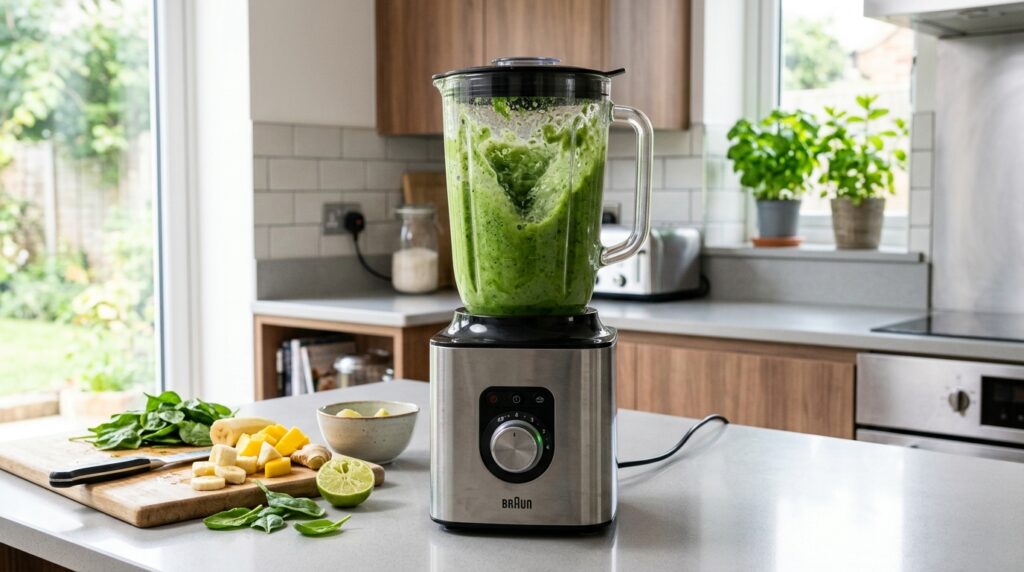
The Braun TriForce Power Pro offers excellent performance at a reasonable price.
It effortlessly blends tough ingredients like spinach, kale, nuts, and frozen fruits.
Key Features
- Various blending settings for different needs
- Precision blending programs for consistent results
Large pitcher plus personal cup
- Strong motor performance
Pros
Smooth blending texture
Versatile functionality
Strong build quality
Good value for money
Cons
Takes up more counter space
Premium features increase price slightly
Best For
Users who want premium-style blending without paying top-tier prices.
Why We Recommend It
It offers impressive smoothie performance while remaining more affordable than ultra-premium brands.
What to Look for When Buying a Blender for Smoothies and Juices
1. Motor Power
For frozen fruits and ice crushing, choose a blender with at least 900 watts of power.
2. Blade Quality
Sharp stainless-steel blades help create smoother drinks and improve durability.
3. Jar Capacity
Large families may prefer full-sized pitchers, while single users can choose personal blenders.
4. Ease of Cleaning
Dishwasher-safe parts and self-cleaning functions save time.
5. Noise Level
High-powered blenders can be noisy, so consider quieter models if needed.
Are Expensive Blenders Worth It?
Premium blenders usually:
- Last longer
- Blend more smoothly
- Handle tougher ingredients
- Offer better warranties
If you make smoothies daily, investing in a higher-quality blender can save money over time.
Final Verdict
Choosing the best blender depends on your budget, kitchen space, and blending needs.
- Choose the Vitamix Ascent X4 for premium all-around performance.
- Choose the Ninja Professional Plus for the best value.
- Choose the NutriBullet Pro for personal smoothies and compact kitchens.
- Choose the Braun TriForce Power Pro for versatility.
- Choose the Ninja Detect Power Blender for smart blending features.
No matter your choice, a quality blender can help you prepare healthier smoothies, fresh juices, protein shakes, and frozen drinks from the comfort of your home.
Frequently Asked Questions (FAQs)
Q1: What is the best blender for making smoothies every day?
For daily smoothie use, the Vitamix 5200 is the gold standard. Its 2-peak horsepower motor, variable speed control, and 7-year warranty make it purpose-built for high-frequency use.
If budget is a concern, the Ninja Professional Plus offers comparable smoothie performance at a fraction of the cost, with its 1400-watt motor and Auto-iQ programs making it an exceptional everyday choice under $100.
Q2: Can I use a personal blender like the NutriBullet Pro for juicing?
The NutriBullet Pro blends whole fruits and vegetables into a thick, fiber-rich smoothie, but it does not juice in the traditional sense.
True juicing (extracting liquid and discarding pulp) requires a dedicated cold-press or centrifugal juicer.
If you want a drinkable, juice-like consistency, blend your ingredients with water and strain through a fine mesh strainer or nut milk bag for a similar result.
Q3: Are expensive blenders like the Vitamix actually worth the money?
Yes, with one important caveat: they’re worth it if you blend regularly.
A Vitamix blends more smoothly, lasts significantly longer (7+ years vs. 1–3 years for budget models), and handles a wider range of tasks (soups, nut butters, frozen desserts).
For someone who blends 4–7 times per week, the cost-per-use over several years is actually lower than replacing a $60 blender every couple of years.
For occasional users, a mid-range blender like the Ninja Professional Plus delivers 80% of the performance at 25% of the price.
Q4: How many watts do I need in a blender for smoothies and frozen drinks?
For basic smoothies with soft fruit and leafy greens, 600–900 watts is sufficient (the NutriBullet Pro sits in this range).
For frozen fruit, ice crushing, and harder ingredients like carrots or frozen açaí packs, look for 1000–1400 watts minimum.
For professional-grade performance and longevity under daily heavy use, 1500+ watts (like the Vitamix 5200 at 1380W / 2 peak HP) is the benchmark to aim for.
Q5: Which blender is easiest to clean?
The Vitamix 5200 wins on cleaning ease, its self-cleaning cycle takes under 60 seconds with just warm water and soap. The NutriBullet Pro is a close second because you blend directly in the drinking cup, eliminating extra parts.
Full-size blenders like the Ninja Professional Plus have more components (jar, lid, blade assembly) that require more thorough rinsing, though most parts are dishwasher-safe.
As a general rule: avoid blenders where the blade assembly doesn’t detach from the jar, as these are significantly harder to clean thoroughly and can harbor bacteria over time.